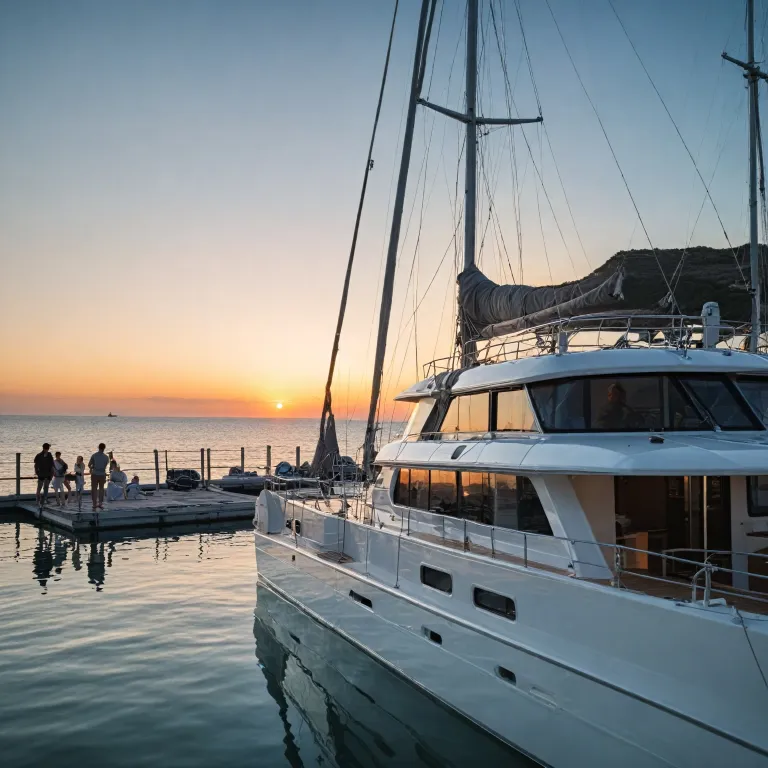
Strategic catamaran insurance for hospitality risk managers
For hotel groups, cruise operators, and island resorts, a catamaran is no longer just a leisure boat but a mobile hospitality asset. When risk managers evaluate catamaran insurance, they must align marine insurance structures with groupwide risk appetite, loss scenarios, and guest safety expectations. This means treating each catamaran as a floating extension of the brand, subject to the same duty of care as any onshore facility.
Underwriters will scrutinize the catamaran’s value, age, and sailing profile, as well as the boating experience of skippers and crew. The assessment of vessel value, sailing regions, and the owner’s sailing resume directly shapes coverage, from hull damage to liability for guests and third parties. For hospitality companies, this requires a disciplined application process supported by marine surveyors, legal advisors, and an experienced insurance broker able to translate operational realities into insurable terms.
Risk managers should map each location and coverage area, including marina constraints, hurricane season exposure, and cross border operations. When catamarans serve multiple resorts or cruise itineraries, the coverage must follow the asset across every area, with clear wording on international waters and charter usage. Many insurance companies now use telematics and GPS to refine risk models, which can benefit companies that operate safely and document every sailing leg.
Because catamaran owners in hospitality often manage fleets, they must negotiate yacht insurance and broader marine insurance programs that integrate with corporate captives and global policies. A single total loss event involving guests can trigger complex claims across several insurance companies, from the lead insurance company to excess layers. Aligning catamaran insurance with corporate governance therefore becomes a board level priority for travel and hospitality groups.
From yacht to catamaran fleets: aligning marine insurance with corporate structures
Many hospitality groups operate mixed fleets of yacht and catamaran units, sometimes through separate companies or special purpose entities. This fragmentation can complicate yacht insurance and catamaran insurance placement, especially when different insurance companies and jurisdictions are involved. Risk managers and juristes must therefore rationalize which company owns which boat and how liabilities flow back to the parent group.
Where a resort uses both power sail yachts and sailing catamarans for excursions, underwriters will examine each vessel’s boat experience profile and the boating experience of skippers. The application process should standardize how companies present sailing resume data, incident history, and maintenance records to every insurance company. This consistency supports better pricing, reduces disputes, and strengthens the group’s credibility with marine insurance markets.
Corporate structures also influence how coverage responds to guest injury, crew health issues, and environmental damage. Policies must coordinate with health care arrangements, local pharmacy networks, and any pharmacy benefit or benefit management programs used for crew medical support. In complex destinations, a single loss can trigger yacht owners’ liability, employer obligations, and even public health investigations linked to drug handling on board.
For groups exploring alternative risk transfer, captive structures can host marine insurance layers for catamarans and yachts. Strategic initiatives in captive insurance for hospitality risk strategies, as discussed in specialized analyses on reshaping hospitality risk strategies, illustrate how fleets can be integrated into broader retention plans. This approach allows companies to retain predictable loss layers while purchasing catastrophe protection for total loss scenarios and severe liability claims.
Health, pharmacy, and benefit management on hospitality catamarans
When catamarans carry guests, crew, and sometimes high profile clients, health risk management becomes inseparable from catamaran insurance. Underwriters increasingly ask how companies manage onboard health care, from first aid to telemedicine, and how they control drug storage and pharmacy protocols. For risk managers, this means integrating maritime medical standards with corporate health, safety, and benefit management frameworks.
Each catamaran and yacht should maintain a documented pharmacy inventory, including prescription drug controls, expiry monitoring, and cold chain procedures where necessary. Insurance companies may request evidence that pharmacy benefit policies align with flag state rules and local coastal regulations in each coverage area. Where fleets operate across several location clusters, consistent procedures reassure both insurers and regulators that health risks are systematically controlled.
Hospitality companies must also coordinate crew health coverage, repatriation benefits, and shore side health care access. A robust benefit management program, supported by an insurance broker familiar with marine and health markets, can reduce friction when a medical loss occurs during sailing operations. This is particularly important during hurricane season or in remote sailing regions where evacuation logistics are complex.
Catamaran owners and yacht owners in the hospitality sector should ensure that marine insurance, health insurance, and corporate benefit schemes dovetail cleanly. A poorly drafted policy can leave gaps between hull coverage, liability coverage, and crew health protections after a serious incident. Aligning these layers strengthens the overall insurance architecture and supports defensible decision making when claims are scrutinized by courts or regulators.
Advanced risk assessment: telematics, sailing experience, and legal exposure
Modern catamaran insurance increasingly relies on data driven risk assessment, which has direct implications for hospitality operators. Insurers use telematics, GPS tracking, and digital logbooks to evaluate sailing patterns, boat experience, and adherence to safe navigation practices. For companies, this creates both an opportunity to evidence strong risk culture and a challenge to manage data governance and privacy.
Underwriters will correlate boating experience and sailing resume information with recorded routes, weather conditions, and incident reports. A fleet that consistently avoids high risk area segments during hurricane season, for example, may negotiate more favorable coverage terms and deductibles. Conversely, repeated near misses or groundings in a specific location can trigger premium increases or even non renewal from an insurance company.
Legal exposure extends beyond physical loss or total loss of a catamaran or yacht. Liability claims may involve guest injury, environmental damage, or alleged negligence in health care delivery or drug management on board. Juristes must therefore ensure that policy wording, waivers, and operational procedures align, especially when multiple insurance companies share the marine insurance program.
Specialized partners such as marine surveyors, risk consultants, and firms like hanham gross can support detailed risk mapping and loss scenario analysis. Their reports help catamaran owners, yacht owners, and boat owners justify coverage limits, retention levels, and crisis response plans. For hospitality groups, embedding these assessments into enterprise risk management frameworks elevates marine operations to the same governance level as hotels and resorts.
Integrating catamaran insurance into broader travel risk management
For travel and hospitality brands, catamaran insurance should never be treated as a standalone technical purchase. Instead, it must integrate with travel risk management, guest safety protocols, and hotel cancellation and trip disruption strategies. A serious marine loss can cascade into reputational damage, mass cancellations, and complex multi jurisdictional claims.
Risk managers should align marine insurance coverage with policies that protect against travel disruption, including hotel cancellation in travel risk management frameworks. Guidance on maximizing protection for hotel cancellation in travel risk management illustrates how interconnected these coverage layers have become for global operators. When a catamaran incident forces itinerary changes, well structured coverage can soften the financial impact on both the company and its guests.
From an operational perspective, companies must define clear escalation paths when a loss occurs on a boat, whether a catamaran or yacht. This includes immediate safety actions, notification of the insurance broker and insurance company, and coordination with local authorities in the relevant coverage area. Documented procedures, supported by regular drills, enhance both safety outcomes and claims defensibility.
Hospitality catamarans often operate in sensitive coastal area zones where environmental and community expectations are high. A total loss or pollution event can trigger regulatory investigations, civil claims, and intense media scrutiny for both catamaran owners and yacht owners. Embedding marine risk scenarios into crisis communication plans ensures that legal, insurance, and public relations teams respond in a coordinated and credible manner.
Pricing, premiums, and negotiating leverage for hospitality marine fleets
Understanding how insurers price catamaran insurance is essential for hospitality finance and risk teams. Premiums typically represent a modest percentage of the catamaran’s insured value, but they can escalate sharply in high risk regions or after significant loss events. For a large resort or cruise company, these dynamics materially affect operating budgets and capital allocation decisions.
Insurers consider vessel value, age, construction, and intended sailing regions, alongside the boating experience of captains and crew. They also assess historical loss records, maintenance standards, and the robustness of safety management systems across all boats in the fleet. Where companies can evidence disciplined operations, they gain leverage in negotiations with insurance companies and may secure broader coverage at more efficient cost.
Hospitality operators should benchmark quotes from several insurance companies, using an experienced insurance broker to structure competitive tenders. Comparing yacht insurance and catamaran insurance proposals side by side helps identify gaps in coverage, sublimits, and exclusions that could affect yacht owners and catamaran owners differently. This is particularly important when fleets include both sailing and power sail vessels with distinct risk profiles.
Risk managers can also explore higher deductibles, captive participation, or layered marine insurance structures to optimize total cost of risk. When a company demonstrates strong governance, transparent data, and a mature risk culture, underwriters are more willing to tailor coverage area definitions and pricing. Over time, this strategic approach transforms catamaran insurance from a compulsory expense into a lever for resilience and competitive differentiation in the travel and hospitality market.
Key quantitative insights for catamaran insurance in hospitality
- Average annual catamaran insurance premiums often approximate 1.5 % of the vessel’s insured value for well managed fleets.
- For a high value catamaran around 610 000 USD, annual marine insurance premiums can range roughly between 9 150 and 18 300 USD depending on risk factors.
- Premium levels are highly sensitive to sailing regions, with hurricane season exposure and high risk locations driving noticeable increases.
- Insurers systematically factor owner and crew boating experience, vessel age, and coverage limits into pricing models for catamarans and yachts.
Expert answers to frequent questions on catamaran insurance
What factors influence catamaran insurance premiums ?
Premiums are influenced by the vessel's value, age, usage, sailing region, owner's experience, and coverage limits.
Is catamaran insurance mandatory ?
While not always legally required, many marinas and lenders mandate insurance coverage.
Can I reduce my catamaran insurance premium ?
Yes, by maintaining a clean sailing record, completing safety courses, and choosing higher deductibles, you may lower premiums.
How should hospitality groups structure coverage for mixed fleets ?
They should harmonize yacht insurance and catamaran insurance under a coordinated marine insurance program, ensuring consistent limits, deductibles, and liability wording across all boats and companies.
Why is sailing experience so important for insurers ?
Boating experience and a detailed sailing resume provide underwriters with evidence of competent seamanship, which correlates with fewer incidents, lower loss frequency, and more predictable claims outcomes for insurance companies.