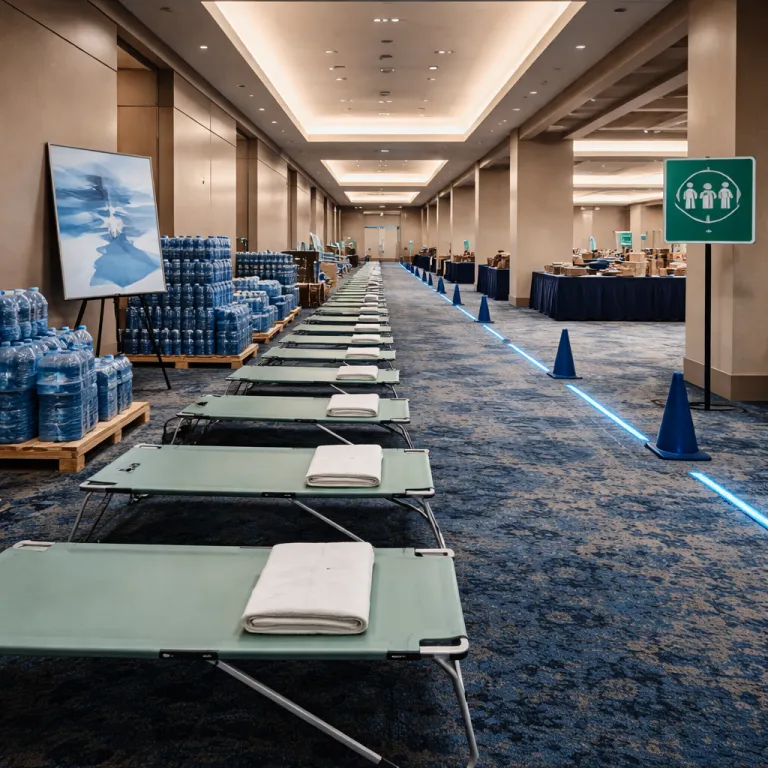
From perfect documents to imperfect nights: why hotel crisis management must assume failure
Every hotel crisis management binder looks reassuring until the alarm sounds at 2 a.m. The real test for any management hospitality framework is whether a night manager and a skeleton équipe can turn that document into a coherent response while half the leadership is on a long haul flight. In the hospitality industry, the properties that protect every guest and every member of staff during crises are usually the ones that have already watched their own plan fail in a safe tabletop room.
Risk managers and directions générales know that a crisis is never just an operational event ; it is a legal, insurance, and reputation stress test for the entire hospitality business. A hotel crisis triggered by fire, a medical emergency, cyber extortion, or natural disasters exposes every weakness in disaster management, from communication chains to management risk allocation between operator and owner. The gap between the elegant management plan and the messy reality of guests, staff, and local authorities is where liability, coverage disputes, and post crisis litigation are born.
Insurers and brokers now treat hotel crisis management maturity as an underwriting factor, not a soft nice to have. When 85 % of hotels report having some form of crisis plan yet average crisis response time still sits around 15 minutes, the industry clearly has a specificity problem. A line in a document that says “inform guests quickly” does not protect tourism industry revenues when a natural gas leak forces an evacuation ; a protocol that states “the night manager uses channel X to push message Y to all guests within six minutes” is what actually moves people safely down the stairs.
Designing tabletops that break the plan, not the people
Most crisis preparedness exercises in hospitality management are still scored on attendance and polite participation. The result is compliance theatre where the management plan is read aloud, everyone nods, and no one tests whether guests staff can actually follow the instructions under pressure. A serious tabletop for hotel crisis management is built to make the plan fail in controlled conditions so that the real incident does not become the first live test.
Start with the most probable risks for your specific hotel and tourism context, not with a generic multi hazard scenario. A coastal resort should stress test natural disasters such as storm surge and flooding, while an urban business hotel might prioritise fire, medical emergencies, cyber outages, or a violent incident impacting guest safety and staff safety. For each scenario, define in advance what an effective crisis looks like in measurable terms ; for example, “all guests accounted for in 12 minutes, first communication to guests in rooms within six minutes, first update to owner and insurer within 20 minutes.”
The exercise design must also reflect how the hospitality industry actually operates at night and during shoulder seasons. Run at least one tabletop with only the night manager, one supervisor, and the on call engineer, because that is the real équipe on duty when many crises start. Use this session to test whether staff training has reached the people who will actually execute the crisis response, not just the day shift leaders who helped write the document ; this is where you often find that the person who authored the management plan is on holiday and the night manager has never seen it.
During the exercise, facilitators should inject realistic friction into the hotel crisis narrative. Simulate guests who refuse to evacuate, a blocked stairwell, a social media rumour about a “major disaster at the hotel,” or a language barrier with international guests who do not understand the first announcement. Force the team to adapt the crisis management playbook while maintaining clear communication with guests, staff, local authorities, and the corporate office, because this is exactly what will be required when a real crisis hits the tourism industry at scale.
For risk managers looking to align tabletop design with broader travel risk assessment, integrating the crisis scenarios into a structured hotel safety risk review is essential. A detailed travel risk assessment for hotels framework helps prioritise which crises to simulate first and which business functions are most critical to protect. When you connect tabletop findings to a living operational risk register, as outlined in this analysis on summer season operational risk preparation, you turn each exercise into a direct input for capital planning, insurance negotiations, and long term resilience investments.
The specificity gap: from “communicate with guests” to minute by minute protocols
The most dangerous sentence in any hotel crisis management document is “communicate with guests and stakeholders as soon as possible.” In a real crisis, that vague instruction leaves the night manager guessing which channel to use, what to say, and who approves the message while precious minutes slip away. The hotels that move guests safely and protect the hospitality business brand are the ones that have already scripted the first 30 minutes of crisis communication in painful detail.
For each priority risk, the management hospitality team should define a channel hierarchy and message templates that can be triggered without legal review at 2 a.m. A robust management plan specifies that the night manager uses the fire panel and public address system for immediate life safety instructions, then pushes a short reassurance message through the guest app, SMS, or in room television once guests are in a safe location. It also clarifies when to escalate to corporate communications, when to brief insurers, and how to coordinate statements with local authorities to avoid contradictory narratives that damage trust in the wider tourism industry.
Social media now acts as both an early warning system and an accelerant for hotel crises. A single video of confused guests in a lobby can undermine hours of careful crisis response work if the visible communication appears chaotic or indifferent. Tabletops must therefore include a dedicated social media stream managed by a trained member of staff who monitors posts, corrects misinformation, and feeds real time sentiment back into the crisis management cell so that on the ground decisions reflect how the situation is perceived beyond the hotel walls.
Legal and insurance teams should sit inside these exercises, not just receive the post crisis report. Their presence helps align disaster management protocols with policy wording, notification clauses, and local duty of care obligations that apply to guests and staff. Cross sector benchmarks from other asset heavy sectors, such as comprehensive strategies for art gallery insurance and business continuity, can be surprisingly relevant here because they show how to protect both people and high value property while maintaining a viable business recovery trajectory.
When the exercise ends, the scoring metric is simple and unforgiving. Do not ask whether the team followed the document ; ask how many times the document failed to match the reality of guests, staff, technology, and local infrastructure. Each gap becomes a tracked action in the management risk register, with clear owners, deadlines, and budget implications, turning crisis recovery planning into a continuous improvement loop rather than a once a year compliance ritual.
What insurers, owners, and regulators really want to see from your tabletops
Carriers, investors, and regulators have become far more sophisticated in how they assess hotel crisis management capabilities. They no longer accept a glossy binder and a signed attendance sheet as proof of crisis preparedness for a complex hospitality business. What they want is evidence that your hotels have tested their plans under realistic stress and used the results to harden both operations and governance.
For insurers, high quality tabletop documentation is now a proxy for future loss performance and for the credibility of your disaster management strategy. Underwriters look for clear timelines of crisis response actions, decision logs showing when guest safety was prioritised over short term revenue, and records of how communication with guests and staff was handled during simulated crises. They also pay attention to whether management hospitality teams have integrated lessons into staff training, capital expenditure, and long term resilience projects such as backup power, redundant communication systems, and real time monitoring tools.
Owner representatives and asset managers focus on business continuity and brand protection across portfolios of hotels. They expect to see that each hotel crisis scenario includes quantified impacts on occupancy, average daily rate, and tourism demand, as well as a structured recovery plan that covers both immediate operations and post crisis reputation repair. In this context, “What is hotel crisis management?” and “Why is crisis management important for hotels?” stop being abstract questions and become hard edged boardroom discussions about liability, franchise value, and the ability to reopen safely after natural disasters or health crises.
Regulators and local authorities, for their part, care about how your crisis response integrates with citywide emergency services and public safety protocols. They want to know not only “How do hotels prepare for crises?” but also how your communication with their teams will work in the first chaotic minutes of an incident. This is where the dataset principle of staying informed about hotel safety measures, knowing emergency exits, and keeping emergency contacts handy becomes operationalised into joint drills, shared contact lists, and pre agreed information sharing formats.
Across all these stakeholders, one pattern is clear. The hotels that can show a documented cycle of planning, realistic exercising, brutally honest debriefs, and visible changes to procedures, technology, and staff training are the ones that secure better insurance terms, stronger owner confidence, and higher trust from guests and regulators. In a risk landscape where crises are more frequent and more visible, that continuous improvement loop is no longer optional ; it is the core of modern hospitality management and the most reliable path to resilient recovery when the next incident hits.
Key figures that reshape hotel crisis management expectations
- Approximately 85 % of hotels report having some form of crisis plan in place, yet many of these documents have never been tested through realistic tabletop exercises, which creates a dangerous illusion of preparedness for both operators and insurers (Hotel Management Journal, 2025).
- The average crisis response time in the hospitality industry is around 15 minutes from incident detection to structured action, a delay that can significantly affect guest safety outcomes and business continuity during fast moving events such as fires or medical emergencies (Hospitality Safety Report, 2024).
- Industry analyses show a growing focus on health related crises and integration of technology into crisis management, with real time monitoring systems and centralized communication platforms increasingly used to coordinate guests, staff, and external partners during complex incidents (multiple sector safety reviews).
- Regular staff training programmes are now recognised as one of the most effective levers for improving crisis response performance, because they ensure that the people actually on duty at night understand the plan and can execute it without waiting for senior management to arrive on site (training and safety benchmarks across the tourism industry).
References
- Hotel Management Journal – global survey on hotel emergency planning and crisis response performance.
- Hospitality Safety Report – benchmarking of incident timelines and guest safety outcomes in the hospitality industry.
- Sector analyses from risk and insurance specialists covering crisis management, business continuity, and resilience in tourism and hospitality.