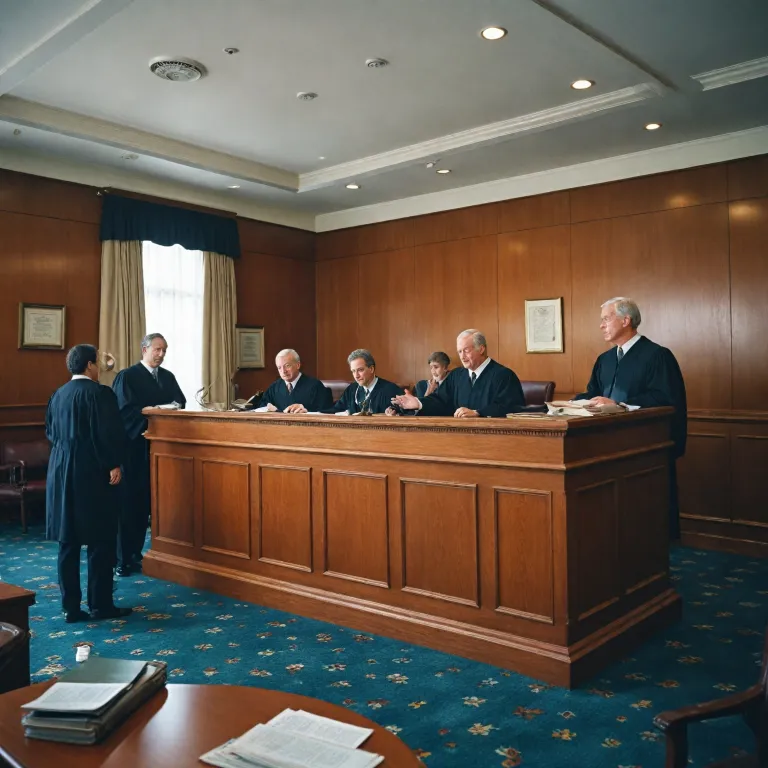
Interpreting court discretion in New Jersey Court Rule 4:46-1 for hospitality risk managers
New Jersey Court Rule 4:46-1 court discretion is a critical consideration for risk managers, general management, insurers, and legal specialists in the hospitality sector. The rule governs the timing and procedures for dispositive motions, particularly summary judgment motions, which can significantly affect the outcome of litigation involving hotels, resorts, and travel operators. Motions for summary judgment must be returnable no later than 30 days before the scheduled trial date unless the court, exercising its discretion, orders otherwise for good cause. This flexibility allows the court to adapt to the unique complexities of hospitality disputes, where the volume of actions in the chancery division or law division can impact the trial calendar. Understanding how the court applies its discretion under this rule is essential for parties preparing motion papers, ensuring compliance with the amended timelines, and anticipating the court's approach to dispositive motions filed close to trial.
For risk managers, the ability to anticipate when a motion or cross motion might be considered late is vital. The rule requires that a dispositive motion be filed at least 28 days before the return date, with opposing party papers due 10 days before, and replies 4 days before. This structured timeline ensures that all parties, including the moving party and party opposition, have adequate time to prepare their arguments and that the court can efficiently manage its calendar. The court’s discretion to modify these timelines for good cause provides a safeguard for parties facing unforeseen circumstances, such as late discovery or new evidence, which are not uncommon in the dynamic hospitality environment. The superior court’s approach to these motions, whether in the law division or chancery division, underscores the importance of meticulous preparation and timely filing service.
Procedural timelines and their impact on dispositive motions in hospitality litigation
Strict adherence to procedural timelines is a hallmark of New Jersey Court Rule 4:46-1 court discretion, especially when dispositive motions are at stake. The rule was amended to clarify that dispositive motions, including summary judgment motions, must be filed and served within a specific timeframe to avoid disrupting the trial calendar. For hospitality businesses, this means that any motion filed outside the prescribed period may be denied or not considered unless the court finds good cause. The moving party must ensure that the motion filed is supported by comprehensive motion papers, affidavits, and statements of material facts, as required by law and practice in the superior court.
In the context of hospitality disputes, where claims may involve complex contractual issues, insurance coverage, or guest safety, the timing of dispositive motions can be decisive. The court’s discretion to allow late motions, provided there is a compelling reason, offers a measure of flexibility but also places a premium on proactive risk management. Legal teams must coordinate closely with risk managers to gather evidence, draft persuasive arguments, and meet all filing service requirements. For further insights into best practices for managing legal timelines in hospitality, see our comprehensive guide to litigation management in hospitality.
Role of notice and order in summary judgment motions for hospitality cases
Notice and order are foundational elements in the process of filing dispositive motions under New Jersey Court Rule 4:46-1 court discretion. The rule mandates that all parties receive timely notice of any motion, ensuring that the opposing party has sufficient opportunity to respond. This is particularly important in hospitality litigation, where multiple parties—such as property owners, management companies, and insurers—may be involved. The court’s order on a dispositive motion, whether granting or denying summary judgment, can reshape the trajectory of a case and influence settlement negotiations.
Effective communication between the moving party and the court is essential to avoid procedural pitfalls. Motions filed without proper notice or outside the designated time frame risk being dismissed, which can have significant financial and reputational consequences for hospitality businesses. The amended rule emphasizes the need for clear, documented communication, with all motion papers and supporting documents filed in accordance with the superior court’s requirements. For a deeper understanding of how notice and order affect dispositive motions in hospitality law, consult our detailed analysis of procedural safeguards in hospitality litigation.
Best practices for preparing and filing dispositive motions in hospitality disputes
Preparing dispositive motions in accordance with New Jersey Court Rule 4:46-1 court discretion requires a strategic approach. Legal teams must ensure that all motion papers are meticulously drafted, with a clear statement of material facts and supporting affidavits. The timing of the motion filed is crucial, as the rule specifies that dispositive motions must be returnable at least 30 days before the trial date, unless the court exercises its discretion for good cause. This allows the court to manage its calendar effectively and ensures that all parties have adequate time to prepare for oral argument.
In hospitality disputes, where the facts may be complex and the stakes high, the moving party must anticipate potential arguments from the opposing party and address them proactively in the motion papers. The law division and chancery division of the superior court both expect a high standard of practice, with strict adherence to procedural requirements. Cross motions and summary judgment motions must be clearly distinguished, and all filing service deadlines must be met to avoid delays.
Oral argument and court discretion: Navigating hearings in hospitality litigation
Oral argument plays a pivotal role in the court’s consideration of dispositive motions under New Jersey Court Rule 4:46-1 court discretion. While the rule allows for motions to be decided on the papers, the court may, at its discretion, schedule oral argument if it deems it necessary for a fair resolution. This is particularly relevant in hospitality cases, where the factual and legal issues may be nuanced and require clarification. The moving party and party opposition must be prepared to present their arguments succinctly and respond to the court’s questions.
The court’s discretion in granting or denying oral argument underscores the importance of thorough preparation. Legal teams should anticipate the court’s concerns and be ready to address them during the hearing. The superior court’s approach to dispositive motions, including summary judgment and cross motions, reflects a commitment to efficient case management while ensuring that all parties have a fair opportunity to be heard. As stated in the dataset: "Rule 4:46-1 establishes the timing and procedural requirements for filing motions for summary judgment in civil cases to ensure they are considered well in advance of trial." This principle is especially significant in the fast-paced hospitality sector, where timely resolution of disputes is essential.
Strategic implications of court discretion for risk, assurance, and legal teams in hospitality
The strategic implications of New Jersey Court Rule 4:46-1 court discretion extend beyond procedural compliance. For risk managers, insurers, and legal advisors, understanding how the court exercises its discretion in managing dispositive motions can inform broader risk mitigation strategies. The rule’s flexibility allows the court to accommodate the unique challenges of hospitality litigation, such as last-minute evidence or evolving legal theories. However, this discretion also requires parties to be vigilant in monitoring deadlines and preparing comprehensive motion papers.
Actions in the chancery division or law division may involve complex factual scenarios, making the timing and substance of dispositive motions critical. The court’s ability to modify the timeline for good cause provides a safety valve, but it should not be relied upon as a routine solution. As highlighted in the dataset: "If a summary judgment motion is filed later than the prescribed timelines without good cause, the court may deny the motion or refuse to consider it." This underscores the need for proactive planning and collaboration among all stakeholders in the hospitality sector. By aligning legal, risk, and assurance functions, organizations can navigate the intricacies of New Jersey Court Rule 4:46-1 court discretion and achieve more favorable outcomes in litigation.
Key statistics on dispositive motions and court discretion in New Jersey hospitality litigation
- Rule 4:46-1 was amended to require dispositive motions to be returnable no later than 30 days before trial, unless the court orders otherwise for good cause.
- Parties must serve and file dispositive motions at least 28 days before the return date, with opposing papers due 10 days before, and replies 4 days before.
- The court’s discretion allows for modification of these timelines, providing flexibility in case management for hospitality disputes.
- Strict adherence to procedural timelines is increasingly emphasized by courts to ensure efficient resolution of dispositive motions.
Frequently asked questions about New Jersey Court Rule 4:46-1 court discretion in hospitality
What is the purpose of Rule 4:46-1 in New Jersey?
Rule 4:46-1 establishes the timing and procedural requirements for filing motions for summary judgment in civil cases to ensure they are considered well in advance of trial.
Can a motion for summary judgment be filed at any time in New Jersey?
A plaintiff may file a motion for summary judgment after 35 days from the service of the pleading claiming relief, while a defendant may file such a motion at any time.
What happens if a summary judgment motion is filed late in New Jersey?
If a summary judgment motion is filed later than the prescribed timelines without good cause, the court may deny the motion or refuse to consider it.
How does court discretion affect the timing of dispositive motions in hospitality cases?
The court has the discretion to modify the timing requirements for dispositive motions if good cause is shown, allowing flexibility in managing complex hospitality disputes.
What are the key steps for filing dispositive motions under Rule 4:46-1?
Key steps include serving and filing the motion at least 28 days before the return date, submitting opposing papers at least 10 days before, and replies at least 4 days before the return date, with the court retaining discretion to adjust these timelines.
References: New Jersey Courts, American Bar Association, National Association of Hotel & Lodging Attorneys.