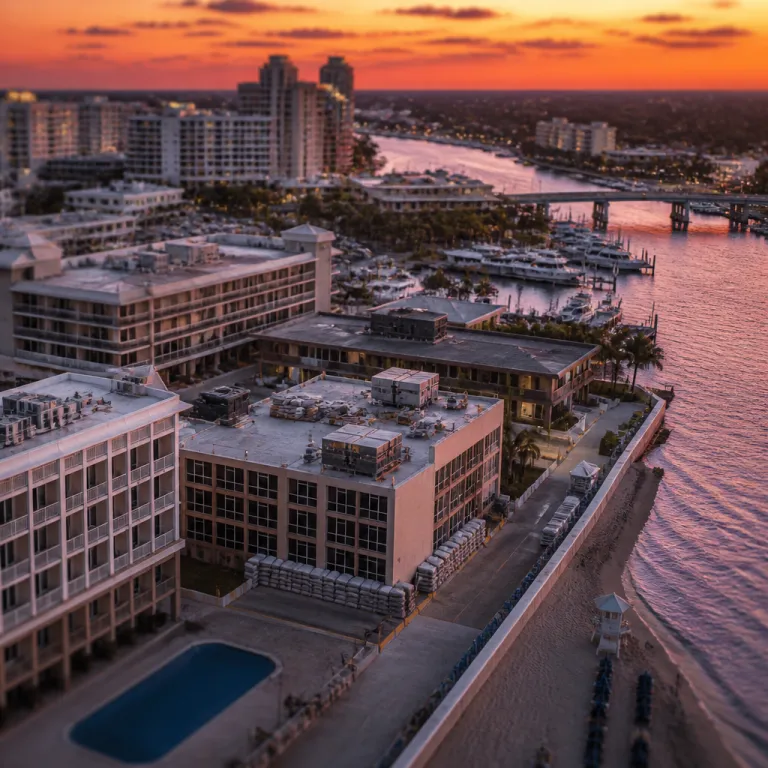
Hospitality insurance in Fort Lauderdale: a practical guide for hotels and resorts
Fort Lauderdale’s hotel market sits on a narrow coastal strip that is repeatedly exposed to Atlantic hurricanes and heavy rainfall. According to the National Oceanic and Atmospheric Administration (NOAA), Florida accounted for roughly 37% of all U.S. hurricane landfalls between 1851 and 2020, and Broward County has seen multiple billion‑dollar storm events in the last two decades. In this environment, a hospitality insurance strategy for Fort Lauderdale hotels must reconcile windstorm exposure, tourism‑driven liability, and high commercial property values. For risk managers and senior executives, a generic business insurance package rarely delivers the depth of protection that a sophisticated hospitality group actually needs.
The hospitality industry in Fort Lauderdale, Florida, therefore operates in a high‑severity risk environment where a single uninsured or under‑insured claim can erode annual EBITDA. A beachfront hotel or resort faces concurrent threats: hurricane‑driven property damage, guest injury, liquor liability incidents, cyber events, and workers’ compensation exposures linked to seasonal staff. When an insurance company underwrites such a portfolio, it must calibrate commercial property, general liability, liquor liability, and casualty limits to reflect both asset values and guest volumes, while also respecting lender requirements and franchise standards.
Specialist actors in Florida have built insurance agency and insurance group capabilities around these realities. Each agency structures hospitality insurance programs that integrate commercial insurance, personal insurance for key executives, and tailored business insurance for hotel and restaurant operations. For legal teams and in‑house counsel, this creates an opportunity to align policy wording with contractual risk transfer, franchise agreements, and local regulatory requirements in Fort Lauderdale, rather than relying on boilerplate language drafted for inland or non‑tourism risks.
Deconstructing coverage architecture for Fort Lauderdale hotels and resorts
Designing a robust risk transfer program for a Fort Lauderdale hotel starts with a granular map of property, liability, and operational exposures. A typical resort will combine commercial property and casualty policies with layered liability coverage and workers’ compensation. The objective is to ensure that every major risk category has a clear insurance response rather than fragmented endorsements that only partially address hurricane, flood, or guest injury scenarios.
For property damage, underwriters in Florida scrutinize construction type, elevation, flood zones, and wind‑mitigation features before pricing commercial property limits. The Florida Office of Insurance Regulation has repeatedly highlighted how coastal construction and roof condition drive catastrophe pricing, and Citizens Property Insurance Corporation has reported rising average claim severities after recent hurricane seasons. A coastal hotel in Fort Lauderdale may therefore require separate deductibles for named storms, flood, and all other perils, which risk management teams must model in their business interruption scenarios. Legal counsel should read every property insurance and business insurance clause related to ordinance or law, ingress/egress, and civil authority, because these details often determine whether a claim for lost revenue is paid or denied.
On the liability side, general liability and liquor liability are central pillars for any hospitality insurance program. Bars, rooftop venues, and pool decks in Fort Lauderdale generate attractive revenue, yet they also increase the probability of bodily injury claims and liquor‑related incidents. One regional broker notes that “slip‑and‑fall and alcohol‑related claims remain the two most frequent loss drivers for coastal hotels,” which is consistent with many loss runs reviewed by risk managers. For a deeper technical breakdown of hotel liability structures, many risk managers refer to specialised analyses such as hotel insurance coverage explained for hospitality operators, then adapt those frameworks to the specific legal and climatic context of Florida.
Risk management, reporting, and claims governance for hospitality groups
Insurance in Fort Lauderdale only creates value when embedded in a disciplined risk management framework. Hospitality industry operators that treat coverage as a transactional purchase often face higher premiums, more frequent claims, and weaker negotiating power with any insurance company. By contrast, a hotel group that invests in structured risk reporting and prevention can stabilise its loss history and secure more favourable commercial insurance terms, particularly on catastrophe‑exposed property and liability lines.
Effective risk management begins with a formal risk register that maps property, liability, workers’ compensation, and cyber exposures across each hotel asset. Safety audits, incident logs, and near‑miss reports should feed into a central report that the risk manager shares with both the insurance agency and internal legal teams. This documentation supports every future claim, because adjusters can read a clear narrative of controls, training, and corrective actions implemented by the business. In practice, Fort Lauderdale hotels that maintain detailed inspection records after major storms often experience faster claim settlement and fewer coverage disputes.
Claims governance is equally strategic for hospitality insurance in Fort Lauderdale, where storm seasons and high guest turnover generate frequent incidents. A well‑drafted claims protocol defines who reports a claim, which documents are collected, and how quickly the insurance group or insurance agency is notified. For complex property damage or liability and workers’ compensation cases, many hotel groups in Florida now use risk management software to track each claim from first notice of loss to final settlement, improving both reserving accuracy and legal defensibility. One multi‑property operator in Broward County, for example, reduced average claim closure times by several months after centralising all incident data and standardising communication with adjusters.
To align insurance with booking patterns and revenue management, some operators also study specialised perspectives on the strategic role of insurance for hotel bookings. This allows risk managers and legal counsel to connect coverage triggers with cancellation policies, distribution contracts, and guest compensation frameworks, particularly during hurricane season when travel disruptions and mass cancellations are more likely.
Tailored programs from specialist agencies in Florida’s hospitality corridor
Not every insurance agency understands the operational nuances of a waterfront hotel in Fort Lauderdale. Specialist intermediaries act as brokers that assemble hospitality insurance programs from multiple insurers, balancing property, casualty, general liability, and liquor liability in a single coordinated structure. For a risk manager, this multi‑carrier architecture can reduce concentration risk while preserving consistent coverage terms across the group, especially when different towers respond to wind, flood, and liability events.
Some providers, operating as insurance advisers with a strong focus on hospitality risk management solutions, often begin with a detailed on‑site risk assessment. Their teams use data analytics to evaluate property values, occupancy trends, and historical claims, then recommend coverage limits and deductibles that reflect the real volatility of the business. This analytical approach is particularly valuable in Fort Lauderdale, where coastal exposure and tourism cycles create sharp swings in both property and liability profiles. After Hurricane Irma, for instance, several specialist brokers used FEMA and NOAA loss data to justify higher wind deductibles but also negotiated broader business interruption extensions for hotels that had invested in mitigation.
Other agencies position themselves as specialists in restaurant and bar insurance, which is highly relevant for hotel groups with significant food and beverage revenue. Their programs typically integrate liquor liability, workers’ compensation, and commercial property coverage for kitchens, bars, and entertainment spaces within a single business insurance package. For senior leadership and legal departments, partnering with such a specialised insurance company can streamline policy negotiation, claims handling, and compliance with Florida’s evolving regulatory landscape, including changes monitored by the Florida Office of Insurance Regulation.
Legal, contractual, and jurisdictional nuances in Fort Lauderdale hospitality
Legal teams working with hospitality insurance in Fort Lauderdale must navigate a dense web of contracts, statutes, and case law. Franchise agreements, management contracts, and vendor relationships all allocate risk differently, which directly affects how insurance coverage should be structured. A misalignment between indemnity clauses and policy wording can leave a hotel group unexpectedly exposed when a major claim arises, particularly if a third‑party operator controls a high‑risk venue such as a rooftop bar or marina.
In‑house counsel and external advisers in Florida therefore review every general liability and property insurance policy against the underlying commercial contracts. Particular attention is paid to additional insured status, waiver of subrogation, and primary non‑contributory language, especially where third‑party operators manage restaurants, spas, or event spaces within the hotel. When a guest injury or property damage incident occurs in such shared spaces, clear contractual and insurance language determines which company’s policy responds first. Recent Florida case law on premises liability and negligent security has reinforced the importance of documenting control over common areas and ensuring that insurance mirrors those responsibilities.
Regulatory compliance in Fort Lauderdale, Florida, also shapes how workers’ compensation and employer liability protections are implemented. Hotels must ensure that all employees, including seasonal and agency staff, are correctly classified for workers’ compensation purposes, because misclassification can trigger penalties and denied claims. For cross‑border hospitality groups, coordinating these Florida‑specific requirements with corporate risk management standards is essential to maintain consistent protection and avoid gaps between jurisdictions, especially where different states or countries apply divergent rules on employer obligations.
From film crews to cyber events : emerging risks reshaping hospitality insurance
Hospitality insurance in Fort Lauderdale is evolving as new activities and technologies reshape risk profiles. Hotels now host film productions, influencer shoots, and large‑scale events that introduce specialised liability and property exposures. When a film crew occupies a hotel, for example, the risk of property damage, equipment loss, and third‑party injury increases significantly, and standard event endorsements may not fully address stunt work, drones, or high‑value equipment stored on‑site.
Risk managers are therefore expanding their commercial insurance portfolios to include endorsements or separate policies that address these emerging exposures. Cyber incidents linked to guest data, mobile check‑in systems, and payment platforms now sit alongside traditional general liability and liquor liability concerns. To stay ahead of these trends, many hospitality groups study how film production insurance is reshaping risk strategies in hospitality and travel, then adapt those insights to their own Fort Lauderdale operations, often in consultation with brokers who specialise in both entertainment and hotel risks.
As one industry explanation summarises the core of modern hospitality coverage : “What does hospitality insurance cover? It covers property damage, liability claims, and business interruption.” This concise statement captures the triad that every insurance group, insurance company, and insurance agency must address for hotels in Fort Lauderdale, Florida. The sophistication now lies in how risk management teams calibrate limits, deductibles, and exclusions so that each claim, whether property, cyber, or workers’ compensation related, finds a clear and predictable path to indemnity, supported by documentation and clear contractual allocation of risk.
Key figures and benchmarks for hospitality insurance in Fort Lauderdale
- Typical annual premiums for hospitality insurance in Florida vary widely by location, construction type, and claims history, so hotel operators in Fort Lauderdale should benchmark costs with their broker rather than rely on a single statewide average. Market surveys by regional intermediaries often show that coastal properties pay materially higher catastrophe‑related rates than inland hotels.
- Coastal hotels in Fort Lauderdale, Florida, often allocate a substantial share of their total insurance spend to commercial property and related catastrophe coverage, reflecting the dominance of windstorm‑ and flood‑related property damage exposures. Citizens Property Insurance Corporation has reported that hurricane‑related claims remain a major driver of overall loss costs in the state.
- Hospitality groups that implement structured risk management and maintain a claims‑free record over several policy periods typically achieve measurable premium reductions, especially on general liability and workers’ compensation lines. Some Fort Lauderdale operators report multi‑year savings after investing in slip‑resistant surfaces, enhanced security, and documented staff training.
- Specialist agencies increasingly use data analytics tools to refine risk assessment, which improves pricing accuracy and can stabilise premiums for complex hotel portfolios. By combining FEMA flood maps, NOAA storm‑surge models, and internal loss data, brokers can present a more nuanced risk profile to underwriters.
FAQ about hospitality insurance in Fort Lauderdale
What does hospitality insurance in Fort Lauderdale usually cover ?
Hospitality insurance in Fort Lauderdale typically combines commercial property, general liability, liquor liability, and business interruption coverage. For hotels and resorts, this structure protects buildings, contents, revenue streams, and guests or third parties who may suffer injury or property damage. Many programs also integrate workers’ compensation and selected personal insurance protections for key executives.
Is liquor liability automatically included for Fort Lauderdale hotels and bars ?
Liquor liability is often offered within broader hospitality insurance packages, but it is not always automatic. Risk managers should confirm whether liquor-related incidents are covered under general liability or require a dedicated endorsement with separate limits. This is particularly important for hotels in Fort Lauderdale, Florida, that generate significant revenue from bars, nightclubs, or banqueting operations.
How can a hotel reduce its hospitality insurance premiums in Florida ?
Hotels can reduce premiums by implementing robust risk management practices and maintaining a claims-free record over time. Measures include regular safety training, documented inspections, upgraded fire protection, and strong incident reporting procedures. Sharing this evidence with the insurance agency or insurance company during renewal negotiations often leads to more favourable pricing.
Should a hospitality group in Fort Lauderdale work with a specialist insurance agency ?
Working with a specialist insurance agency or insurance group that focuses on the hospitality industry is strongly recommended. Agencies that understand the specific property, liability, and workers’ compensation exposures of hotels and restaurants in Florida can help align coverage with contractual obligations, regulatory requirements, and the unique risk profile of each property.
What steps should be taken when a claim occurs at a Fort Lauderdale hotel ?
When a claim occurs, the hotel should prioritise safety, preserve evidence, and notify its insurance agency or insurance company immediately. A detailed internal report with photos, witness statements, and incident timelines will support the claim and facilitate faster resolution. Coordinating early with legal counsel and the insurer’s claims team is essential, especially for serious injury or large property damage events.