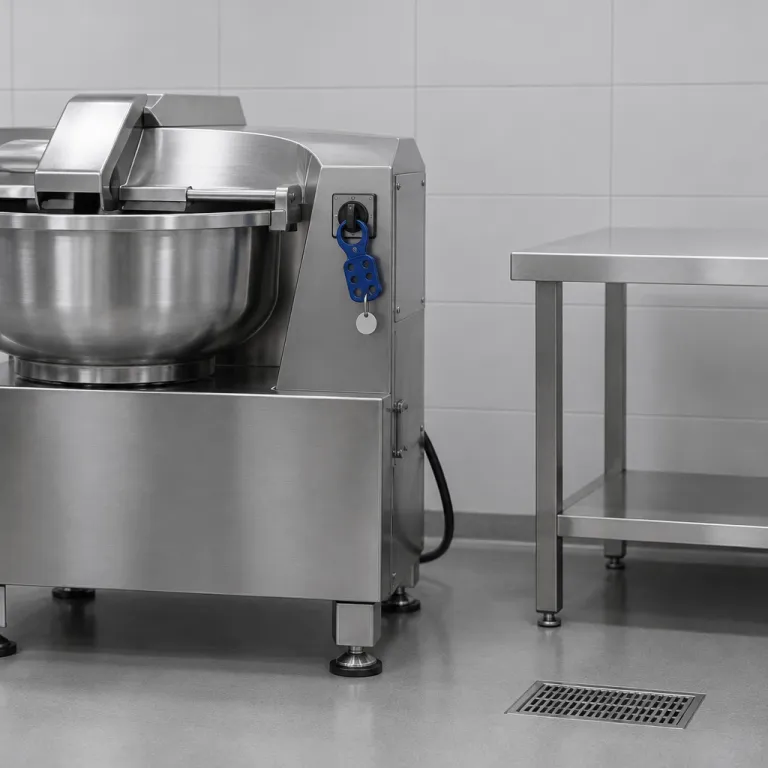
Why hospitality groups need tailored risk assessment methods for food processing equipment
Hotel and resort kitchens now operate as compact food manufacturing sites. Their food processing lines, from raw materials reception to plated food products, create complex risks that classic hotel risk management rarely captures. For directions générales and risk managers, aligning risk assessment methods for food processing equipment with hospitality specific service patterns is now a board level priority.
Unlike industrial plants, hospitality kitchens face fluctuating volumes, seasonal menus, and outsourced services that reshape the supply chain and the hazard profile every week. This variability amplifies hazards food professionals must track, including physical hazards, chemical physical interactions, and cross contamination risks that emerge during peak service. A robust risk assessment must therefore integrate food science principles, food safety regulations, and operational realities such as staff turnover, multilingual équipes, and constrained back of house spaces.
Legal exposure also differs from the wider food industry because a single incident can affect hundreds of guests in one banquet or buffet. Juristes and insurers see that one physical hazard from foreign materials in a breakfast line can escalate into class actions, reputational damage, and complex subrogation claims. Effective risk assessments for food processing equipment in hotels must therefore connect safety quality, quality control, and liability allocation across owners, operators, and outsourced caterers.
Risk managers who treat kitchen equipment as critical infrastructure, not just operational tools, gain a clearer view of systemic risks. They can map how each piece of equipment, each step of food processing, and each flow of materials influences both food safety and guest experience. This strategic view allows risk management teams to prioritise investments in control measures, staff training, and monitoring technologies where they reduce the most severe hazards.
Building a structured risk assessment framework for hotel food processing lines
A structured framework for risk assessment methods for food processing equipment in hospitality starts with a precise mapping of processes. Risk managers should document every step of food processing, from receiving raw materials and storing food products to cooking, holding, and service at the buffet or banqueting line. This process mapping clarifies where hazards, including physical hazards and microbiological threats, can enter the chain.
Once the process is mapped, a formal risk assessment must classify each hazard by likelihood and severity, using criteria aligned with both food safety law and corporate risk appetite. Here, Hazard Analysis and Critical Control Point (HACCP) principles provide a solid backbone, but they must be adapted to hotel specific constraints such as 24 hour room service and multi outlet operations. Structured risk assessments should distinguish between hazards food teams can eliminate through design and those that require ongoing control measures and behavioural training.
For each critical step, the framework should define control points, monitoring routines, and corrective actions that are realistic for busy hotel brigades. For example, slicers, grinders, and vacuum packers are high risk equipment because they can introduce foreign materials and physical hazards if not maintained or cleaned correctly. Risk management teams must therefore integrate maintenance logs, calibration records, and hygiene checks into their assessments, ensuring food safety and safety quality are verifiable, not assumed.
To support multi property hotel groups, the framework should be standardised enough for portfolio wide benchmarking yet flexible enough to reflect local food manufacturing practices and supply chain realities. A practical way to operationalise this is to embed a travel risk style methodology, similar to a practical risk assessment framework for hotel groups, into culinary operations. This alignment allows risk assessments for food processing equipment to sit within the same governance model as destination, security, and business continuity assessments.
From hazards to controls: applying HACCP and beyond in hospitality kitchens
Translating identified hazards into effective control measures is where many hospitality operations struggle. HACCP based risk assessment methods for food processing equipment remain the reference, yet they are often applied as paperwork exercises rather than dynamic risk management tools. For risk managers and juristes, the difference between a living HACCP system and a static file can determine liability after an incident.
In practice, HACCP assessments should focus on how equipment design, layout, and workflow either prevent or enable cross contamination and physical hazards. For example, separating raw materials preparation from ready to eat food processing areas reduces both microbiological risks and the chance of foreign materials migrating between products. Where physical hazard risks cannot be fully eliminated, such as bone fragments in certain meat products, control measures like sieving, filtration, and metal detection must be calibrated and documented with rigorous quality control.
Beyond classic HACCP, advanced risk assessments now integrate predictive maintenance data, temperature logging, and cleaning validation into a single management dashboard. This approach allows risk management teams to correlate equipment failures with spikes in non conformities, near misses, or guest complaints about food safety or safety quality. When combined with structured risk assessments, these data streams help identify systemic weaknesses, such as recurring issues with specific equipment models or suppliers.
Climate related disruptions add another layer of complexity for resort portfolios that rely on fragile supply chain routes. A modelling mindset similar to multi region catastrophe exposure analysis, such as that used in multi region hotel portfolio catastrophe exposure modelling, can be adapted to food industry sourcing. By stress testing supply chain scenarios, risk managers can anticipate how extreme weather might affect raw materials quality, storage conditions, and the reliability of food manufacturing partners.
Managing physical hazards, foreign materials, and cross contamination in hotel environments
Physical hazards and foreign materials represent a distinct category of risk that often receives less attention than microbiological threats in hospitality. Yet for insurers and legal teams, a single incident involving a physical hazard such as glass, metal, or plastic in food products can be easier to prove in court and more damaging to brand trust. Risk assessment methods for food processing equipment must therefore treat physical hazards as a core focus, not a secondary concern.
Effective management starts with equipment selection and layout, ensuring food processing lines minimise the chance of breakage, loose parts, or chemical physical interactions between materials. For example, poorly maintained mixers, slicers, or conveyor belts can shed foreign materials into food, while damaged storage containers can introduce plastic fragments into raw materials. Regular inspections, documented maintenance, and clear replacement criteria for worn components are essential control measures that should be embedded into formal risk assessments.
Cross contamination risks often arise at the interface between equipment, people, and processes, especially in open buffet or live cooking concepts. Here, risk management must integrate staff training, guest flow design, and cleaning protocols to prevent allergens, pathogens, and physical hazards from moving along the chain. Quality control teams should conduct targeted assessments during peak service, not only during audits, to verify that ensuring food safety and safety quality remains robust under pressure.
Outsourced service providers, such as external banquet caterers or specialised food manufacturing partners, can significantly increase complexity. When these partners use their own equipment and materials on site, the hotel’s risk assessments must explicitly cover shared responsibilities, data exchange, and incident reporting. A governance approach similar to that used for outsourced service provider risk in hospitality helps clarify how hazards food responsibilities are allocated and how control failures are escalated.
Integrating legal, insurance, and operational perspectives into food risk management
For hospitality groups, food safety incidents are never purely technical events ; they are legal, financial, and reputational crises. Risk assessment methods for food processing equipment must therefore be co designed by operations, legal, and insurance stakeholders, not left solely to kitchen teams. This integrated approach ensures that risk assessments, HACCP plans, and quality control procedures align with policy wording, contractual obligations, and regulatory expectations.
From an insurance perspective, detailed risk assessments and documented control measures can support more favourable terms, lower deductibles, or tailored extensions for food industry exposures. Underwriters look for evidence that risk management is embedded in daily practice, such as systematic training, incident logging, and corrective action tracking across all properties in the chain. They also scrutinise how hotels manage risks linked to raw materials sourcing, supply chain resilience, and the use of high risk equipment like vacuum packers, blast chillers, and sous vide systems.
Juristes focus on traceability and evidence, ensuring that every assessment, inspection, and maintenance intervention on food processing equipment is recorded in a way that stands up in court. This includes clear documentation of how hazards were identified, how risk assessments were conducted, and which measures were implemented to mitigate specific risks. When an incident occurs, the ability to show a coherent risk management narrative, from initial assessment to ongoing monitoring, often shapes liability outcomes.
Operational leaders, meanwhile, must balance safety quality with guest expectations for speed, variety, and theatrical cooking experiences. They need risk assessment frameworks that are practical, not theoretical, allowing chefs and managers to apply them during busy services without slowing the operation. When legal, insurance, and operational perspectives converge, the result is a resilient system that protects guests, staff, and brand equity while maintaining the creativity and efficiency that define modern hospitality food processing.
Training, culture, and continuous improvement in hospitality food risk assessments
No risk assessment method, however sophisticated, will succeed without a strong safety culture in hospitality kitchens. Training must go beyond basic food safety certificates to explain why specific hazards, such as physical hazards or cross contamination, matter for guests, insurers, and owners. When staff understand how their actions influence both food science principles and legal exposure, compliance becomes more consistent.
Effective programmes combine classroom sessions, on the job coaching, and scenario based exercises that mirror real service pressures. For example, teams can rehearse how to respond when foreign materials are suspected in food products during a large banquet, including immediate control measures, communication with management, and preservation of evidence for later assessment. These exercises should reference actual risk assessment methods for food processing equipment used in the property, reinforcing the link between theory and practice.
Continuous improvement relies on structured feedback loops that connect incidents, near misses, and audit findings back into updated risk assessments. Quality control teams should analyse patterns across multiple outlets or properties, identifying recurring hazards food issues linked to specific equipment, materials, or suppliers. When trends emerge, risk management can adjust control measures, revise training content, or even change equipment specifications to reduce future risks.
For multi brand hotel groups, sharing lessons learned across the portfolio is essential to raise overall safety quality and ensure consistent food safety standards. Central risk management teams can curate best practices, benchmark risk assessments, and coordinate group wide initiatives on topics such as raw materials verification or supply chain resilience. Over time, this collective learning transforms risk assessment methods for food processing equipment from a compliance obligation into a strategic asset that protects guests and strengthens brand trust.
Key statistics on food processing risk in hospitality
- The World Health Organization estimates that unsafe food causes around 600 million cases of foodborne illness globally each year, highlighting the importance of rigorous food safety and risk assessment in all sectors, including hospitality.
- According to the European Food Safety Authority, foreign bodies and physical hazards account for a significant share of product recalls in the food industry, underlining why physical hazard controls and equipment maintenance are critical in hotel kitchens.
- Studies from the United States Centers for Disease Control and Prevention indicate that restaurants and catering settings are frequently implicated in foodborne outbreaks, which reinforces the need for robust HACCP based risk management in hospitality operations.
- Industry surveys show that implementing structured food safety management systems can reduce non conformity incidents by double digit percentages, demonstrating the tangible ROI of investing in risk assessments, training, and quality control for food processing equipment.
FAQ: risk assessment methods for food processing equipment in hospitality
How often should hotels review risk assessments for food processing equipment ?
Hotels should review risk assessments at least annually and whenever there are significant changes in menus, equipment, layouts, or suppliers. Any serious incident, near miss, or regulatory update should also trigger an immediate reassessment. This frequency ensures that identified hazards, control measures, and training remain aligned with current operations.
What are the most common physical hazards in hotel food processing ?
The most common physical hazards in hotel kitchens include glass fragments, metal shavings from equipment, plastic pieces from damaged containers, and bone fragments in certain animal products. Poorly maintained slicers, mixers, and conveyor systems are frequent sources of foreign materials. Regular inspections, preventive maintenance, and appropriate detection technologies are essential to control these risks.
How can risk managers integrate HACCP into corporate risk management frameworks ?
Risk managers can map HACCP critical control points to the organisation’s broader risk registers and key risk indicators. By aligning food safety assessments with enterprise risk management processes, they ensure that severe hazards and systemic weaknesses receive board level attention. This integration also facilitates dialogue with insurers and juristes about coverage, liability, and governance.
What role do outsourced suppliers play in food risk management for hotels ?
Outsourced suppliers, including central kitchens and specialised food manufacturing partners, are integral parts of the hotel’s supply chain and risk profile. Their practices directly affect raw materials quality, cross contamination risks, and the likelihood of physical hazards entering food products. Hotels must therefore conduct due diligence, require documented food safety management systems, and integrate supplier performance into their own risk assessments.
Which indicators show that food processing risk controls are effective in a hotel ?
Effective controls are reflected in low rates of non conformities, minimal guest complaints related to food safety, and a declining trend in near misses or minor incidents. Consistent audit scores, high training completion rates, and well documented maintenance records for critical equipment also indicate strong risk management. When these indicators are stable or improving across multiple properties, risk managers can be confident that their assessment methods and control measures are working.