Why slips, trips and falls toolbox talks belong in the boardroom
Slips, trips and falls remain the most frequent causes of guest and staff injury in hotels, resorts and restaurants. For risk managers and senior executives, a structured slips, trips and falls toolbox talk is no longer a basic compliance ritual but a strategic control that protects brand value and liability exposure. When a single fall on a polished marble walking surface in a lobby leads to severe injuries, the resulting claim can erase the margin of an entire season.
Hospitality environments combine high traffic, varied walking surfaces and complex work areas, which makes slip, trip and fall exposures particularly insidious. A well designed falls toolbox programme transforms every short safety talk into a micro training session that targets specific hazards such as wet floors, uneven thresholds or cluttered service corridors. By embedding a toolbox talk on preventing slips and falls into daily briefings, leadership can show that falls safety is treated with the same seriousness as fire protection or food hygiene.
Insurers and legal advisers increasingly scrutinise whether a property runs regular toolbox talks focused on slip, trip and fall scenarios before underwriting or renewing coverage. When a guest suffers a serious injury after falling on a poorly lit external stair, the presence of documented slips, trips and falls toolbox talk sessions can materially influence liability negotiations. For specialist law firms and claims handlers, such documentation helps demonstrate that the team was aware of hazards and took reasonable steps to prevent slips and reduce injuries.
From good housekeeping to engineered walking surfaces
Many hospitality incidents labelled as unavoidable falls or trips actually stem from weak housekeeping and design decisions. A rigorous slips, trips and falls toolbox talk should connect daily cleaning routines with long term investment in safer walking surfaces and better lighting. When staff understand how a single unattended spill can turn a level lobby into a high risk walking surface, they react faster and more consistently.
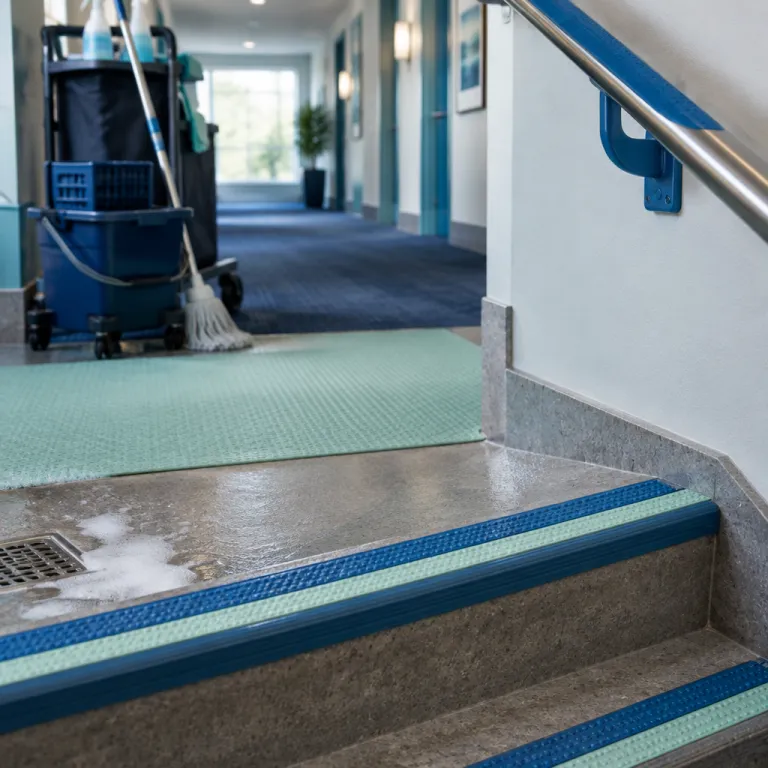
Risk managers should map every internal and external walking surface, from pool decks to back of house work areas, and classify each by slip resistance, drainage and exposure to contaminants. This mapping allows you to prioritise engineering controls such as non slip treatments, contrasting nosings on stairs and improved drainage that directly prevent slips and reduce the likelihood of a serious fall. Linking these projects to capital planning aligns safety with asset management rather than treating slip risks as isolated operational issues.
On large resort grounds, the transition between different walking surfaces often creates hidden hazards that lead to trips, falls and injuries. A short toolbox talk can use photos from your own property to illustrate where a guest might slip or trip, for example at the edge of a pool bar or between a terrace and a restaurant entrance. In one widely cited case study from a coastal resort, incident rates on a pool terrace dropped by more than 20% after the team used toolbox talks to highlight specific uneven joints and then resurfaced the most problematic areas. When you later work on broader property hardening initiatives such as a wildfire season operational checklist, integrating falls safety into that same risk framework reinforces a culture where every physical hazard is managed systematically.
Operational controls in high risk work areas and construction sites
Renovations and seasonal construction work inside operating hotels create a perfect storm for slips, trips and falls if not tightly controlled. Temporary cables, uneven construction site surfaces and improvised detours expose both guests and staff to slip and trip events. A targeted slips, trips and falls toolbox talk for contractors and internal teams should be mandatory at the start of every project phase.
On a construction site within a resort, walking surfaces change daily as materials arrive and work areas shift, which makes being fully aware of surroundings a critical behavioural control. Risk managers should require that each contractor runs daily toolbox talks focused on falls safety, good housekeeping and clear demarcation of pedestrian routes, with photographic evidence stored alongside permits to work. This approach mirrors the discipline used in restaurant loss prevention programmes, where structured briefings and checklists turn abstract safety rules into consistent frontline behaviour.
Back of house zones such as kitchens, loading bays and laundry rooms also present elevated hazards for slips and trips due to wet floors, detergents and clutter. Short toolbox talks before each shift can focus on specific work area risks, such as keeping drains clear, securing mats and maintaining clear access to emergency exits. When these talks are documented and linked to incident data, they help insurers and legal advisers understand that the organisation is not treating falls as random events but as controllable operational risks.
Human factors, cell phones and behavioural safety
Even with engineered walking surfaces and strong procedures, human behaviour remains a decisive factor in many slips, trips and falls. Staff and guests frequently walk while distracted by cell phones, luggage or conversations, which reduces their ability to stay aware of surroundings and react to sudden hazards. A modern slips, trips and falls toolbox talk must therefore address distraction explicitly, not just floor conditions.
Risk managers can work with HR and training teams to integrate behavioural safety principles into regular toolbox talks and broader learning programmes. For example, a short safety talk might ask supervisors to observe how often colleagues walk through work areas while checking cell phones, then use that observation to start a discussion about personal responsibility and peer intervention. When people understand that a single distracted step on a wet walking surface can turn into a serious fall or recordable injury, they are more likely to adjust their habits.
Guest behaviour is harder to control, yet clear communication and subtle design cues can help prevent slips and trips in public zones. Floor markings, contrasting colours and well placed signage near level changes or wet areas can nudge guests to slow down and watch their step without creating a sense of alarm. Security teams who already manage higher risk topics such as when hospitality security guards should be armed can easily incorporate brief messages about falls safety into their patrol routines and guest interactions.
Legal defensibility, insurance expectations and documentation discipline
From a legal and insurance perspective, the way you design and document slips, trips and falls toolbox talks can significantly influence claim outcomes. Courts and insurers look for evidence that management identified hazards, trained staff and monitored compliance before a fall occurred. Well structured toolbox talks, signed attendance sheets and follow up actions create a defensible narrative that the organisation took reasonable steps to prevent slips and injuries.
Legal counsel and specialist advisers should work closely with risk managers to align toolbox talk content with local regulations, case law trends and insurer expectations. For example, if recent jurisprudence in your jurisdiction emphasises lighting levels on external walking surfaces, your toolbox talks and audits should explicitly address illumination checks and corrective actions. When a guest suffers a serious injury after falling on a dimly lit path, contemporaneous records of safety talk sessions and inspection logs can materially reduce liability exposure.
Insurers increasingly differentiate between properties that treat falls as common but manageable risks and those that rely on generic safety slogans. Underwriters may request evidence of regular toolbox talks, incident trend analysis and targeted interventions in high risk work areas before offering favourable terms. By turning slips, trips and falls data into actionable insights and embedding them into your toolbox talk programme, you demonstrate a mature risk culture that merits better conditions and stronger partnerships with your insurance providers.
Embedding slips, trips and falls prevention into enterprise risk strategy
For senior leadership, the real value of a slips, trips and falls toolbox talk lies in how it connects frontline practice with enterprise risk strategy. Every slip, trip or fall represents not only a potential injury but also a reputational event that can spread rapidly through online reviews and social media. Treating falls safety as a board level topic signals to the entire organisation that guest and staff protection is non negotiable.
Risk managers should integrate slip and trip indicators into their broader risk dashboards, alongside security incidents, fire alarms and food safety metrics. When trends show a rise in injuries linked to specific walking surfaces or work areas, leadership can allocate targeted resources such as resurfacing, better drainage or enhanced training to prevent slips and reduce future claims. This data driven approach also allows you to benchmark properties within a portfolio and identify where additional toolbox talks or engineering controls are required.
Hospitality groups that already invest in comprehensive risk programmes for issues such as property hardening or restaurant loss prevention can use the same governance structures for falls toolbox initiatives. Safety committees, internal audits and cross functional working groups provide natural forums to review slips, trips and falls data and refine toolbox talk content. Over time, this integration turns what might seem like a simple safety talk into a powerful lever for cultural change and sustained reduction of injuries from falling in every part of the business.
Key statistics on slips, trips and falls in hospitality
- In many hotel and restaurant operations, slips, trips and falls account for roughly one third of employee injuries, making falls common drivers of workers’ compensation claims according to national occupational safety agencies such as OSHA in the United States and the UK Health and Safety Executive.
- International data from workplace regulators show that falls on the same level, often caused by a slip or trip on wet or contaminated walking surfaces, represent a significant share of lost time incidents in service industries.
- Studies of hospitality environments indicate that good housekeeping practices, such as prompt spill cleanup and clutter control in work areas, can reduce slip and trip incidents by double digit percentages when consistently applied, especially when combined with regular toolbox talks.
- Research on distraction highlights that walking while using cell phones measurably increases the risk of trip and fall events, particularly on uneven or unfamiliar walking surfaces in public spaces.
- Risk management reviews by major insurers frequently find that a structured falls toolbox and regular toolbox talks are associated with lower incident rates compared with sites that rely only on annual training sessions.
FAQ about slips, trips and falls toolbox talks in hospitality
How often should we run slips, trips and falls toolbox talks ?
High exposure teams such as housekeeping, kitchen, maintenance and security should receive a short toolbox talk on slips, trips and falls at least weekly. For lower exposure roles, a focused safety talk every two weeks can be sufficient if supported by strong supervision and good housekeeping standards. The key is to adjust frequency based on incident data, seasonal patterns and specific hazards in each work area.
What topics must a falls toolbox cover for legal defensibility ?
A robust falls toolbox programme should address walking surface conditions, lighting, footwear, cleaning procedures, spill response, use of warning signs and management of temporary hazards such as cables or construction work. Each toolbox talk should link these elements to real incidents on site, showing that the team learns from past injuries and near misses. Documentation of attendance, photos of hazards discussed and follow up actions all strengthen legal defensibility after a fall or trip claim.
How can we involve contractors and temporary staff in our toolbox talks ?
Contracts for construction or maintenance work inside hospitality properties should explicitly require participation in slips, trips and falls toolbox talks before starting work. Site inductions must include a safety talk on walking routes, restricted zones, emergency procedures and expectations for good housekeeping in shared work areas. Keeping signed records for all contractors and temporary staff helps ensure consistent standards and supports insurers and legal advisers during any post incident review.
What role do supervisors play in preventing slips and trips falls ?
Supervisors translate policy into practice by leading toolbox talks, monitoring walking surfaces and enforcing rules on clutter, footwear and use of cell phones in critical zones. Their daily presence in work areas allows them to spot emerging hazards and intervene before a slip, trip or fall occurs. Training supervisors to coach rather than only police behaviour increases engagement and makes falls safety part of normal operational conversations.
How should we measure the effectiveness of our slips, trips and falls programme ?
Risk managers should track incident rates for slips, trips and falls events, severity of injuries, near miss reports and completion rates for toolbox talks across all work areas. Correlating these indicators with changes in walking surfaces, cleaning regimes or construction activity helps identify which controls are most effective. Regular reviews with insurers and specialist advisers can then refine the strategy and align it with evolving best practices in hospitality risk management.