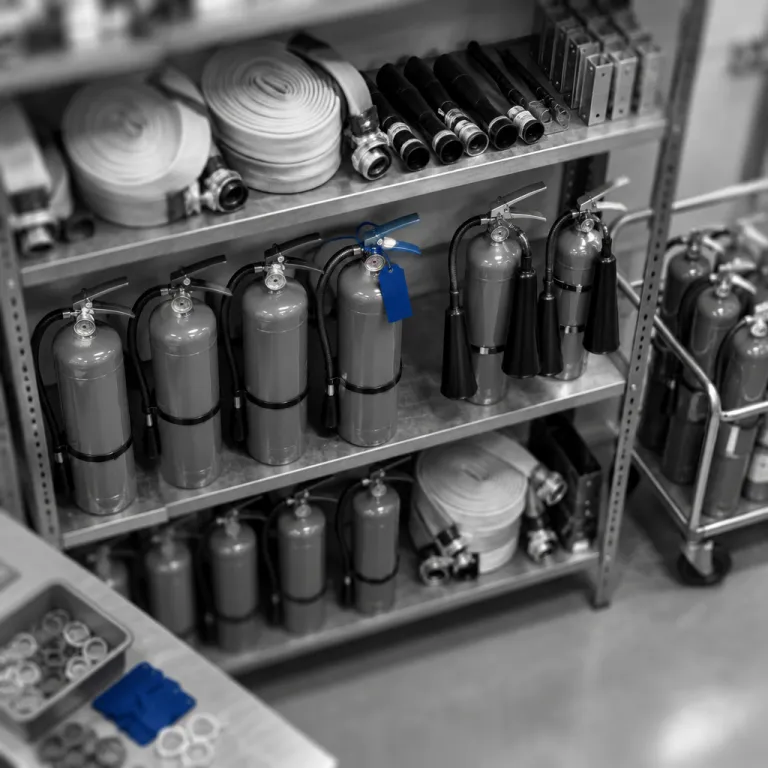
Understanding how long fire extinguishers remain reliable in hospitality assets
Every risk manager in hospitality eventually asks how long a fire extinguisher will remain good for in a complex, multi-site portfolio. A fire extinguisher will never remain reliable forever, because internal components age, seals harden, and the pressure gauge can slowly drift away from the optimal range. For hotels, resorts, and cruise terminals, the real question is how to align extinguisher fire performance with legal duty of care, recognised fire safety standards, and insurer expectations.
In most European jurisdictions, a portable fire extinguisher is considered operational for many years if it receives regular maintenance and passes all mandatory inspections. Water, foam, and powder rechargeable fire models typically remain in service for 10 to 20 years, while a disposable extinguisher is often limited to around 5 to 12 years depending on manufacturer guidance and local codes. Hospitality operators must document each inspection on an inspection tag and link those data points to their central risk register to demonstrate that extinguishers are still ready for use and have not silently expired.
From a legal and assurance perspective, the lifespan of fire extinguishers is not just a technical topic but a governance issue. If an extinguisher expired before an incident and was not replaced, liability exposure increases sharply for senior management and for the property owner. Insurers will find every gap in the inspection trail when assessing coverage after a long fire incident in a guest room, kitchen, or back-of-house area, and will compare the records against applicable standards such as NFPA 10, EN 3, EN 1866, and BS 5306.
Risk managers should therefore treat each fire extinguisher as a regulated safety asset with a clear expiration horizon. The pressure gauge must remain in the green zone, the body must be free of corrosion, and the hose must be intact to ensure fire readiness. When any of these conditions fail, good practice is to replace extinguisher units immediately or recharge them, and to document the time replace decision in both the physical inspection tag and the digital maintenance system so that no extinguisher longer in service is assumed to be safe without evidence.
Lifecycle of disposable and rechargeable extinguishers in hotels and resorts
Understanding how long fire extinguishers remain serviceable starts with their construction and refill strategy. A disposable extinguisher is designed for single use and will be replaced rather than refilled once discharged or when the inspection reveals degradation. By contrast, a rechargeable extinguisher can be refilled and kept in service for longer years if regular maintenance is performed correctly and the cylinder passes periodic pressure tests such as hydrostatic examinations.
In a large resort, rechargeable fire units are usually deployed in back-of-house zones, kitchens, and technical rooms where staff can access them quickly and where servicing logistics are easier. These rechargeable extinguisher models require regular internal inspections, hydrostatic testing, and documented servicing to ensure fire performance remains compliant with recognised standards such as EN 3 or NFPA 10. A disposable extinguisher is more common in guest corridors or small meeting rooms where replacement logistics are simpler and the cost of recharge is not justified.
For both types, the pressure gauge is the most visible indicator of readiness for the operational team. If the needle is outside the green zone, the extinguisher is expired in practical terms even if the formal expiration date on the inspection tag has not yet passed. At that point, the only acceptable options are to recharge or replace extinguisher units and update the asset register so that no location is left without a ready device and so that the inspection history clearly shows why the extinguisher good for use was removed.
To avoid ambiguity, many operators summarise lifecycle expectations in a simple internal reference table that aligns with manufacturer data and standards. For example, stored-pressure water and foam extinguishers may require hydrostatic testing every 5 years and full replacement at 15 to 20 years, while CO2 units often require hydrostatic tests at 10-year intervals and may remain in service for up to 20 years if they pass. Hospitality risk leaders should integrate these type-specific rules into broader loss prevention strategies so that every extinguisher longer in service is still demonstrably compliant.
Regulatory expectations, insurer scrutiny, and legal exposure
For executive teams and legal counsel, the key issue is not only how long fire extinguishers are good for but how regulators and insurers interpret that duration. Fire safety codes such as NFPA 10, EN 3, EN 1866, or BS 5306 typically require regular inspections, documented servicing, and clear evidence that each fire extinguisher is ready for use. When a claim arises, insurers will examine whether the operator followed these rules consistently across all properties and whether any extinguisher expired unnoticed or was left in place after the pressure gauge left the green zone.
Risk managers must therefore maintain a precise schedule of inspections for every fire extinguisher on site. Monthly visual inspections by trained staff should confirm that the pressure gauge is in the green zone, that the inspection tag is legible, and that access is unobstructed. Annual professional inspections and periodic hydrostatic tests—often every 5 years for many stored-pressure models and every 10 years for certain high-pressure cylinders, subject to manufacturer guidance—then provide the deeper assurance that extinguishers have not silently expired or lost pressure.
Legal exposure increases significantly when an extinguisher expired before an incident and management failed to replace it. In one widely cited hotel case, a kitchen fire spread beyond the point of origin because the nearest extinguisher was undercharged and had missed several annual inspections; the court treated the incomplete inspection tag and missing technician reports as evidence of systemic negligence, and the insurer reduced the claim payment on the basis of policy conditions requiring regular maintenance. Courts will ask whether the operator took reasonable steps to ensure fire readiness, including training, documentation, and timely replacement of any disposable extinguisher or rechargeable extinguisher that showed defects.
Insurers also evaluate how long fire extinguishers have been in service when pricing policies or handling renewals. A portfolio where extinguishers are regularly replaced before expiration, where inspection data are centralised, and where regular maintenance is demonstrably embedded in operations will generally obtain better conditions. Conversely, scattered records and visibly aged extinguishers will raise questions about governance and may trigger exclusions, higher deductibles, or more intrusive inspections focused on fire safety controls.
Operationalising inspections and maintenance across multi site hospitality networks
Translating policy into practice requires a disciplined approach to inspection and maintenance. In a typical hotel, the technical team should conduct monthly inspections of every fire extinguisher, checking the pressure gauge, seals, and physical condition. These inspections must be logged on the inspection tag and in a digital maintenance system to create a robust audit trail that shows each extinguisher is still good and ready to use and that no extinguisher expired without a recorded decision to remove or replace it.
For multi-site groups, central risk teams should standardise how long fire extinguishers remain in service before proactive replacement. Some operators choose to replace extinguisher units a few years before the manufacturer’s maximum life to reduce the risk of hidden defects and to avoid a cluster of units reaching expiration at the same time. This strategy also simplifies training, because staff learn a single rule for when to time replace each category of extinguisher and can quickly identify any unit that appears older than the agreed service-life window.
Regular maintenance should be treated as a non-negotiable requirement rather than a discretionary cost. Extinguishers require regular servicing by certified technicians who can verify internal condition, refill rechargeable fire models, and safely dispose of any disposable extinguisher that has reached expiration. When an extinguisher is judged good enough for continued use, the technician updates the inspection tag and the digital record simultaneously so that future inspections will find consistent information and so that auditors can trace exactly how long the extinguisher remained in service.
Remote governance tools can support these processes, especially for geographically dispersed resorts and franchised properties. Central risk teams can use photo evidence of the pressure gauge and inspection tag to ensure fire readiness without being physically on site, while 24/7 monitoring solutions already deployed for security can be leveraged to verify that extinguishers remain accessible. Integrating these checks with broader remote video monitoring governance frameworks helps align fire safety with overall security oversight and long-term resilience.
Linking extinguisher lifespan to incident prevention and business continuity
For hospitality risk leaders, the question how long fire extinguishers are good for is directly tied to incident prevention. A single extinguisher fire intervention in a guest room can prevent a corridor blaze, protect vertical evacuation routes, and avoid a full-scale evacuation. When extinguishers are expired, undercharged, or obstructed, that first line of defence collapses and minor incidents escalate rapidly into long fire events with significant smoke and water damage.
Business continuity planning should therefore integrate detailed assumptions about fire extinguisher performance. Scenario analyses must consider whether staff will find a ready and fully charged extinguisher within a few metres of any likely ignition point, from laundry rooms to rooftop bars. If the pressure gauge is not in the green zone or the inspection tag shows overdue inspections, the scenario’s protective layer is weaker than assumed and recovery times will be longer because the fire safety strategy relied on an extinguisher good in theory but not in practice.
From an assurance perspective, the cost of replacing extinguishers before the theoretical end of their life is usually negligible compared with the potential loss from a long fire event. Premium rooms, conference facilities, and branded restaurants represent high-value revenue streams that depend on uninterrupted operations and guest confidence. Replacing a disposable extinguisher or recharging a rechargeable extinguisher slightly earlier than required is a rational investment in resilience and in visible fire safety standards that guests, regulators, and insurers will all recognise.
Incident investigations repeatedly show that regular maintenance of extinguishers, alarms, and suppression systems is a leading indicator of overall safety culture. Properties where extinguishers require regular servicing and where no extinguisher expired unnoticed tend to have better training, clearer procedures, and faster response times. In such environments, the question is not only how long fire extinguishers last, but how effectively they are integrated into a layered defence strategy that combines detection, suppression, and evacuation.
Practical governance checklist for risk managers and legal teams
Risk managers, insurers, and legal teams need a practical framework to govern how long fire extinguishers are good for across diverse hospitality assets. A first step is to map every fire extinguisher, its type, capacity, and location, then link that inventory to a central maintenance schedule. Each unit should have a visible inspection tag and a corresponding digital record with its installation date, last service, and planned time replace milestone so that no extinguisher longer in service is overlooked or assumed to be compliant without proof.
Second, governance policies should clearly differentiate between disposable and rechargeable models. For each category, define the maximum years in service, the intervals for professional inspections, and the criteria that trigger immediate replacement, such as a damaged hose, missing pin, or pressure gauge outside the green zone. These rules must be simple enough for front-line teams to apply during daily checks while still reflecting the requirements of NFPA 10, EN 3, EN 1866, or BS 5306 where applicable and the specific guidance provided in manufacturer manuals.
Third, legal and insurance teams should align on documentation standards that will stand up to post-incident scrutiny. That means ensuring that every extinguisher good for continued use has a complete inspection history, that any extinguisher expired is removed from service immediately, and that regular maintenance is evidenced by invoices and technician reports. When negotiating policies, sharing this structured data with insurers can support better conditions, fewer exclusions, and clearer understanding of how long extinguishers will remain in service under the agreed fire safety regime.
Finally, training programmes must reinforce that an extinguisher longer in service is not automatically unsafe if maintained, but that complacency is the real enemy. Staff should understand how to read the pressure gauge, how to interpret the inspection tag, and when to escalate concerns to the maintenance team. This human layer is what transforms technical compliance into effective incident prevention and robust hospitality risk governance, ensuring that every fire extinguisher on site is genuinely ready when needed.
Aligning extinguisher strategy with evolving hospitality risk landscapes
Hospitality risk profiles are evolving as properties integrate new technologies, alternative energy sources, and more complex back-of-house operations. These shifts change not only where fires may start but also how long fire extinguishers remain appropriate for emerging risks. Lithium-ion battery storage, rooftop photovoltaics, and open kitchen concepts all require more nuanced fire safety planning and may demand different extinguisher types or capacities.
Risk managers should periodically reassess whether existing extinguishers are still the right type and capacity for each zone. A fire extinguisher that was adequate years ago for a simple storage room may no longer be sufficient once that space hosts electrical equipment or battery charging stations. In such cases, the time replace decision is driven less by chronological expiration and more by functional obsolescence and the need to ensure fire protection is matched to the hazard and that the extinguisher will perform as expected.
Insurers increasingly expect this dynamic approach, especially in high-value urban hotels and large resorts. When underwriting, they will find and question any mismatch between identified hazards and the installed fire extinguishers, including whether rechargeable fire units are positioned where they can be serviced easily. They also look for evidence that extinguishers require regular review whenever the property’s layout or usage changes, and that any obsolete or expired units are promptly replaced so that the documented fire safety strategy remains accurate.
For senior leadership, this means treating extinguisher strategy as part of broader asset and risk management rather than a static compliance checklist. Regular maintenance, timely replacement, and strategic redeployment of extinguishers support both guest safety and brand reputation. Over time, a disciplined approach to how long fire extinguishers are good for becomes a visible marker of operational excellence and mature fire safety governance in the travel and hospitality sector.
Key statistics on fire extinguishers and hospitality safety
- Analyses referencing National Fire Protection Association (NFPA) data indicate that portable fire extinguishers successfully extinguish or control a very high proportion of reported fires in which they are used, often cited at around 90–95 %, highlighting their critical role in incident prevention when devices are maintained correctly and the pressure gauge remains in the green zone.
- NFPA 10, EN 3, and similar standards typically require annual professional inspections and monthly visual checks for extinguishers, and non-compliance with these intervals is a frequent finding in post-incident investigations of hotel and restaurant fires where at least one extinguisher expired or was obstructed.
- Studies of hotel fires in Europe have shown that cooking-related incidents account for more than 40 % of reported fires, which reinforces the need for correctly selected and regularly serviced extinguishers in kitchens and food preparation areas, including appropriate wet chemical or foam units.
- Industry surveys indicate that proactive replacement of extinguishers a few years before the manufacturer’s maximum service life can reduce equipment-related failure rates by more than 50 %, at a marginal increase in overall fire safety budgets compared with the potential cost of a long fire event.
FAQ about how long fire extinguishers are good for in hospitality
How many years can a fire extinguisher stay in service in a hotel?
Most portable extinguishers can remain in service for 10 to 20 years if they receive regular maintenance, pass all required inspections, and show no physical damage. Manufacturers provide specific maximum service lives, and many hospitality operators choose to replace units earlier to reduce failure risk. Local regulations, insurer requirements, and standards such as NFPA 10, EN 3, or BS 5306 may also impose stricter limits for certain property types or extinguisher categories.
How can staff tell if a fire extinguisher is still good and ready to use?
Staff should first check that the pressure gauge needle is in the green zone and that the safety pin and tamper seal are intact. They must also verify that the inspection tag shows up-to-date monthly checks and annual servicing, and that the cylinder has no corrosion, dents, or leaks. If any of these conditions are not met, the extinguisher should be removed from service, marked as expired or defective, and inspected by a qualified technician before it is either recharged or replaced.
When should a disposable extinguisher be replaced in a hospitality property?
A disposable extinguisher should be replaced immediately after any use, when the pressure gauge is outside the green zone, or when it reaches the manufacturer’s stated expiration date. Many hotels also adopt internal rules to replace disposable models after a defined number of years in service, even if they appear functional. This proactive approach simplifies compliance, ensures fire readiness, and reduces the chance of an extinguisher failing during an incident.
Do rechargeable extinguishers require more inspections than disposable models?
Rechargeable extinguishers follow the same basic inspection frequency as disposable units, with monthly visual checks and annual professional servicing. However, they also require periodic internal examinations and hydrostatic testing at intervals defined by standards and manufacturers, which adds complexity. Hospitality operators must plan these additional steps carefully to avoid gaps in coverage when units are temporarily removed for testing and to ensure fire protection remains continuous.
What documentation should risk managers keep about extinguisher lifespan and maintenance?
Risk managers should maintain a complete inventory of all extinguishers, including type, capacity, location, installation date, and serial number. For each unit, they need records of monthly inspections, annual services, any repairs or recharges, and the final replacement date, ideally stored in a central digital system. This documentation supports regulatory compliance, facilitates insurer reviews, and provides critical evidence in the event of a fire-related claim or long fire incident investigation.