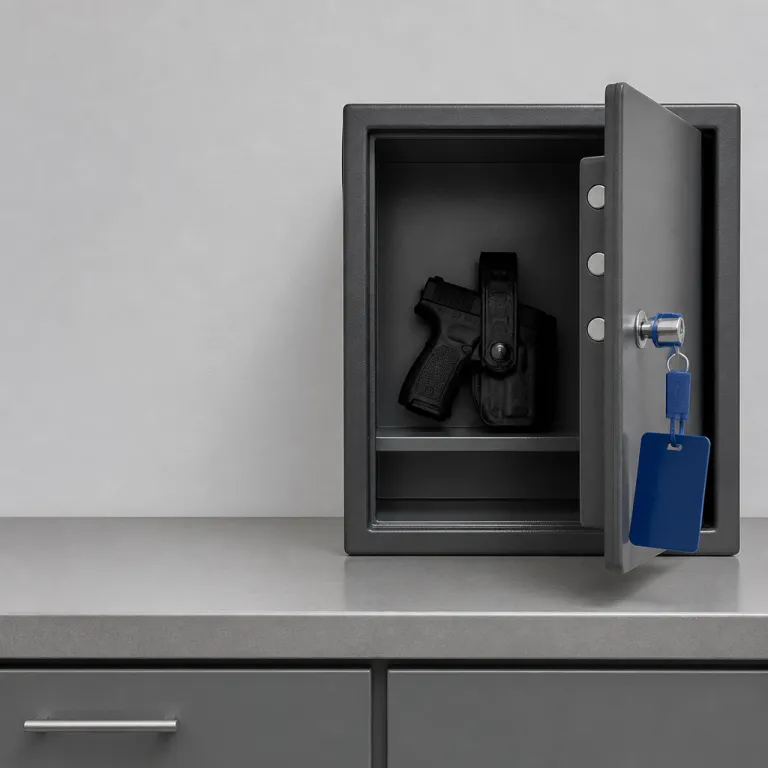
Reframing the question: when do security guards carry guns in hospitality ?
Risk managers in hospitality rarely ask only “do security guards carry guns ?”. They really ask under which conditions a security guard may carry firearms without increasing liability, reputational risk, or guest anxiety. The answer depends on the threat profile, the legal framework, and the maturity level of security governance in each property.
Across the United States, security guards operate under state regulations that strictly define who may be armed, what type of firearm is permitted, and which training requirements must be met. State regulatory agencies such as the California Bureau of Security and Investigative Services (BSIS) or the Texas Department of Public Safety’s Private Security Program license each security officer and often require a separate guard card or equivalent authorization before any guard carry of weapons is allowed. Employers in hotels, resorts, casinos, hospitals, and convention centers must then overlay their own policies on top of these regulations to align armed security with brand standards and insurance expectations.
For hospitality leaders, the real decision is not simply whether guards carry guns, but whether armed guards are proportionate to the foreseeable incidents on site. A luxury urban hotel near a police station with rapid law enforcement response may rely on unarmed security personnel and strong physical security design instead of firearms. By contrast, a large convention hotel attached to a hospital campus, where around half of hospitals now use armed security according to a 2023 LegalClarity survey of hospital security programs, may justify a higher level security posture with selected armed security officers on duty.
Legal frameworks, state regulations, and liability for armed hospitality security
Every decision about whether security guards carry guns in a hotel, resort, or convention center starts with law and state regulations. In the United States, each state defines licensing, firearms training, and the minimum training requirements for both unarmed and armed security personnel. These rules determine which security services providers may deploy armed guards, what type of firearm they may carry, and how often each security officer must requalify.
Hospitality employers must then translate these regulations into internal policies that are defensible in court and acceptable to insurers and legal counsel. Contracts with guard services companies should specify whether the assignment requires unarmed security guards or armed security, which weapons are authorized, and how incidents involving guns will be reported to law enforcement and to the property’s risk management team. Clear clauses on guard carry of firearms, storage of weapons, and cooperation with police investigations are essential to limit vicarious liability for the hotel or travel operator.
Regulatory expectations are tightening, particularly in sensitive environments such as hospital hotels, medical tourism hubs, and large event venues. One industry trend is “increasing arming of hospital security”, combined with “enhanced training requirements” and “stricter regulatory oversight”. For hospitality event operators, this shift reinforces the need to rethink private security for events in hospitality through converged risk governance, where physical security, cyber monitoring, and legal compliance are coordinated rather than managed in silos. For example, some states now require specific armed-guard endorsements on security licenses, mandatory reporting of firearm discharges, and documented use-of-force policies as conditions for license renewal, and insurers increasingly expect written evidence of these controls.
Risk based criteria for deciding when guards should be armed in hotels
For a senior leadership team, the central question is not only do security guards carry guns, but when is an armed guard operationally justified. A structured risk assessment should weigh the probability and impact of violent incidents, the existing physical security measures, and the speed of police response. This assessment must be documented, periodically reviewed, and aligned with the expectations of insurers and specialized legal counsel.
Key criteria include the property’s location, guest profile, and history of incidents involving weapons or serious assaults. A casino resort with high cash volumes, a city center hotel near nightlife districts, or a convention hotel hosting politically sensitive events may require a higher level security posture with selected armed guards. In contrast, a boutique resort in a low crime coastal area may rely on unarmed security officers, strong access control, and remote video monitoring services to manage risk without introducing firearms.
Technology now allows some properties to reduce reliance on armed security by using 24/7 remote video monitoring services that reshape hospitality security governance. When security personnel in a control room can detect threats early and coordinate with on site security guards and local law enforcement, the need for every security guard to carry guns diminishes. Risk managers should compare the long term cost, liability exposure, and guest perception of armed security versus investment in surveillance, analytics, and staff de escalation training. In some jurisdictions, insurers explicitly recognize investments in monitoring and de escalation capabilities as risk mitigations when evaluating whether armed guards are necessary, and may reference these controls in underwriting guidance for armed security in hotels.
Training requirements, competence, and the reality of firearms in hospitality operations
Where hospitality organizations decide that some security guards will be armed, the quality of firearms training becomes the decisive control. State regulations typically require a specific number of hours of firearms training, legal instruction on use of force, and periodic requalification for each armed security officer. However, risk managers should treat these statutory minimums as a floor, not a ceiling, and insist on higher standards for any security personnel who carry guns around guests and staff.
Robust programs combine classroom law instruction, scenario based drills, and stress inoculation exercises that simulate real incidents in hotel corridors, lobbies, and loading docks. Training requirements should cover weapon retention, safe storage of firearms when off duty, coordination with police, and clear rules on when an armed guard may draw or use a firearm. Employers should also verify that every security guard with a guard card for armed duties has been evaluated for psychological fitness, communication skills, and the ability to de escalate conflicts without resorting to weapons.
Operationally, senior management must ensure that armed security officers are integrated into broader safety programs, not treated as isolated tactical assets. That means regular joint exercises with unarmed security guards, front office teams, and engineering personnel, as well as alignment with occupational safety initiatives that address the elevated injury rate among hotel workers. When armed guards, unarmed officers, and line staff train together, the property can respond to threats with a calibrated level of force instead of defaulting to firearms as the first solution. Incident reviews, near-miss analyses, and refresher training should be scheduled and documented so that lessons from real events directly inform future competence requirements and insurer discussions.
Balancing guest perception, brand standards, and law enforcement partnerships
Hospitality brands operate on trust, so the visible presence of armed security guards must be carefully calibrated. Guests may feel reassured by a discreet armed guard in a high risk environment, yet unsettled by overt display of weapons in a family resort. Risk managers must therefore align the level security posture with brand positioning, cultural expectations of international guests, and the property’s communication strategy.
Close cooperation with local law enforcement is essential when security personnel carry firearms on site. Memoranda of understanding with police departments can define how security officers report incidents, how evidence from surveillance systems is shared, and how joint responses to active threats will be coordinated. These agreements also help clarify the boundary between private security services and public police powers, reducing the risk that a security officer is perceived as acting beyond their legal authority.
Brand standards should specify when guards carry guns in public facing areas versus back of house zones, and how weapons are concealed or secured. Some hotel groups prefer that only a small cadre of armed guards or security officers remain out of sight, ready to respond while unarmed security guards handle guest facing duties. Others, particularly in casino or hospital adjacent properties, accept a more visible armed security presence as part of a transparent safety narrative for guests, staff, and regulators. In either model, communication plans should explain in neutral language why certain security measures are in place, without disclosing sensitive tactical details, and should be consistent with any public statements made after security incidents.
Governance, documentation, and insurance implications of armed hospitality security
From an assurance and legal perspective, the governance of armed security in hospitality must be as rigorous as financial controls. Boards and senior executives should approve a written policy that defines when security guards may be armed, which roles are eligible, and how compliance with state regulations will be monitored. This policy should reference the specific guard services contracts, internal procedures for issuing and recovering firearms, and the documentation required after any incident involving weapons.
Insurers increasingly scrutinize whether armed security officers receive training that exceeds minimum state requirements, and whether each armed guard holds a valid guard card or equivalent license. Underwriters may request evidence of firearms training curricula, incident reporting templates, and cooperation protocols with law enforcement before agreeing to cover firearm related liability. Properties that cannot demonstrate robust governance may face higher premiums, exclusions, or pressure to revert to unarmed security personnel combined with enhanced physical security measures.
Effective governance also requires continuous learning from incidents, near misses, and regulatory changes. Security managers should review every case where guards carry guns on duty, every discharge of a firearm, and every complaint about security officers, then adjust procedures accordingly. When this feedback loop is transparent and well documented, hospitality organizations can show regulators, courts, and insurers that armed security is managed as a controlled, audited risk rather than an improvised response to fear. In practice, this means maintaining centralized records of authorizations, training dates, incident outcomes, and corrective actions, and ensuring they are available for inspection and for periodic reviews with insurers and legal counsel.
Key statistics on armed security in sensitive hospitality environments
- Approximately 50 % of hospitals in the United States use armed security according to LegalClarity, which is highly relevant for hotel properties integrated into or adjacent to medical campuses. This figure is based on survey data of hospital security programs and illustrates how common firearms have become in certain healthcare-linked environments.
- State regulatory agencies typically require initial licensing, firearms training, and periodic requalification for armed guards, creating a multi stage compliance timeline that employers must track for every security officer on duty. For example, many states mandate annual classroom refreshers and live-fire qualification for any guard authorized to carry a handgun while working.
- Industry observers report an increasing arming of hospital security, combined with enhanced training requirements and stricter regulatory oversight, which is gradually influencing expectations for high risk hospitality venues such as casino resorts and large convention hotels. Trade publications and professional associations frequently highlight this shift in their benchmarking reports.
- In many retail environments such as shopping malls, most security guards are unarmed, illustrating that the decision to have guards carry guns is context specific and not an automatic requirement for all commercial properties. Mall operators often rely on unarmed patrols, surveillance cameras, and rapid police response instead of routine armed presence.
FAQ about when security guards carry guns in hospitality
Can all security guards carry guns in hotels and resorts ?
No, only those meeting specific state requirements. In practice, this means a security guard must hold the appropriate license, complete mandated firearms training, and be assigned to an armed security role by their employer. Many hospitality properties choose to keep most security personnel unarmed and reserve firearms for a limited number of specially trained officers.
Do security guards need special licenses to carry firearms on hospitality premises ?
Yes, separate from personal concealed carry permits. A guard card or equivalent professional license is usually required for any security officer who will carry guns as part of their duties. Employers must verify that each armed guard remains compliant with state regulations and internal training requirements throughout their employment.
Are armed security guards common in shopping malls and similar hospitality adjacent venues ?
Are armed security guards common in malls ? No, most mall security guards are unarmed. Where armed guards are present, they are usually part of a specialized team working under strict policies and close coordination with law enforcement. Hospitality properties connected to malls often mirror this model, using unarmed security officers for routine duties and reserving firearms for exceptional risk scenarios.
What should hospitality risk managers verify before allowing guards to carry guns ?
Risk managers should verify state regulations before carrying firearms, ensure proper licensing and training, and adhere to employer policies. They should also confirm that guard services contracts clearly define armed and unarmed roles, that firearms training exceeds minimum legal standards, and that incident reporting procedures are aligned with insurer expectations. Regular audits of guard carry authorizations and weapon inventories help maintain control and traceability.
How often must armed security officers in hospitality requalify with their firearm ?
Requalification frequency is set by state regulations and can vary significantly between jurisdictions. Many states require annual or biannual firearms training and qualification for armed guards, and some employers impose even shorter cycles for high risk assignments. Hospitality organizations should track these dates centrally to avoid any lapse in compliance for security personnel who carry guns on site.