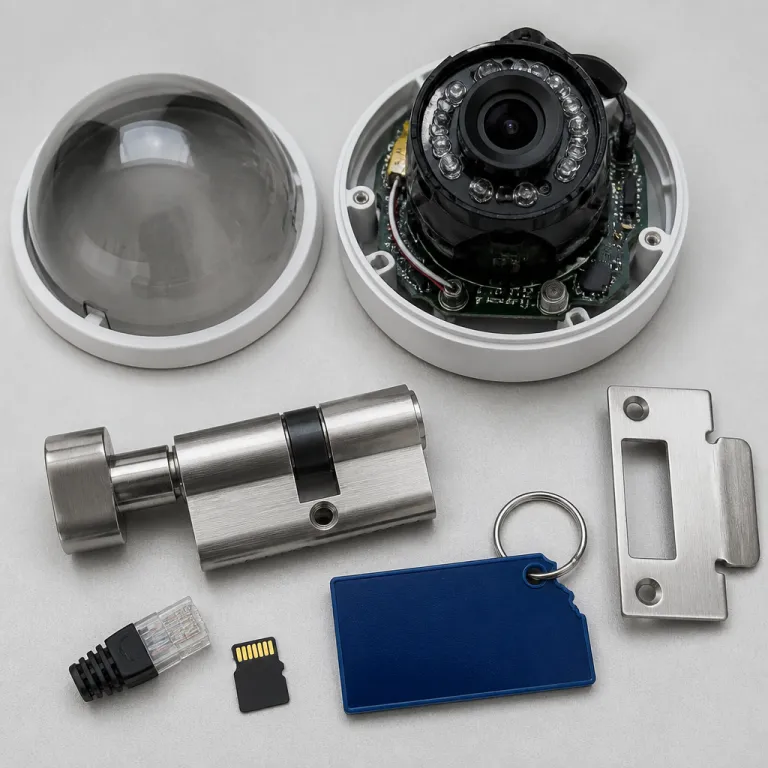
From static guards to 24/7 remote video monitoring in Kansas hospitality
Hospitality risk leaders in Kansas are steadily moving from static security guards to integrated 24/7 remote video monitoring services that align with enterprise risk appetites. This shift reflects a strategic decision to replace fragmented security setups with converged security solutions that connect physical assets, cyber layers, and legal exposure across every property in a Kansas City or statewide portfolio. For executive teams and insurers, the question is no longer whether to use remote monitoring, but how to govern each monitoring service so that it stands up to claims scrutiny and regulatory review.
Remote video monitoring in a hospitality context means continuous oversight of a property via live video feeds supervised by off-site security personnel. When these video surveillance feeds are combined with AI analytics and structured alarm monitoring workflows, they become a risk management instrument rather than a simple city security expense line. For risk managers, the ability to orchestrate security cameras, access control, and alarm systems into one coherent system is now central to both guest safety and liability containment.
Specialized providers such as SecureVision247, Virtual Guard, and Defender Security Trailers already deliver 24/7 monitoring services to hotels, resorts, and mixed-use hospitality businesses across Kansas, as illustrated in their published hospitality case studies and regional deployment summaries. Their security services rely on high-resolution cameras, resilient camera systems, and cloud-based security platforms that can be supervised from hardened monitoring centers far from the city where the incident occurs. For travel and hospitality businesses, this model offers a route to peace of mind while reducing the direct cost of on-site security guards and the indirect cost of claims, a pattern echoed in Security Industry Association and ASIS International briefings on remote guarding and technology-led protection programs.
Designing a converged security architecture for multi property hospitality portfolios
For a hotel group operating several properties across Kansas, the core challenge is designing a converged security architecture that treats every site as part of one controlled system. A modern architecture links on-site security cameras, CCTV monitoring platforms, and access control devices with centralized remote monitoring so that every alarm is processed under the same risk rules. This approach allows risk managers to benchmark incident rates between properties and to align insurance conditions with measurable security performance.
In practice, this means mapping each property by risk zone and defining which camera systems require live CCTV coverage and which can rely on event-based video monitoring. Public areas, loading docks, and parking structures in Kansas City typically justify continuous video surveillance with real-time escalation to a monitoring service, while low-risk back office corridors may only need motion-triggered video systems. For insurers and legal teams, this zoning logic is essential evidence that security solutions are proportionate and not merely cosmetic.
When hospitality businesses host large events, the same converged architecture must integrate temporary deployments such as mobile camera systems or Defender Security Trailers. Guidance on how to hire security for an event in hospitality without compromising guest experience becomes far more effective when the base layer of remote surveillance and alarm monitoring is already standardized. Underwriters can then evaluate the incremental risk of each event, rather than reassessing the entire security camera estate every time a ballroom is booked.
AI, proactive video analytics, and the legal standard of care
AI-powered proactive video analytics are changing how Kansas hospitality businesses define reasonable security, which directly affects legal exposure and insurance wording. When a monitoring service can analyze video in real time and flag anomalies before they escalate, the standard of care for high-risk properties inevitably rises. Legal counsel and risk managers must therefore understand not only what the technology can provide, but also how its limitations are documented and disclosed.
Virtual Guard and similar providers use AI to scan live video feeds for unusual patterns, from loitering near staff entrances to forced access control attempts at guest-only doors. Their own explanation is explicit: “AI analyzes video feeds to detect unusual activities, reducing false alarms and improving response times.” For insurers, this capability supports differentiated premiums for properties that integrate proactive video analytics into their security systems and can show a measurable reduction in nuisance alarm traffic.
However, AI-driven remote monitoring also raises questions about evidence handling, bias, and auditability when incidents occur in a busy city environment. Risk managers should require that every security camera and CCTV monitoring rule set is documented, version controlled, and aligned with internal policies on privacy and data retention. Resources on rethinking event security for hospitality through converged risk governance are particularly relevant when extending these AI-based security services from fixed properties to temporary venues and off-site activations.
Cost, ROI, and insurance implications of remote video monitoring in Kansas
For executive leadership and CFOs, the business case for 24/7 remote video monitoring services in Kansas rests on both direct cost savings and indirect risk benefits. Providers such as SecureVision247 report that remote monitoring can reduce security costs by up to 70% compared with traditional on-site security guards, especially for dispersed portfolios with several mid-scale properties, although actual savings vary by layout, staffing model, and incident profile. These figures are broadly consistent with directional benchmarks from the Security Industry Association and ASIS International, which document similar ranges when guard-heavy models are replaced with technology-led programs. When this cost reduction is combined with lower incident frequency and faster alarm monitoring response, the overall ROI becomes compelling for insurers and asset owners alike.
Remote surveillance also changes how insurers model loss scenarios for hospitality businesses in Kansas City and smaller towns across the state. A property equipped with integrated security cameras, structured alarm monitoring, and documented monitoring services can often negotiate more favorable deductibles or conditions, because the probability of unobserved incidents is materially lower. Underwriters pay close attention to whether every security system is supported by a resilient monitoring service that can maintain live oversight even during local disruptions.
For risk managers, the key is to translate technical capabilities into contractual language that clearly allocates responsibilities between the business and the security services provider. Service level agreements should specify maximum response times for real-time interventions, such as a target of 30 seconds to review a verified alarm and 90 seconds to initiate escalation, along with defined paths to local law enforcement and property management. They should also set minimum data retention periods, for example 30–90 days of routine video storage and longer retention for flagged incidents, and reporting formats that support both claims handling and internal risk dashboards. When these elements are aligned, 24/7 remote monitoring becomes not just a security solution, but a core component of the organization’s overall risk financing strategy.
Operationalizing remote monitoring across front office, back of house, and cyber layers
Implementing 24/7 remote video monitoring services in Kansas hospitality properties requires more than installing cameras and connecting them to a central system. Each business must define how front office teams, back-of-house staff, and corporate security functions interact with the monitoring service during both routine operations and crises. Without clear playbooks, even the most advanced security systems can fail at the moment of truth.
At the front line, reception and duty managers need simple procedures for coordinating with remote monitoring operators when a live video alert is raised. For example, if CCTV monitoring detects suspicious behavior near a staff-only entrance, the monitoring service should be able to contact a named manager, trigger a local alarm if appropriate, and log every action in a format that supports later legal review. In parallel, back-of-house teams must understand how access control events, such as repeated failed badge attempts, are correlated with video surveillance to prevent internal fraud or unauthorized contractor access.
Cybersecurity teams also play a critical role, because every security camera, CCTV recorder, and remote monitoring endpoint is now part of the attack surface. Risk managers should require regular penetration testing of camera systems, strict network segmentation for security devices, and clear incident response plans if a video monitoring platform is compromised. Guidance on panic button compliance, such as the analysis of Washington’s expanded law and its remaining compliance gaps available through specialist panic button compliance insights, illustrates how physical safety mandates increasingly intersect with connected security systems.
From city security to guest trust : governance, audits, and evidence
For hospitality brands operating in Kansas City and regional hubs, the visible presence of security cameras and CCTV monitoring can reassure guests, but trust ultimately depends on governance and transparency. Guests and staff expect that any security service collecting video will handle their data responsibly, respond quickly to threats, and support fair investigations when incidents occur. Risk managers must therefore treat remote monitoring not only as a technical asset, but as a governance obligation that spans legal, HR, and brand functions.
Regular audits of monitoring services should verify that every alarm monitoring workflow functions as designed, that access control logs match video records, and that retention policies comply with both internal rules and local law. When incidents occur on a property, the ability to reconstruct a precise timeline from video monitoring, alarm data, and staff reports is often decisive in liability disputes and insurance negotiations. This is particularly true in complex cases involving multiple businesses within a mixed-use city property, where shared security systems can blur responsibilities.
Ultimately, 24/7 remote video monitoring services in Kansas offer hospitality operators a path to peace of mind, but only when embedded in a mature risk framework. By aligning camera systems, security guards on site, and remote monitoring centers under a single governance model, executive leaders can show that city security is not an afterthought but a core part of guest safety and brand protection. For insurers, legal advisers, and specialized consulting firms, such alignment provides the evidential backbone needed to support defensible decisions when claims and disputes inevitably arise.
Key figures on remote video monitoring and hospitality risk
- Remote monitoring services can reduce direct security costs by up to 70% compared with traditional on-site guards, according to data published by SecureVision247 for hospitality and commercial properties and echoed in Security Industry Association briefings on remote guarding, though individual Kansas hotel results depend on baseline staffing and incident levels.
- Average response times from remote monitoring centers to a verified alarm can be as low as 30 seconds, based on figures reported by Remote Security Guard Services for properties using integrated video surveillance and alarm monitoring and consistent with ASIS International case study benchmarks for technology-enabled guarding.
- Mobile security trailers such as Defender Security Trailers extend live video coverage to temporary or remote hospitality sites, enabling continuous surveillance where permanent infrastructure is not viable.
- AI-enabled video monitoring is increasingly adopted by hospitality businesses seeking to reduce false alarms and improve incident detection, reflecting a broader shift from reactive to proactive video analytics in security systems.
- Partnerships between remote monitoring providers, local law enforcement, and security technology vendors are now a standard feature of advanced security solutions for multi-property hospitality portfolios in Kansas, supporting coordinated responses and more robust incident documentation.
FAQ : remote video monitoring for hospitality in Kansas
What is remote video monitoring in a hospitality context ?
Remote video monitoring in hospitality means that security cameras installed across a property send live video feeds to an off-site monitoring center, where trained personnel supervise activity, verify alarms, and coordinate responses with on-site teams or law enforcement. This model allows hotels and resorts in Kansas to maintain continuous surveillance without staffing every location with full-time security guards. It also creates a centralized record of incidents that supports legal defense and insurance claims.
How does AI improve security for hotels using remote monitoring services ?
AI tools integrated into video surveillance systems analyze live feeds to detect unusual patterns such as loitering, perimeter breaches, or forced access control attempts. As stated by one provider, “AI analyzes video feeds to detect unusual activities, reducing false alarms and improving response times.” For hospitality risk managers, this means fewer nuisance alarms, faster escalation of genuine threats, and better use of both on-site and remote security resources.
Are 24/7 remote video monitoring services in Kansas cost effective for mid scale hotels ?
For many mid-scale hotels and limited-service properties, 24/7 remote monitoring can be more cost effective than maintaining a full on-site guard presence, especially during low occupancy periods. Providers such as SecureVision247 report potential cost reductions of up to 70% compared with traditional guarding models, while still providing continuous oversight. The exact ROI depends on property layout, incident history, and how well the monitoring service is integrated with existing alarm and access control systems.
What should insurers and juristes look for in a remote monitoring contract ?
Insurers and legal teams should examine service level agreements for clear definitions of response times, escalation procedures, and evidence handling obligations. Contracts should specify how long video and alarm data are retained, who can access them, and how CCTV monitoring logs are shared during claims or litigation. They should also confirm that the provider’s security systems meet relevant technical standards and that responsibilities between the business and the monitoring service are unambiguous.
How does remote monitoring interact with local law enforcement in Kansas ?
Most advanced monitoring services maintain established protocols with local law enforcement agencies across Kansas, enabling rapid dispatch when a verified incident occurs. When remote operators confirm a threat through live video and alarm data, they can provide precise information on location, suspect behavior, and risk level, which improves response quality. For hospitality businesses, documenting these protocols and outcomes strengthens both their risk management narrative and their position in any subsequent legal or insurance proceedings.