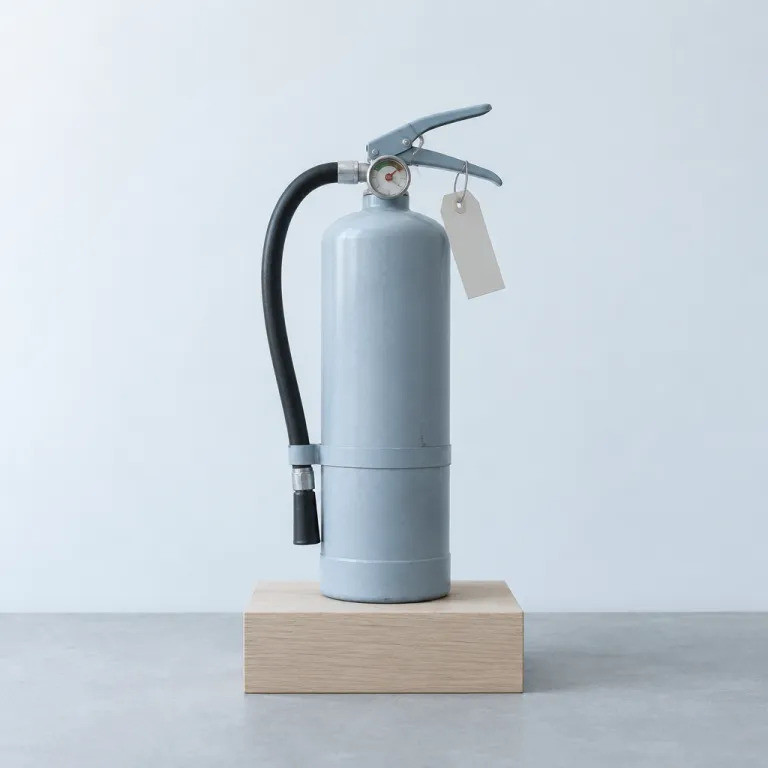
Understanding how long a fire extinguisher lasts in hospitality assets
For a hotel or resort, the question “how long does a fire extinguisher last” is never theoretical. The extinguisher lifespan directly shapes fire protection strategy, insurance conditions, and legal exposure for every hospitality unit. When a single expired fire extinguisher is found after an incident, liability arguments become very short and very sharp.
In most hospitality properties, portable fire extinguishers remain in service between 5 and 15 years, but only if maintenance is rigorous and the units stay correctly pressurized. Risk managers must distinguish between disposable fire extinguisher models, which you replace entirely after use or at end of life, and rechargeable fire extinguishers, which can be refilled and re certified after a long fire event or accidental discharge. The real question is not only how long extinguishers last in theory, but how long each extinguisher unit remains legally defensible in front of an insurer or a court.
Every fire extinguisher is a pressurized vessel that slowly loses pressure over the years, especially in harsh back of house environments. In hospitality, chemical extinguishers are often exposed to heat, humidity, and cleaning agents that accelerate corrosion and compromise safety. People do not always see the risk, yet an extinguisher expired in a stairwell can turn a manageable fire into a catastrophic claim.
Regulatory expectations, insurer scrutiny, and the reality of expired units
Regulators and insurers rarely argue about how long a fire extinguisher lasts on paper; they focus on documented inspection and maintenance. In many jurisdictions, extinguishers require at least an annual professional inspection, with detailed records that show pressure readings, visual checks, and any corrective actions. When extinguishers expire without clear documentation, the gap becomes a powerful argument for insurers to limit coverage and for plaintiffs to allege negligence.
For hospitality risk managers, the key is to treat every fire extinguisher as a regulated safety device, not a decorative red cylinder. Each pressurized unit must show a readable label, a functional pressure gauge in the green zone, and a visible inspection tag covering several extinguisher years of checks. When an extinguisher expired date is exceeded or the gauge shows low pressure, the unit should be removed from service immediately and either replaced or sent for rechargeable maintenance.
During emergency response audits, I often see traditional fire extinguishers hidden behind furniture, blocked by luggage, or mounted too high for quick access. Case studies of large hotel evacuations, such as a documented nine minute evacuation of 200 guests described in a detailed fire drill protocol, show that accessible extinguishers and trained staff dramatically reduce escalation. In litigation, investigators will photograph every fire extinguisher location, every inspection tag, and every expired fire label to reconstruct whether extinguishers last as long as the operator claims.
Technical lifespan of dry chemical extinguishers in hotels and resorts
Most hospitality properties rely on dry chemical fire extinguishers because they are versatile, effective, and relatively economical. These dry chemical units typically have a manufacturer stated extinguisher lifespan of around 10 to 12 years, assuming correct storage and scheduled maintenance. However, how long a fire extinguisher lasts in a tropical beachfront resort is rarely the same as in a climate controlled city business hotel.
Dry chemical extinguishers are pressurized with nitrogen or air, and the internal pressure gradually decreases as seals age and micro leaks appear. In kitchens, pool areas, and spa zones, chemical extinguishers face steam, salt, and cleaning chemicals that corrode the cylinder and fittings, shortening the safe period before you must replace the unit. Risk managers should therefore treat the manufacturer’s maximum extinguisher years as an upper limit, not a target, and adjust replacement cycles based on environmental stress.
From a fire safety and fire protection perspective, the most robust approach is to define a conservative internal policy that goes beyond code minimums. For example, some hotel groups decide that rechargeable extinguishers last no more than eight years in high humidity zones, regardless of the label, and that disposable units are removed even earlier. Advanced hotel fire safety guidelines and protection strategies, such as those used in leading international chains, integrate these shorter cycles into capital planning so that no extinguisher expired label ever appears during an audit.
Rechargeable versus disposable extinguishers as a risk and legal decision
Choosing between rechargeable fire extinguishers and disposable models is not only a procurement question; it is a strategic risk decision. Rechargeable extinguishers require more structured maintenance, but they offer better lifecycle control and clearer documentation for insurers and juristes. Disposable units seem simple, yet they can create blind spots when people do not track replacement dates with the same rigor as annual professional servicing.
Rechargeable extinguishers last through multiple refills if the cylinder passes periodic pressure tests and internal inspections. Each recharge event generates a maintenance record, which strengthens the legal defensibility of your fire safety program and shows that extinguishers require continuous attention. In contrast, when a disposable fire extinguisher is used once or shows low pressure on the gauge, the only safe option is to replace the entire unit, and missing that step can leave an expired fire device hanging on the wall.
For directions générales and assureurs, the optimal mix often combines rechargeable chemical extinguishers in high risk technical areas with disposable units in low risk guest corridors. A physical security and risk consultant can help model total cost of ownership, including the impact of extinguisher lifespan on capital expenditure and insurance premiums. When you align your choice of fire extinguishers with your broader hospitality risk, assurance, and legal strategy, you transform a simple equipment decision into a structured protection policy.
Operational controls, inspections, and documentation that stand up in court
In a serious hotel fire, investigators will reconstruct the entire chain of fire protection decisions, from procurement to daily checks. They will ask how long does a fire extinguisher last in your internal policy, and whether your inspection regime matches that declared standard. Any gap between written procedures and actual extinguisher maintenance quickly becomes a liability issue.
Every hospitality property should operate a layered inspection system that combines daily visual checks by staff with monthly supervisory reviews and annual professional servicing. Daily checks confirm that each fire extinguisher is present, unobstructed, and shows a pressure gauge in the green zone, while monthly reviews verify tags, seals, and physical condition of all units. The annual professional inspection, carried out by a certified contractor, should include weighing, internal checks for dry chemical caking, and pressure testing where required by local code.
From a legal standpoint, the strength of your defence often depends on the quality of your documentation rather than on how long extinguishers last in theory. Digital logs that record each extinguisher unit, its location, its agent type, and every inspection event create a clear narrative of due diligence. When an insurer or court sees that no extinguisher expired unnoticed and that chemical extinguishers were replaced ahead of schedule, the argument for robust fire safety becomes significantly stronger.
Integrating extinguisher lifespan into holistic emergency response planning
Fire extinguishers are only one layer in a hotel’s emergency response, yet their reliability underpins the entire fire safety architecture. When risk managers ask how long does a fire extinguisher last, they should immediately connect the answer to evacuation plans, staff training, and insurer expectations. A perfectly written emergency plan fails if the first staff member to reach a long fire corridor finds an extinguisher expired or depressurized.
Effective emergency response planning starts with a precise inventory of all fire extinguishers, their agent types, and their extinguisher years in service. This inventory should be mapped against fire scenarios in guest rooms, kitchens, laundry areas, parking levels, and back of house technical spaces, ensuring that the right unit is within reach of each likely ignition source. Training must then teach staff not only how to operate a fire extinguisher, but also how to read the pressure gauge, identify disposable versus rechargeable units, and escalate quickly when extinguishers require replacement.
For assureurs and juristes, the most reassuring sign is when people do not treat extinguishers as static décor but as dynamic safety assets with a defined lifecycle. When rechargeable extinguishers last only as long as documented tests allow, and when chemical extinguishers are proactively replaced before corrosion appears, the entire hospitality portfolio shows a culture of prevention. That culture often translates into better insurance terms, stronger legal resilience, and a more credible story when a serious fire tests the system.
Key statistics on fire extinguishers and hospitality risk
- According to the National Fire Protection Association’s guidance on portable extinguishers, properly selected and maintained units play a critical role in controlling early stage fires, which is particularly relevant for hotel incidents where rapid response is essential.
- NFPA 10 specifies that many dry chemical fire extinguishers require a hydrostatic pressure test at 12 year intervals, which effectively sets a maximum safe service duration for numerous pressurized units in hospitality environments.
- Data from the U.S. Fire Administration indicate that hotels and motels experience thousands of structure fires annually, with cooking equipment involved in a large share of these events, underlining the need for correctly maintained chemical extinguishers in kitchen areas.
- Industry surveys and compliance audits frequently reveal at least one extinguisher expired or obstructed during random inspections, a pattern that, if mirrored in hotels, would represent a substantial hidden liability for risk managers and insurers.
FAQ about how long a fire extinguisher lasts in hospitality
How many years does a typical hotel fire extinguisher last ?
Most dry chemical fire extinguishers in hotels have a manufacturer stated lifespan of around 10 to 12 years, but environmental conditions and local regulations may require earlier replacement. Risk managers often adopt shorter internal cycles, especially in humid or corrosive areas. The practical rule is that extinguishers last only as long as inspections and pressure tests confirm they remain safe.
How often should hotel fire extinguishers be inspected ?
Portable extinguishers require daily visual checks by staff, monthly documented inspections, and at least an annual professional service by a certified technician. Some jurisdictions also mandate more frequent checks in high risk zones such as commercial kitchens. Insurers generally expect hotels to meet or exceed these inspection intervals.
When must a hotel replace a fire extinguisher instead of recharging it ?
A hotel should replace a fire extinguisher when the cylinder is damaged, corroded, or fails a pressure test, or when the unit is a disposable model that has been discharged. Replacement is also necessary when the extinguisher is older than the maximum service life specified by the manufacturer or local code. In any doubt, replacing the unit is safer than attempting to recharge it.
Do expired fire extinguishers affect insurance coverage after an incident ?
Expired or poorly maintained extinguishers can significantly complicate insurance claims after a hotel fire. Insurers may argue that the operator failed to maintain reasonable fire protection standards, potentially reducing payouts or contesting liability. Detailed maintenance records and timely replacement of expired units are therefore essential for preserving coverage.
Are rechargeable extinguishers always better than disposable models for hotels ?
Rechargeable extinguishers offer stronger documentation and can be more economical over time, especially in large properties with frequent small incidents or drills. However, they require disciplined maintenance and reliable service partners. Disposable units can be appropriate in low risk areas if replacement schedules are strictly enforced and clearly documented.