Why hotel service robot liability is different when you lease the machine
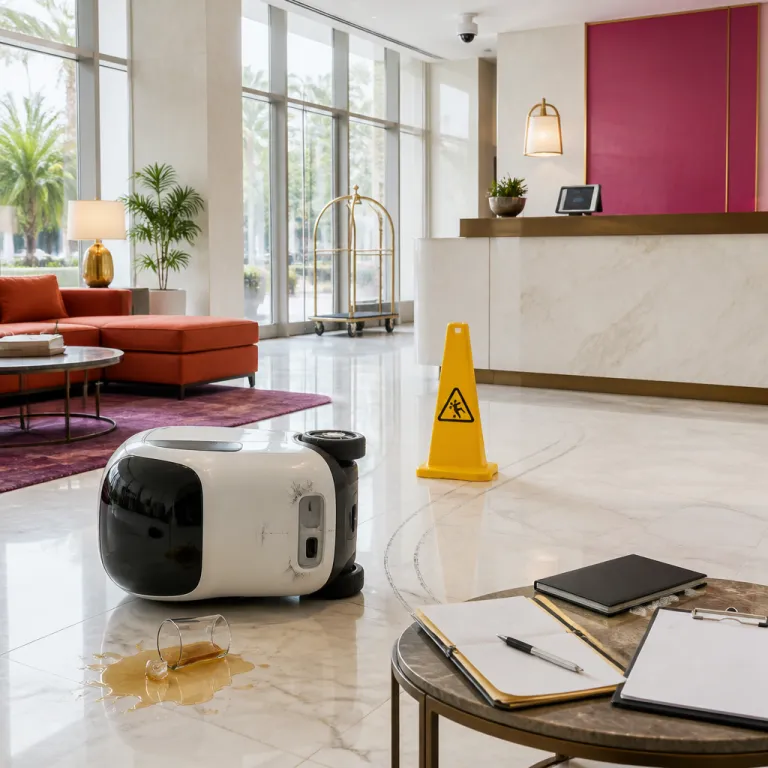
Hotel service robot liability looks deceptively simple until a leased lobby robot injures a guest. In one widely discussed training scenario used by hospitality insurers, a personal injury incident involving a lobby robot shows how quickly responsibility jumps from manufacturer to operator once the robot enters daily hotel operations. For risk managers and directions générales, the shift from owning equipment to Robot as a Service contracts quietly rewrites the rights and responsibilities landscape around robots in hospitality.
Across the hospitality industry, service robots now handle delivery, cleaning and basic room service in a growing share of hotels, while RaaS subscriptions from providers such as Pudu, Keenon or Bear Robotics turn robotics into an operational expense rather than a capital purchase. Industry surveys from hotel technology associations and robotics vendors regularly report adoption rates in the tens of percent, but methodologies vary and figures should be treated as indicative rather than definitive. That financial elegance hides a harder legal truth: premises liability usually attaches to the hotel as operator, even when the robot is leased, remotely updated and heavily marketed as autonomous artificial intelligence. When a robot collides with a human guest in a crowded front desk area, the first defendant in most reported disputes and insurer case studies is still the hotel, not the robotics vendor.
Insurer bulletins and safety datasets on robot-related injuries in hospitality, while still limited, confirm that this is no longer a theoretical risk for the hotel industry. One anonymised case file described by a major global insurer involved a leased lobby robot deployed at 08:00, an incident at 10:30 and emergency services on site by 11:00, with hotel management, the robot manufacturer and the injured guest all represented by separate legal teams. That timeline illustrates how little time a general manager has to move from operational response to legal containment once a service robot incident escalates into a formal report and potential litigation.
Premises liability versus product liability in RaaS hotel operations
When a leased delivery robot injures a guest, two liability regimes collide inside the same lobby. Premises liability focuses on the hotel as the human operator of the space, while product liability targets the robot manufacturer or integrator that designed, built or programmed the service robot. In practice, hotel service robot liability often starts as a premises claim because the incident happens on hotel property under hotel control, even if the robot deployment is managed under a RaaS subscription.
Legal counsel routinely reminds hospitality robotics clients that “Liability typically falls on the hotel as the operator.” That single sentence should shape how risk managers read every indemnity clause, especially when vendors position humanoid robots as almost independent actors roaming service hotels and mixed use properties. A guest can still sue the robot manufacturer, because “Yes, if a product defect caused the injury,” but the hotel will rarely avoid being named, and insurers will examine whether hotel operations met their own duty of care around supervision, maintenance and staff training.
For juristes and assureurs, the hard question is not whether robots or humans are smarter, but who controlled what at the time of the incident. If the delivery robots were operating in a poorly lit corridor, with no updated signage and no operational risk assessment, premises liability arguments strengthen regardless of any software bug. Conversely, if maintenance records, software update logs and incident case studies show a clear product defect, product liability claims against the robotics vendor or integrator gain weight and may trigger separate coverage and subrogation strategies, similar to complex force majeure disputes in hotel management agreements described in specialised analyses of contract stress tests.
The hidden liability allocation gap in standard RaaS contracts
Most standard RaaS contracts in hospitality read like technology subscriptions, not like shared risk instruments for semi autonomous machines moving among guests. Vendors typically present a neat monthly fee for each robot, sometimes between a few hundred and a thousand dollars, covering hardware, software, remote monitoring and periodic cleaning or maintenance visits. Buried deeper in the document, however, are sweeping disclaimers that push hotel service robot liability back onto the hotel, even when the robot’s artificial intelligence stack or navigation system misbehaves.
In many templates, the RaaS provider disclaims responsibility for any injury to a guest, staff member or third party arising from hotel operations, while limiting its own exposure to the subscription fees paid over a short period of time. A typical clause reads: “Vendor’s aggregate liability for any claim arising out of or relating to the Services shall not exceed the fees paid by Customer in the three (3) months preceding the event giving rise to such claim.” The hotel, by contrast, accepts broad obligations to supervise the robot, maintain safe premises and indemnify the vendor against most third party claims, including some that arguably belong under product liability. That imbalance becomes acute in service hotels where robots from Pudu, Keenon or Bear Robotics operate in tight spaces, share elevators with humans and handle late night room service deliveries without direct human service oversight.
RaaS contracts also tend to under specify data handling, software update liability and integration risks with other hotel systems, even as artificial intelligence features expand. When a human robot interaction goes wrong because of a faulty update pushed during peak time, the contract may treat it as an operational issue for the hotel, not a vendor error. For countryside inns and smaller properties, which often rely on generic templates similar to those critiqued in legal safeguards briefings for rural hospitality, that allocation gap can leave owners personally exposed if a serious injury or property damage claim exceeds insurance limits.
Insurance coverage gaps when robots share space with guests and staff
General liability policies in the hospitality industry were not written with autonomous delivery robots weaving through lobbies and corridors. Under traditional wording, a slip and fall near the front desk or a housekeeping accident in a guest corridor fits comfortably within premises liability coverage. A collision between a leased service robot and a guest using mobility aids, caused by a software glitch or sensor failure, sits in a grey zone that many insurers and brokers are still mapping.
Some policies treat robots as mobile equipment owned or operated by the hotel, which can work when the hotel owns the robot but becomes awkward when the unit is leased under a RaaS model and remotely managed by the vendor. Other wordings exclude losses arising from design defects, programming errors or failures in artificial intelligence components, pushing those claims toward product liability coverage that the hotel does not control. As one senior hospitality underwriter noted in a 2023 internal bulletin, “We will look very closely at how the robot is controlled, maintained and updated before confirming coverage for any injury.” The dataset’s reminder that “What precautions should hotels take with robots? Implement safety protocols and regular maintenance.” should be read alongside policy conditions that require documented inspections, training and incident reporting.
Risk managers should sit with their insurers and map specific scenarios: a Pudu delivery robot striking a child in a breakfast area, a Keenon unit blocking an emergency exit during an evacuation, or a Bear Robotics server colliding with a tray and causing burns. For each case, the team should identify which coverage responds, what sublimits apply and whether any robotics or artificial intelligence exclusions might bite. That exercise should extend beyond flagship urban hotels to regional properties and independent inns, where tailored risk, assurance and legal safeguards for the modern countryside inn are increasingly relevant as robotics vendors push into secondary markets.
Designing contracts and risk assessments that match real hotel operations
Hotel service robot liability becomes manageable only when contracts, insurance and operations are aligned with how robots actually move through the building. A proper risk assessment starts with a physical walk through of all routes used by service robots, from loading dock to guest room corridors, identifying pinch points, blind corners, slopes and shared spaces with vulnerable guests. That operational mapping should then feed into written protocols, staff training and specific clauses in RaaS agreements that allocate responsibility for navigation, software updates and emergency overrides.
Key clauses to negotiate include mutual indemnification, clear maintenance obligations, response times for critical repairs and explicit vendor liability for defective software or unsafe robot deployment decisions. For example, an indemnity provision might state: “Vendor shall indemnify and hold harmless Hotel from any third-party claim to the extent arising from a defect in the Robot’s hardware, firmware or software, including remote updates performed by Vendor.” Data handling provisions must address not only privacy but also the integrity of logs and telemetry that will later support incident investigations, case studies and insurer reviews. Hotels should also require vendors to maintain adequate product liability and cyber coverage, with certificates shared and aligned to the hotel’s own limits, mirroring the structured approach used in safe hotels act playbooks that dissect statutory duty of care for urban properties.
During tabletop exercises, general managers should rehearse scenarios where a robot injures a guest at peak time, combining human service recovery with technical containment and legal notification steps. That playbook should specify who shuts down the robot, who preserves surveillance footage and maintenance records, and who contacts legal counsel, insurers and the robot manufacturer. In a sector where industry surveys suggest that a majority of hotels already use some form of artificial intelligence for guest communication, the next competitive edge will belong to the hospitality industry players whose contracts, training and incident response protocols treat robots as part of the safety critical infrastructure, not as harmless gadgets.
FAQ on hotel service robot liability in RaaS models
Who is usually liable if a hotel robot injures a guest ?
Liability usually starts with the hotel as premises operator, because the incident occurs in a space the hotel controls and manages. The injured guest can also pursue the robot manufacturer or integrator if there is evidence of a design or manufacturing defect. Courts and insurers then allocate responsibility between premises liability and product liability based on maintenance records, software logs and the specific facts.
Can a guest sue the robot manufacturer directly ?
A guest can bring a claim directly against the robot manufacturer when there is a plausible allegation that a defect in design, manufacturing or software caused the injury. That route falls under product liability law, which focuses on whether the robot was unreasonably dangerous when used as intended. In many cases, both the hotel and the manufacturer are named, and the litigation process sorts out their respective shares of fault.
What precautions should hotels take before deploying service robots ?
Hotels should conduct a structured risk assessment of all routes and spaces where robots will operate, then adapt signage, lighting and traffic patterns accordingly. They must implement safety protocols, regular maintenance, staff training and incident reporting procedures that match the specific robots and RaaS contracts in use. Those measures both reduce the likelihood of harm and strengthen the hotel’s legal position if an incident occurs.
Do standard general liability policies cover robot related incidents ?
Many general liability policies will respond to bodily injury or property damage caused by robots, but coverage can be limited by exclusions for product defects, programming errors or autonomous system failures. Hotels should review policy wording with brokers and insurers to clarify how robots are classified and whether any artificial intelligence or robotics exclusions apply. Where gaps exist, they may need endorsements, separate product liability coverage from vendors or bespoke wording.
How should RaaS contracts allocate responsibility between hotel and vendor ?
Well structured RaaS contracts should include mutual indemnities, clear maintenance and update obligations, and explicit vendor responsibility for defects in hardware, software or remote operations. They should also define incident response cooperation, data sharing and evidence preservation duties after any injury or near miss. Without those provisions, hotels risk absorbing liabilities that belong with the robotics provider, especially when incidents involve complex software behaviour rather than simple operational misuse.