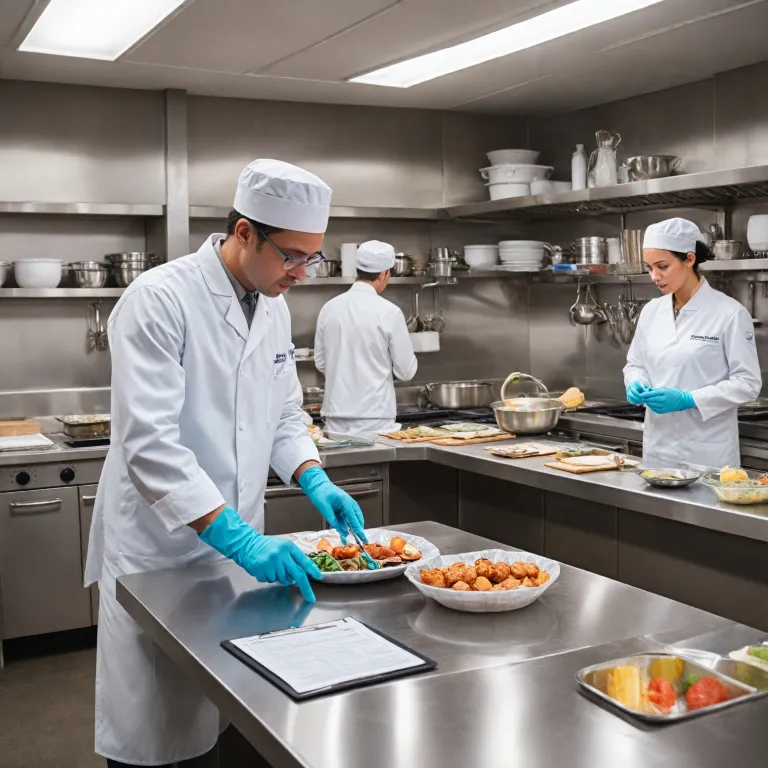
Why a structured kitchen inspection strategy protects hospitality risk profiles
For hospitality groups, a disciplined and documented kitchen inspection strategy is now a core risk management tool. A robust step-by-step guide to conducting kitchen inspections links food safety, legal compliance, and insurance defensibility in a single operational framework. When a restaurant or hotel kitchen fails an inspection, the impact on public health, brand equity, and liability exposure can be immediate and severe.
Risk managers therefore need a methodology that integrates every inspection with broader safety standards and governance obligations. Regular kitchen inspections, aligned with local health expectations, reduce the probability of foodborne incidents and related claims. They also demonstrate to insurers and courts that the operator exercises systematic control over critical food preparation areas.
In practice, this means treating each kitchen inspection as a formal audit rather than a routine housekeeping task. The kitchen manager should coordinate with the health inspector when possible, ensuring that internal inspections mirror external health inspections. This alignment helps anticipate restaurant health violations and supports consistent hygiene and safety performance across all commercial kitchen sites.
From a legal and assurance perspective, the step-by-step guide to conducting kitchen inspections must be written, communicated, and enforced. It should define responsibilities for staff, specify inspection checklist content, and set minimum frequencies for internal inspections. When incidents occur, these documents become essential evidence of due diligence, supporting negotiations with insurers and interactions with local health authorities.
Finally, a structured approach to kitchen inspections supports better contract management with professional cleaning and pest control partners. Clear expectations around kitchen cleaning, pest control, and equipment maintenance can be embedded into service level agreements. This reduces ambiguity, strengthens risk transfer, and supports compliance with the applicable health code and safety standards.
Designing a defensible step by step inspection framework for hospitality kitchens
Building a defensible framework starts with mapping all food flows and risk points in each kitchen. The step-by-step guide to conducting kitchen inspections should follow the same path as food, from delivery and food storage to food preparation, cooking, holding, and service. This approach ensures that inspection checklist items reflect real contamination risks rather than abstract regulatory categories.
Each health inspection oriented framework should distinguish between structural and operational controls. Structural elements include equipment condition, ventilation, drainage, and pest control barriers, while operational elements cover cleaning schedules, staff behaviour, and temperature control practices. Both dimensions must be evaluated during internal inspections to match the expectations of any external health inspector.
For multi property operators, harmonised inspection checklists are essential to maintain consistent hygiene and safety standards. Central risk teams can define a core kitchen inspection template, then allow local adaptations for specific restaurant concepts or regional health code nuances. This balance supports comparability across inspections while respecting local health requirements and cultural practices.
Legal and insurance teams should be involved early when designing the inspection checklist and audit trail. Their input helps ensure that inspection records, photographs, and corrective action logs will stand up to scrutiny in litigation or coverage disputes. For complex governance questions, such as allocation of responsibilities between owners and operators, guidance on court discretion and risk management frameworks can be instructive.
Finally, the framework should embed escalation rules for critical violations identified during kitchen inspections. Issues such as cross contamination, failed temperature control, or evidence of pests must trigger immediate corrective actions and, where necessary, temporary suspension of food preparation. Clear thresholds and response protocols protect public health and demonstrate a mature risk culture to regulators and insurers.
Operationalising the step by step guide in daily kitchen inspections
Translating policy into practice requires a precise, operational step-by-step guide to conducting kitchen inspections. The process should be divided into a preparation phase, an inspection phase, and a post inspection phase, each with defined responsibilities. Kitchen managers, supervisors, and designated inspectors must understand their roles and the legal implications of incomplete or inaccurate inspections.
During the preparation phase, the kitchen manager reviews previous inspections, outstanding violations, and any recent health inspections. Inspection checklists, thermometers, sanitizers, and cleaning logs should be ready, and staff should be informed that a kitchen inspection will occur without revealing exact timing. This balance encourages authentic behaviour while maintaining transparency and respect for the équipe.
The inspection phase should follow a logical route through all areas of the commercial kitchen. Inspectors must evaluate food storage conditions, temperature control records, food preparation practices, and kitchen cleaning quality, while also checking equipment integrity and pest control measures. Particular attention should be paid to high risk areas where cross contamination between raw and ready to eat food is most likely.
Health inspection style observations should be documented in real time, ideally using digital inspection tools for accuracy and traceability. Photos of hygiene issues, damaged equipment, or unclean areas can later support training and corrective actions. When inspectors identify serious food safety risks, they should immediately instruct staff to isolate affected food and halt related food preparation activities.
In the post inspection phase, findings are translated into an action plan with deadlines and responsible persons. The kitchen manager shares key results with risk management, legal, and insurance contacts when relevant, especially after repeated violations. This structured follow up ensures that inspections drive measurable improvements in hygiene, safety, and public health protection.
Legal, insurance, and governance implications of kitchen inspection failures
For hospitality operators, failures identified during kitchen inspections are not only operational issues ; they are legal and insurance events. A serious health inspection failure can trigger mandatory reporting, temporary closure, and reputational damage that affects occupancy and revenue. When foodborne illness is suspected, every previous kitchen inspection, cleaning record, and training log becomes potential evidence.
Risk managers should therefore ensure that the step-by-step guide to conducting kitchen inspections is fully integrated into the organisation’s governance framework. Policies must specify how inspection data is stored, who can access it, and how long records are retained for legal and insurance purposes. This is particularly important in jurisdictions where restaurant health violations can lead to civil claims or even criminal liability for executives.
Insurers increasingly scrutinise food safety and hygiene controls when underwriting hospitality risks. Detailed inspection checklist documentation, evidence of regular internal inspections, and proof of staff training on food safety can support more favourable terms. Conversely, repeated violations, poor kitchen cleaning practices, or inadequate pest control may lead to exclusions, higher deductibles, or non renewal.
Corporate governance teams should also consider how inspection responsibilities are allocated between owners, asset managers, and operators. In management or franchise agreements, clauses should clarify who controls food safety policies, who conducts audits, and who bears liability for health code breaches. For complex ownership structures, guidance on hospitality corporate governance and pre emption rights can help align incentives.
Ultimately, a mature inspection regime strengthens the organisation’s position when facing regulators, courts, or insurers. When documentation shows that health inspections were anticipated, internal inspections were rigorous, and corrective actions were timely, the narrative shifts from negligence to responsible risk management. This can significantly influence outcomes in disputes related to public health incidents.
People, training, and culture at the heart of compliant kitchen inspections
No step-by-step guide to conducting kitchen inspections can succeed without a strong safety culture among kitchen staff. Risk managers must recognise that food safety, hygiene, and cleaning behaviours are shaped by training, leadership, and daily operational pressures. When teams are understaffed or poorly trained, even the best inspection checklist will fail to prevent contamination or health code breaches.
Structured training programmes should cover food safety fundamentals, including food storage rules, temperature control, and cross contamination prevention. Staff must understand why health inspections matter, how restaurant health performance affects business continuity, and how their individual actions protect public health. Practical demonstrations in real kitchen areas are often more effective than classroom sessions alone.
Supervisors and kitchen managers play a critical role in reinforcing safety standards between formal inspections. They should conduct brief daily walk throughs, checking that cleaning schedules are respected, equipment is clean, and food preparation practices align with the inspection checklist. These micro inspections help normalise high hygiene expectations and reduce the likelihood of serious violations during official health inspections.
External partners such as professional cleaning services and pest control providers must be integrated into the training and communication loop. They should understand the operator’s safety standards, legal obligations, and insurance expectations, particularly in high risk commercial kitchen environments. Shared protocols for kitchen cleaning, pest control, and equipment sanitation support consistent outcomes across multiple restaurant sites.
Finally, leadership should recognise and reward teams that maintain exemplary food safety performance during kitchen inspections. Positive reinforcement, transparent communication of inspection results, and constructive responses to failures all contribute to a resilient safety culture. As one expert summary notes, “Common violations include improper food storage temperatures, cross-contamination, inadequate sanitation, and pest infestations.”
Digital tools, metrics, and continuous improvement in kitchen inspections
Digitalisation is transforming how hospitality groups implement their step-by-step guide to conducting kitchen inspections. Mobile applications, cloud based inspection logs, and real time dashboards allow risk managers to monitor food safety performance across many kitchens. These tools also support standardisation, ensuring that every kitchen inspection follows the same inspection checklist and rating criteria.
From a risk and assurance perspective, digital inspection systems provide time stamped evidence of inspections, findings, and corrective actions. Health inspectors and insurers often view such records as more reliable than handwritten logs, especially when supported by photographs and temperature data. Over time, analytics can highlight recurring violations, weak areas, or sites requiring additional training and support.
Key performance indicators should link inspection results with broader public health and financial outcomes. Metrics might include the number of critical violations per inspection, adherence to cleaning schedules, or compliance with temperature control requirements. When correlated with incident reports or claims data, these indicators help quantify the impact of food safety investments on risk reduction.
Digital tools also facilitate collaboration between kitchen managers, risk teams, legal departments, and external inspectors. Shared platforms allow health inspector feedback, internal audit findings, and staff training records to be viewed in a single interface. This integrated perspective supports more informed decisions about resource allocation, policy updates, and equipment upgrades in commercial kitchen operations.
Continuous improvement should be embedded into the inspection cycle, with regular reviews of food safety policies, inspection checklists, and training content. As regulations, health code interpretations, and safety standards evolve, the organisation’s step-by-step guide to conducting kitchen inspections must be updated accordingly. “How often should a commercial kitchen undergo inspection? Frequency varies by jurisdiction, but typically, commercial kitchens are inspected at least once or twice a year by health authorities. Regular self-inspections are recommended more frequently.” “What is the importance of maintaining proper food storage temperatures? Maintaining proper temperatures prevents bacterial growth, reducing the risk of foodborne illnesses.”
Key quantitative insights for risk managers and hospitality leaders
- Percentage of foodborne illnesses linked to improper food handling : 48 % (Centers for Disease Control and Prevention).
- Average cost of a health code violation fine for a restaurant or commercial kitchen : 500 USD (National Restaurant Association).
Frequently asked questions on kitchen inspections in hospitality
What are common violations found during kitchen inspections ?
Common violations include improper food storage temperatures, cross contamination, inadequate sanitation, and pest infestations. These issues often arise from weak training, poor cleaning schedules, or insufficient supervision in busy food preparation areas. Addressing root causes through structured inspections and targeted training significantly reduces recurrence.
How often should a commercial kitchen undergo inspection ?
Regulatory health inspections usually occur at least once or twice per year, depending on local health requirements and risk classification. However, internal kitchen inspections should be scheduled more frequently, often weekly or monthly, to maintain continuous control. This layered approach ensures that issues are identified and corrected well before official health inspections.
What is the importance of maintaining proper food storage temperatures ?
Maintaining correct temperatures for chilled and hot food prevents rapid bacterial growth that can cause foodborne illness. Temperature control is therefore a central element of any inspection checklist and a key focus for every health inspector. Consistent monitoring, calibrated equipment, and staff training are essential to keep food within safe ranges.
Why should hospitality operators use digital tools for kitchen inspections ?
Digital tools provide structured inspection workflows, real time data capture, and secure storage of inspection records. They support transparency with regulators, insurers, and internal auditors by offering traceable evidence of compliance efforts. Analytics from digital inspections also help identify systemic weaknesses and guide targeted risk mitigation investments.
How can risk managers link kitchen inspections to broader governance and insurance strategies ?
Risk managers should embed inspection requirements into corporate policies, management contracts, and insurance discussions. Demonstrating rigorous kitchen inspections, strong food safety training, and rapid corrective actions can improve negotiating positions with both regulators and insurers. Over time, this integrated approach strengthens governance, reduces claims, and protects the organisation’s reputation.