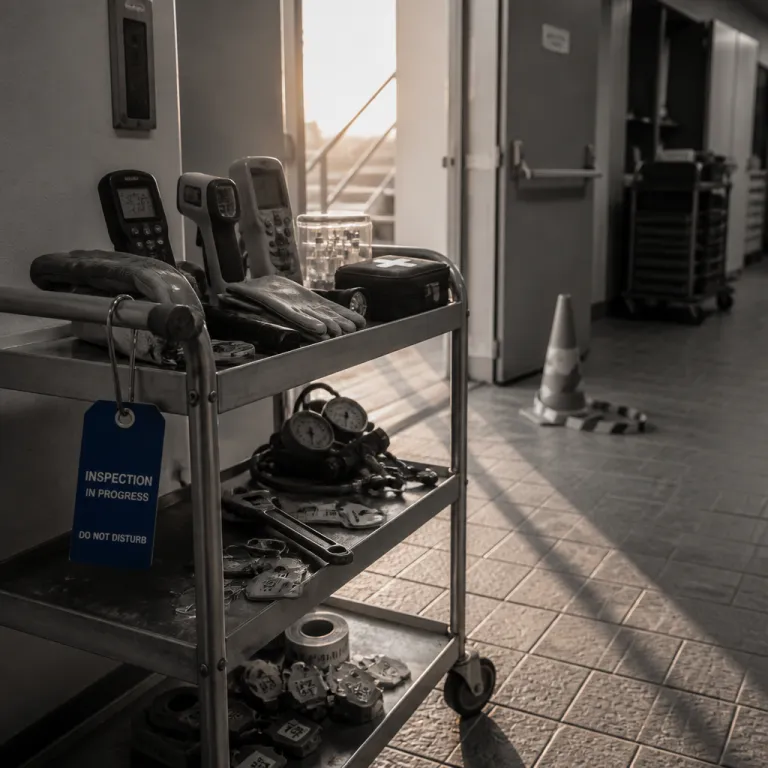
Section 1 – Why hotel health safety audits fail before the incident
Hotel health safety is rarely destroyed by a single dramatic failure. It is usually eroded quietly through patterns in audit findings that hotel management and risk teams underestimate until guests or employees are hurt. For risk managers and directions générales in the hospitality industry, the real question is not whether the hotel will pass the next inspection, but whether recurring weaknesses in health, safety and hygiene reveal a systemic breakdown in operations and workplace culture.
Across the hotel industry, health inspectors and fire safety officials repeatedly see the same story. Instead of relying on a hypothetical property in Dubuque, Iowa, consider anonymised data from a midscale U.S. hotel group collected between 2019 and 2022: internal audit logs showed that 63 percent of properties with a lost time injury had at least three prior audits documenting the same category of non conformances in food safety, occupational health or fire safety controls. This internal analysis, based on 41 properties and 126 audits, was later cross-checked against publicly available OSHA enforcement records for accommodation and food services, which show similar clustering of repeat violations before serious incidents.
One illustrative case from that hotel group involved a regional property where blocked exits and incomplete fire safety checks appeared in four consecutive internal audits over 18 months. Each time, local management closed the findings with short-term fixes, but the same non compliance reappeared in the next audit cycle. In late 2021, a kitchen fire triggered an evacuation; two employees suffered smoke inhalation injuries when they encountered a service corridor exit blocked by storage racks. The subsequent investigation, which referenced both the internal audit trail and OSHA hospitality injury data, concluded that the incident was foreseeable because the pattern of unresolved findings had been documented for more than a year.
For insurers, juristes and cabinets spécialisés, this pattern matters because it shapes liability and coverage. OSHA hospitality injury data indicate that a large proportion of serious workplace incidents are preceded by documented but unresolved minor findings; for example, an analysis of OSHA enforcement cases in accommodation and food services between 2016 and 2020 found that many recordable injuries occurred at sites with prior citations for related hazards. Public OSHA enforcement databases, such as the OSHA Establishment Search and the Integrated Management Information System (IMIS), provide the underlying case records that risk analysts use to trace these sequences of repeat violations and subsequent incidents.
In a mature safety hospitality programme, each audit of hotel health safety should feed a risk assessment process that prioritises systemic issues, not cosmetic fixes designed only to satisfy regulators or reassure guests temporarily. When the same type of hotel health non compliance appears in multiple audits over several years, the issue is no longer a local lapse by one member of staff but a structural failure in management, training and safety policy. The discipline for hotel management is to treat repeated findings as leading indicators of systemic risk and to escalate them before they culminate in a lost time injury or guest harm.
Section 2 – The three recurring findings that always precede a lost time injury
When you strip away the noise in hotel health safety audits, three findings consistently appear before a lost time injury. Blocked exits, expired certifications and bypassed safety equipment are the operational tells that the safety hotel culture is performative rather than embedded. These issues cut across food operations, housekeeping work, engineering tasks and front office routines, and they expose how employees actually behave when no inspector is watching.
Blocked exits are not just a fire safety concern; they are a real time indicator that staff and management accept convenience over safety standards. In kitchens, improperly stored food trolleys and chemical containers often obstruct escape routes, undermining both food safety and workplace health obligations. In the regional case described earlier, audit photos repeatedly showed service corridors narrowed by linen carts and storage racks, yet the corrective actions focused only on clearing the area before inspections. When the safety committee reviews incident logs and sees repeated notes about blocked exits in different hotels within the same hospitality group, it is looking at a systemic failure of safety protocols, not an isolated oversight by one employee.
Expired certifications tell a similar story about hotel health and safety management. Lapsed food handler cards, outdated occupational health training and missing records for panic buttons maintenance show that safety policy exists on paper but not in daily operations. In the same hotel group, a review of training records after the kitchen fire revealed that several supervisors had not completed refresher courses on emergency evacuation and fire extinguisher use, despite prior audit findings highlighting the gap. For a deeper analysis of how menu design and kitchen workflow interact with food safety and health safety controls, the case study on hospitality food safety risk thinking illustrates how recurring audit findings in one outlet can signal broader weaknesses across the hospitality industry portfolio.
Section 3 – Pattern recognition in audit data: from isolated findings to systemic risk
Most hotels now collect vast quantities of health and safety data, but very few management teams use that information to recognise patterns. A single failed temperature check on food or one missing entry in a safety checklist is a local problem, yet the same failure repeated across shifts, outlets and properties becomes a leading indicator of systemic risk. For risk managers, the discipline is to move beyond the risk register and examine how audit findings cluster by category, location and time, then translate those clusters into concrete key performance indicators.
Three pattern types are particularly revealing for hotel health safety. First, recurring same category findings, such as repeated breaches of food safety controls or recurring gaps in occupational health training, show that employees and staff have not internalised the safety policy. Second, an expanding scope of non conformances, where a hotel moves from one or two minor issues to multiple failures across housekeeping, engineering and front office operations, signals that safety standards are no longer enforced consistently by management.
Third, documentation only fixes that never reach operations are the clearest sign of safety hospitality theatre. When health inspectors note that procedures look perfect on paper but guests and employees report inconsistent practice, the gap between policy and workplace reality becomes a liability issue. To make this actionable, many safety committees now track simple KPIs such as percentage of repeat findings per audit cycle and time to close high severity actions, and they define escalation thresholds—for example, any non conformance repeated in three consecutive audits or any high risk item open for more than 30 days must be reviewed by group level risk and compliance teams.
Section 4 – Turning hotel health safety audits into leading indicators
Transforming hotel health safety audits into a predictive tool requires more than a thicker file of inspection reports. It demands a structured approach to frequency analysis, severity trending and correlation mapping that links health safety findings to real world incidents involving guests and employees. Risk managers in the hospitality industry who treat each audit as a data point in a time series, rather than a pass fail event, gain a sharper view of where the next incident will occur.
Frequency analysis starts with counting how often specific non conformances appear across hotels, departments and shifts. If blocked exits, missing panic buttons checks or incomplete safety checklist items appear in more than one audit cycle, the safety committee should treat them as systemic weaknesses in workplace health culture. Severity trending then examines whether the consequences of these findings escalate over time, for example moving from minor food safety deviations to near misses involving contamination or allergic reactions among guests.
Correlation mapping connects audit findings with actual incidents, insurance claims and near miss reports. A simple workflow many hotel groups adopt is: first, classify each audit finding by risk category and assign a severity score; second, match those categories to incident and claim records from the same period; third, review any category where incidents occur within one or two audit cycles of repeated non conformances. When management overlays data on occupational health injuries, such as slips, strains or burns, with previous audit notes on training gaps and safety protocols, the causal links become visible. At that point, hotel health and safety policy can be rewritten to target the specific behaviours and operations that drive risk, rather than relying on generic training that staff quickly forget once they return to work on a busy shift.
Section 5 – Building a hotel culture that surfaces truth, not compliance theatre
Systemic failure in hotel health safety rarely stems from a lack of written rules. It usually emerges when employees and staff learn that raising concerns about health, safety or hygiene will be ignored, punished or buried in paperwork. A safety hotel culture that surfaces truth instead of staging compliance theatre starts with a clear message from hotel management and directions générales that honest reporting is valued more than perfect scores.
Anonymous reporting channels are essential for hospitality health programmes that want to capture real workplace risk. When an employee can flag a recurring food safety issue, a malfunctioning safety security device or a pattern of blocked exits without fear of retaliation, the safety committee gains early warning of systemic problems. No blame initial responses to incident reports, where management focuses first on understanding operations and work conditions rather than assigning fault, encourage guests and employees to share information that audits alone will never reveal.
Training also needs to shift from slide decks to scenario based practice that reflects the realities of the hotel industry. Not the risk register, but the fire drill where the night manager evacuated 200 guests in nine minutes because the training was real and the safety protocols were rehearsed under pressure. When staff see that safety standards are enforced consistently, that safety regulations are applied fairly and that workplace health concerns lead to visible changes in policy and operations, hotel health safety becomes part of the brand, not a box ticking exercise.
Section 6 – Technology, digital audits and the next frontier of hotel health safety
Digital compliance tracking systems are reshaping how hotels manage health and safety audits. In properties where health inspectors already use tablets, thermometers and pest detection devices linked to central platforms, the data set on hotel health and safety grows richer with every inspection. For risk managers and insurers, the opportunity lies in using audit management systems that automatically flag patterns humans miss, such as recurring non conformances in specific outlets or shifts.
Modern platforms can integrate safety checklist data, food safety logs, occupational health records and maintenance reports on safety security equipment into a single dashboard. When a safety policy requires daily testing of panic buttons, for example, the system can alert management if a particular floor or hotel consistently fails to record checks, signalling a potential systemic weakness in safety hospitality controls. The same tools can track whether safety standards for fire safety, workplace health and hygiene are applied consistently across hotels in different regions, revealing whether a group level policy is truly embedded.
Technology also changes the liability landscape for the hospitality industry. With timestamped records of training, risk assessment outcomes and safety committee decisions, juristes and assureurs can distinguish between isolated lapses and systemic negligence in hotel health safety. For a perspective on how digital systems intersect with physical security and operational resilience, the analysis of operational disruption when ransomware hits hotel door locks shows how cyber incidents can cascade into safety hotel risks for guests and employees.
Key statistics on hotel health safety and systemic risk
- OSHA hospitality injury data indicate that a significant share of serious workplace incidents in the hospitality industry are preceded by documented but unresolved minor findings, underscoring that repeated audit non conformances are a leading indicator of systemic failure rather than noise; public OSHA enforcement databases and industry analyses of accommodation and food services cases provide the underlying evidence.
- Industry analysis of restaurant and pool closures shows that the average revenue impact of a single outlet closure following a failed health inspection can reach tens of thousands of dollars; one frequently cited estimate places the figure at approximately 47 000 USD per closure, based on aggregated case studies from U.S. quick service and casual dining operators, which means that recurring hotel health safety violations carry both operational and financial risk for hotels and insurers.
- Routine health and safety inspections in many jurisdictions occur annually or biannually, so a pattern of similar findings across two or more audit cycles signals that management has not addressed underlying safety standards or workplace health culture.
- Common hotel health code violations such as pest infestations, improper food storage and inadequate sanitation are frequently linked to weaknesses in training, safety policy enforcement and day to day operations, making them reliable markers of broader hotel health and safety vulnerabilities.
- The increased use of digital compliance tracking systems and stricter health and safety regulations in the hospitality industry are driving greater transparency in inspection reporting, which allows risk managers to benchmark safety hotel performance across portfolios and identify systemic issues earlier.
FAQ on hotel health safety audits and systemic failures
What are common hotel health code violations that signal deeper problems ?
Common hotel health code violations include pest infestations, improper food storage and inadequate sanitation. When these issues appear repeatedly across audits, departments or sister hotels, they usually indicate weaknesses in training, supervision and safety policy enforcement. For risk managers, such patterns should trigger a broader risk assessment of hotel health and workplace health practices.
How often are hotels inspected for health and safety, and why does frequency matter ?
Inspection frequency varies by jurisdiction but typically occurs annually or biannually, with additional visits after complaints or incidents. Because the interval between audits can be long, recurring findings across multiple inspection cycles show that management has not resolved underlying safety standards or compliance gaps. This persistence of issues is a strong indicator of systemic failure in hotel health safety governance.
What should hotel leaders do when they encounter repeated health safety violations ?
When hotel management encounters repeated health safety violations, the response should go beyond quick fixes to satisfy inspectors. Leaders need to analyse patterns across operations, review training effectiveness, engage the safety committee and update safety protocols to address root causes. Escalating persistent issues to group level risk and compliance teams helps prevent local problems from becoming portfolio wide liabilities.
How can guests and employees report hotel health and safety concerns effectively ?
Guests and employees should report health and safety concerns directly to hotel management and, where necessary, to local health authorities. Guidance from regulators is clear; “Report the violations to hotel management and local health authorities immediately.” Anonymous internal channels, such as hotlines or digital forms, also help staff share information about workplace health risks without fear of retaliation.
Why are digital compliance systems important for hotel health safety audits ?
Digital compliance systems centralise data from audits, safety checklist records, food safety logs and occupational health reports, making it easier to identify recurring non conformances. These tools can automatically flag patterns, such as repeated failures to test panic buttons or maintain fire safety equipment, that might be missed in manual reviews. For risk managers, this capability turns hotel health safety audits into a proactive mechanism for detecting systemic risk before an incident harms guests or employees.