When a hotel ransomware property management system attack becomes a physical crisis
Ransomware against a hotel property management system is no longer just about encrypted data. When attackers pivot from files to critical systems, the impact hits the lobby, the front desk, and the guest corridor in minutes. For risk managers in the hospitality industry, the new baseline scenario is simple and brutal; guests cannot enter their rooms at check in.
Recent incidents involving hotel PMS platforms show how tightly hotels have bound daily operations to a single stack of systems. In July 2022, Hyatt confirmed a cyber incident affecting some U.S. properties, including Hyatt Place Chelsea New York, which external researchers linked to the NightSpire group based on malware signatures and ransom notes reported in open source threat intelligence. In September 2023, a major Las Vegas resort publicly reported system outages following a ransomware attack widely attributed in open source analysis to ShinyHunters, after the group claimed responsibility on underground forums and shared alleged proof of access. Earlier, in 2016, the Hotel Gracery Tamachi in Tokyo disclosed a ransomware event that disrupted its Washington Hotel branded operations and temporarily blocked access to reservation systems and some guest services. These cases underline the same lesson; the hotel ransomware property management system risk is now an operational risk, not only a cyber risk. Cybersecurity controls that focus only on protecting guest data or cardholder data leave a wide attack surface around door locks, HVAC, and booking integrations.
For a hotel group, three operational disruption scenarios must now anchor every response plan. First, the PMS or integrated booking engine fails during arrival rush, blocking mobile check in, room assignment, and payment flows for hundreds of guests. Second, the door lock system or its third party cloud service is compromised, cutting access to rooms or creating uncontrolled access for attackers and forcing staff to improvise physical security at scale.
Three disruption scenarios every hospitality sector playbook must rehearse
The third scenario is the most underestimated; manipulation of HVAC or building management systems that control temperature, ventilation, and sometimes elevators. When these critical systems are tied to the same network as the PMS, a hotel ransomware property management system incident can cascade into life safety concerns within hours. In a dense urban hotel or a Las Vegas mega resort, that combination of cyber and physical disruption can trigger evacuation decisions, business interruption claims, and regulatory scrutiny.
Scenario one, PMS down at peak arrivals, is the purest stress test of management discipline. Without access to reservation databases, room status, or integrated payment systems, the front desk équipe must revert to paper, radio, and shoe leather while still protecting guest data and complying with PCI DSS obligations. Within the first 15 minutes, staff should print or retrieve the latest rooming list, assign a runner to coordinate with housekeeping, and switch to pre approved paper registration cards. Within two hours, managers should have a manual queueing system in place, a log of walk ins and no shows, and a clear process for capturing card details on standalone terminals. This is where a pre written incident response plan, with clear roles for staff and a tested manual booking workflow, separates resilient hotels from those that simply hope the breach does not happen on a Saturday night.
Scenario two, compromised door locks, forces a different kind of incident response. The question is no longer only how to restore systems, but how to guarantee physical security and controlled access for every guest and every room while attackers may still be probing the network. Within 30 minutes, security should establish a sign in and escort protocol for any room access using mechanical keys, and document each entry on a standardized paper log. For legal teams and insurers, this is where duty of care, liability for theft, and prior guidance on hotel robbery risk management intersect with cyber coverage; the operational disruption is inseparable from traditional safety and security obligations, as explored in depth in this analysis of hotel security, risk, and legal strategies for robbery incidents on Risk for Travel.
From data breach playbooks to operational continuity drills
Most existing incident response plans in the hospitality sector were written for a classic data breach scenario. They assume that the PMS and other systems remain usable while forensic teams trace exfiltrated data and legal teams draft notifications about compromised guest data. That model fails when a hotel ransomware property management system attack takes the PMS, the key encoder, and the payment terminals offline simultaneously.
Operational continuity demands a different kind of planning and rehearsal. The tabletop exercise must simulate a 300 arrival day with PMS, mobile check in, and integrated booking channels all unavailable, while the network segmentation rules are under review and offline backups are being validated. In that exercise, management must prove that staff can still allocate rooms, verify identity, protect guest data, and maintain PCI DSS compliant payment flows using paper forms and standalone terminals. A realistic drill should include timed injects, such as a VIP arrival or a guest dispute over charges, and require teams to complete specific tasks within 30, 60, and 120 minute windows.
Legal and insurance teams should sit in the same room as the front desk and IT leaders during these drills. They need to see how quickly a cyber incident becomes a safety and liability issue when a breach does not only affect data, but also physical access and guest comfort. Practical hotel security strategies for travelers and risk managers, such as those detailed in Risk for Travel’s guidance on essential hotel security actions, become part of the same continuum as cyber incident response when attackers can lock guests out of rooms or disable alarms.
The manual operations plan; paper, keys, and mechanical overrides
When a hotel ransomware property management system incident hits, the only plan that matters is the one the night manager can execute at 02:00. That plan starts with a complete, printed rooming list and a clear paper based booking and check in protocol that staff can follow without any PMS access. Every hotel should be able to run at reduced capacity for at least 24 to 48 hours using manual processes, supported by offline backups of essential reservation data.
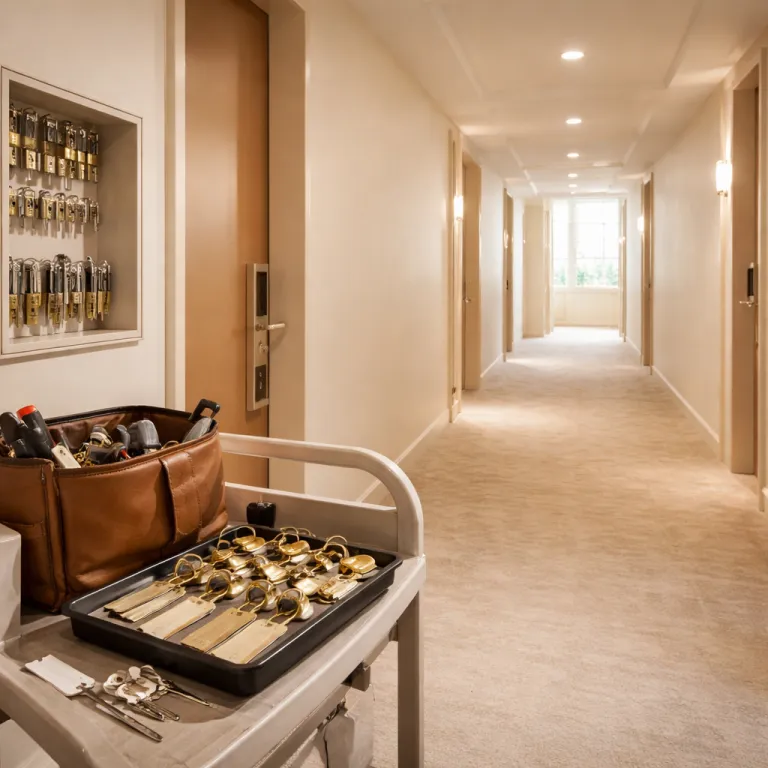
Door locks are the next hard test of realism. Many hotels assume that their third party lock vendor or PMS provider will handle any cyber incident affecting key cards, but the real question is simpler; how many physical keys exist, where are they stored, and which staff can authorize their use. Mechanical override procedures must be written, trained, and audited, because attackers will not wait while the management team searches for a single master key in a forgotten safe.
Paper based operations also expose hidden dependencies and outdated systems. When staff must track room status, housekeeping, and maintenance without digital systems, the gaps in training, staffing, and cross functional communication become obvious. A robust response plan should therefore include regular drills where front desk, housekeeping, and security équipes run a full shift on paper, validating that the hotel can still protect guests, secure assets, and maintain basic hospitality standards under cyber duress. Simple templates help: a manual registration card capturing guest identity, contact details, consent, and payment authorization; a room status sheet listing each room, occupancy, and housekeeping notes; and a key control log recording every issue and return of mechanical keys.
Vendor dependency, network segmentation, and the maturing insurance lens
Every hotel group now needs a vendor dependency map that is as detailed as its fire safety plan. That map should list each connected system, from PMS and booking engines to door locks, HVAC, point of sale, and loyalty platforms, along with its failover mode, offline capabilities, and the vendor’s incident response service level agreement. When a hotel ransomware property management system attack occurs, management must know within minutes which third party providers to call, what contractual obligations they have, and how long manual operations must bridge the gap.
Network segmentation is the technical backbone of this resilience. Critical systems such as door locks, HVAC, and safety alarms should sit on separate, tightly controlled segments, with limited access from guest Wi Fi and from the PMS network, so that a breach does not automatically cascade across the entire property. Managed security service providers, or MSSP partners, can help hotels design and monitor these architectures, but the accountability for cyber and physical security integration remains with the hospitality sector leadership.
Insurers are already adjusting their stance on ransomware and operational disruption in hospitality. Underwriters increasingly require evidence of multi factor authentication, endpoint detection and response, and tested incident response plans before offering meaningful coverage for cyber attacks that shut down hotels. As one industry FAQ now puts it with stark clarity; “Implement robust cybersecurity measures, regular staff training, and maintain up to date software.”
Stress testing the attack surface; from kitchen to cloud
Ransomware groups have learned that the fastest way to force payment is to freeze the guest experience, not just steal data. For hotels, that means the attack surface now spans from cloud based PMS platforms and reservation databases to on premise kitchen printers and elevator controls. A hotel ransomware property management system incident is therefore as much about operational design as it is about malware.
Risk managers should commission regular red team style assessments that trace how attackers could move from a phishing email or a compromised third party integration into critical systems. Those exercises should test whether network segmentation really prevents lateral movement from a compromised front desk workstation to door locks, HVAC, or payment systems, and whether offline backups are both recent and actually restorable. Lessons from other operational risk domains in hospitality, such as the rigorous food safety controls described in Risk for Travel’s analysis of how a casual dining brand reshaped risk thinking, can inspire similar discipline in cyber resilience.
Finally, guest communication must be treated as a core control, not a public relations afterthought. Pre approved templates for each disruption scenario should explain in plain language what has happened, how the hotel is protecting guest data and physical safety, and what compensation or alternative arrangements are available. When staff can deliver that message calmly at the front desk while IT and MSSP teams work on containment, the hotel protects not only its reputation, but also its legal position and insurance recoveries.
FAQ; operational ransomware risk for hotel property management systems
How can hotels protect against ransomware attacks on PMS platforms?
Hotels can reduce ransomware risk by maintaining up to date PMS software, enforcing multi factor authentication, and segmenting networks so that guest Wi Fi and critical systems are separated. Regular staff training on phishing, strong passwords, and incident reporting is essential, because many attacks still start with a single compromised account. Managed security service providers can add 24/7 monitoring, but management must still own the incident response plan and manual operations playbook.
What should guests do if their data is compromised in a hotel attack?
Guests notified of a hotel data breach should immediately change passwords for any affected accounts and enable multi factor authentication where possible. They should monitor bank and card statements for unusual transactions and consider using credit cards rather than debit cards for future stays, because credit cards usually offer stronger fraud protection. If the hotel or card issuer offers credit monitoring or identity protection services, enrolling quickly can help detect misuse of stolen data.
Are smaller independent hotels also targeted by ransomware groups?
Smaller hotels are absolutely targeted, because attackers care more about accessible data and weak defenses than about brand size. Independent properties often run outdated systems, share administrator passwords, or lack formal incident response plans, which makes them attractive to cybercriminals. Investing in basic cybersecurity hygiene, offline backups, and a simple manual operations plan can significantly reduce both the likelihood and the impact of an attack.
What is the role of offline backups in a hotel ransomware property management system incident?
Offline backups provide a clean, uncompromised copy of PMS and reservation data that ransomware cannot encrypt or delete because it is physically or logically disconnected from the live network. For hotels, this means that even if attackers cripple the primary PMS environment, IT teams can rebuild systems from these backups once the breach is contained. Regular testing of backup restoration is critical, because untested backups often fail when they are needed most.
How should hotels integrate cyber incident response with traditional safety and security protocols?
Hotels should treat cyber incidents as potential safety events from the outset, especially when PMS, door locks, or HVAC are affected. Joint exercises involving IT, security, front desk, and legal teams can align procedures for evacuation, guest communication, and evidence preservation with digital forensics and containment steps. This integrated approach ensures that duty of care, regulatory compliance, and insurance requirements are met even under severe operational disruption.
Operational checklist; making PMS ransomware guidance actionable
To translate these principles into practice, hotel leadership should maintain a concise operational checklist. At minimum, this should include: multi factor authentication on all remote access and PMS accounts; quarterly phishing awareness training; network segmentation using VLANs that isolate guest Wi Fi, PMS, and building management systems; documented recovery time objectives for PMS and door lock systems; daily or more frequent offline backups of reservation data; and a printed manual operations pack at each property with rooming lists, paper forms, and contact details for key vendors and MSSP partners. Within 24 to 48 hours of an incident, IT teams should aim to restore core PMS functions from tested offline backups, while operations gradually transition from paper based workflows back to normal digital processes under enhanced monitoring.