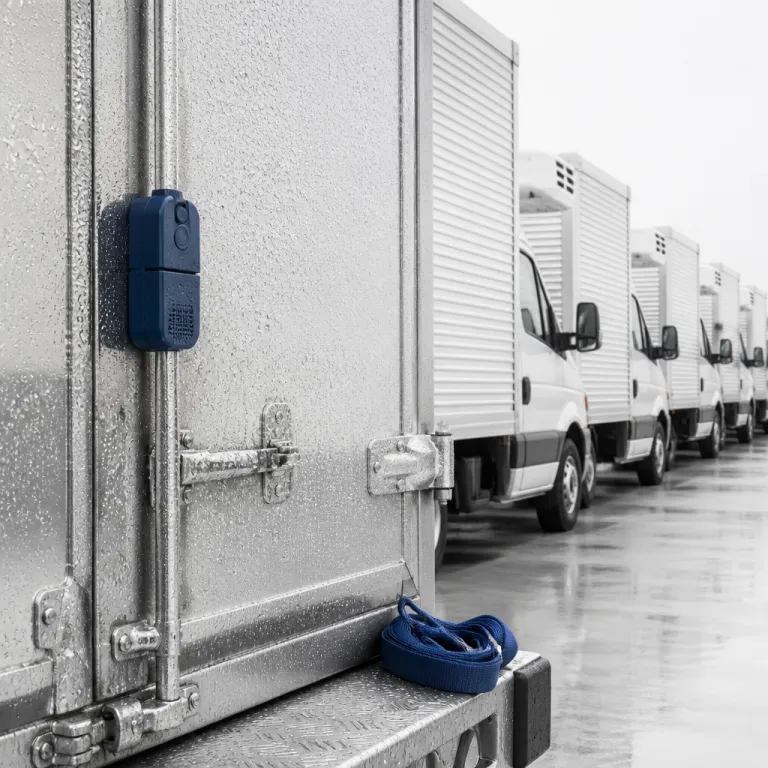
Why food and beverage fleet management is now a core hospitality risk issue
Food and beverage fleet management has moved from a logistics detail to a board-level risk topic. In hotel groups and travel operators, every fleet carrying food or beverage products now directly shapes liability exposure, brand resilience, and customer satisfaction. For risk managers and directions générales, the way fleets are governed has become as critical as fire safety or cyber security.
At its core, food and beverage fleet management means orchestrating vehicles, drivers, temperature-controlled assets, and delivery processes so that food and beverage products arrive on time, in the right temperature range, and in full regulatory compliance. This operational chain is no longer just about efficiency; it is a cold chain risk ecosystem where a single failure in temperature monitoring or sanitation can trigger food safety incidents, claims, and criminal investigations. Hospitality insurers and juristes now scrutinise fleet management data as closely as they review fire system certificates or pool safety logs.
For travel and hospitality brands, the risk perimeter extends from central kitchens and dark stores to beverage distribution partners and outsourced beverage fleets. A hotel group that outsources its beverage fleet or reefer capacity still retains a duty of care regarding food safety, driver safety, and regulatory compliance across the entire chain. That is why sophisticated management software, real-time monitoring tools, and structured fleet maintenance programmes are now embedded in enterprise risk management frameworks, not just in operations manuals.
Legal liability, food safety and the cold chain duty of care
Legal exposure around food and beverage fleet management is expanding fast for hospitality operators. When a cold chain breaks during delivery, courts and regulators increasingly look beyond the driver to assess whether fleet managers, maintenance équipes, and the direction générale exercised adequate control. For juristes and insurers, the question is no longer who drove the truck, but who designed and monitored the management system.
Food safety regulations in Europe, North America, and key tourist destinations now treat temperature control, sanitation procedures, and route planning as integral parts of the food safety management system. In the European Union, Regulation (EC) No 852/2004, Article 4 and Annex II, Chapter IX, require food business operators to maintain appropriate temperature conditions during transport and to implement HACCP-based procedures that cover distribution. In the United States, the Food Safety Modernization Act (FSMA) Sanitary Transportation of Human and Animal Food rule (21 CFR Part 1, Subpart O) sets detailed expectations for temperature control, vehicle cleanliness, and written procedures for monitoring and recordkeeping. If a reefer unit fails and temperature data show prolonged exposure above safe thresholds, prosecutors may argue that fleet maintenance or temperature monitoring processes were negligent. Case law in hospitality property risk, including judicial reviews of long-running contamination and maintenance disputes in large hotel assets, illustrates how courts dissect operational decisions over extended timelines.
For beverage distribution and beverage fleets, the legal lens is similar, even if products are less perishable than chilled food. Alcohol delivery, for example, raises driver safety, road safety, and licensing compliance risks that sit alongside temperature and sanitation concerns. Robust fleet management policies must therefore integrate food and beverage handling rules, driver training, route optimisation constraints, and clear escalation protocols when real-time monitoring flags a temperature or safety anomaly.
Operational risk controls for temperature, sanitation and driver safety
Effective food and beverage fleet management in hospitality starts with disciplined operational controls. Every fleet that moves perishable food or beverage items should operate under a documented cold chain and sanitation standard that is aligned with the group’s food safety policy and, where applicable, HACCP or ISO 22000 requirements. Risk managers need to see these standards translated into daily routines, not just high-level manuals.
From a practical standpoint, this means specifying acceptable temperature ranges for each food category, defining how often temperature monitoring must occur in transit, and setting clear rules for what happens when cold chain integrity is threatened. As a working benchmark, many hospitality operators target a maximum continuous deviation of 2°C from the specified set point, a spoilage rate below 1–2% of perishable volume delivered, and a documented hygiene inspection of each vehicle at least once per week. Modern fleets use sensors and telematics to stream real-time data on temperature, door openings, and route deviations, allowing fleet managers to intervene before a delivery becomes unsafe. In many hotel groups, the same management software that tracks route optimisation and delivery time windows now also logs sanitation checks, reefer defrost cycles, and driver safety events.
Driver behaviour is a critical but sometimes overlooked risk factor in beverage fleet and food delivery operations. Speeding, harsh braking, or unauthorised stops can compromise both driver safety and food safety, especially when cold chain stability depends on steady power to Thermo King or equivalent refrigeration units. A documented 2021 incident reported by a Nordic hospitality association, in which a hotel group had to discard several days of central kitchen production after a delivery vehicle lost power to its refrigeration unit during an extended unscheduled stop, illustrates how a single lapse in driver conduct and monitoring can cascade into food waste, guest disruption, and insurance claims. For mega-event operations, where beverage distribution and food and beverage volumes surge, post-event operational reviews from tournament host cities show how quickly small lapses in driver supervision, loading practices, or temperature checks can escalate into systemic risk.
Data, management software and real time monitoring as risk infrastructure
Digital infrastructure now underpins resilient food and beverage fleet management for hospitality brands. Where paper logs once documented delivery times and basic fleet maintenance, integrated management software platforms now consolidate temperature data, route information, driver performance, and maintenance records into a single risk view. For risk managers and insurers, this unified data layer is becoming as important as traditional incident reporting systems.
Modern fleet management solutions for food and beverage logistics combine GPS tracking, temperature monitoring sensors, and telematics into a real-time monitoring environment. These tools allow fleet managers to see which fleets are on schedule, which reefer units are drifting towards unsafe temperature levels, and where route optimisation could reduce time on the road without compromising food safety. Industry analyses from refrigerated transport associations and vendor case studies consistently report that well-implemented route optimisation and monitoring programmes reduce average delivery time and cut spoilage rates, directly improving customer satisfaction and loss ratios, even though exact percentages vary by fleet profile and geography.
For beverage fleets and mixed food and beverage distribution, the same management software should support scenario analysis, structured case reviews, and dashboard views that highlight recurring risk patterns. Hospitality groups increasingly use anonymised data from Thermo King–equipped vehicles and other refrigerated assets to benchmark fleet maintenance performance across regions and to set internal KPIs such as quarterly audit cadence or maximum acceptable incident frequency per 100,000 kilometres. When evaluating new software, risk leaders should insist on the ability to export clean data for internal audits, to simulate incident scenarios, and to align with broader travel risk assessment frameworks used across the group.
Strategic partnerships, insurance and contractual risk transfer
Few hospitality groups operate every food and beverage fleet asset in-house, which makes strategic partnerships central to risk control. Logistics companies, technology providers, and maintenance équipes all share responsibility for keeping the cold chain intact and ensuring safe, compliant delivery operations. For juristes and assureurs, the key question is how this shared responsibility is documented and enforced.
Contracts with logistics partners should specify minimum standards for fleet maintenance, temperature monitoring, sanitation, and driver safety, with clear audit rights and data-sharing obligations. When beverage distribution is outsourced, agreements must define how real-time data on temperature, route optimisation, and incidents will be shared with the hotel group’s risk and compliance teams. Insurance programmes can then be structured to reflect this allocation of responsibilities, with premium incentives for fleets that demonstrate strong management software usage, low incident rates, and robust training records.
Technology partnerships also require careful risk allocation, especially where management software or monitoring platforms are offered under a free trial, book demo, or software-as-a-service model. Service level agreements should address data ownership, cyber security, and business continuity in case of system outages that could affect food safety or delivery time. When reviewing vendor marketing materials such as a case study or reference project document, risk managers should look for evidence of sustained performance in real operations, not just pilot projects, and ensure that any Thermo King or reefer integration claims are backed by verifiable data and clear performance metrics.
Governance, training and scenario planning for resilient fleets
Strong governance turns food and beverage fleet management from a technical function into a strategic risk control. Boards and directions générales should receive regular reporting on fleet safety, cold chain integrity, and customer satisfaction metrics, not just on cost per kilometre. This governance lens ensures that fleet managers and maintenance teams have the authority and resources to act when monitoring data reveal systemic weaknesses.
Training is the second pillar of resilience, because even the best management software and real-time monitoring tools cannot compensate for untrained drivers or poorly briefed kitchen staff. Drivers need clear guidance on temperature checks, sanitation routines, and escalation steps when a reefer alarm sounds or a Thermo King unit fails mid-route. As one operational summary for hospitality logistics teams puts it with useful clarity: "Plan routes carefully", "Monitor cargo temperature", "Train drivers on safety protocols".
Scenario planning closes the loop between risk theory and daily fleet operations in food and beverage logistics. Risk managers should run tabletop exercises on cold chain failures, multi-vehicle accidents involving beverage fleets, and extended power outages affecting central kitchens and delivery hubs. These exercises test not only the robustness of monitoring and fleet maintenance plans, but also the effectiveness of communication between fleet managers, legal teams, insurers, and front-line hotel managers when real-time crises threaten both food safety and guest experience.
Key statistics and performance benchmarks in food and beverage fleet risk
- Industry analyses of perishable goods logistics consistently show that effective route optimisation and fleet management reduce average delivery time, which directly lowers exposure windows for cold chain breaks and improves guest service levels.
- Structured temperature monitoring and cold chain controls typically decrease spoilage rates in refrigerated transport operations, according to aggregated company data and vendor case studies, which translates into fewer food safety incidents and lower insurance claims for hospitality operators.
- Daily operations, regular maintenance, and periodic audits form a continuous risk management timeline for fleets, and organisations that formalise this cycle report more predictable maintenance costs and fewer unexpected reefer failures.
- AI-powered fleet management solutions that integrate real-time data from GPS, temperature sensors, and telematics are now widely adopted in perishable goods transport, giving hotel groups and travel operators unprecedented visibility into operational risk.
- When hospitality brands embed food and beverage fleet metrics into enterprise risk dashboards, insurers can more accurately price coverage, often rewarding strong monitoring and sanitation performance with improved terms.
FAQ about food and beverage fleet management in hospitality
What is food and beverage fleet management in a hospitality context ?
Food and beverage fleet management in hospitality means coordinating vehicles, drivers, and cold chain assets that transport food and beverage products to hotels, resorts, and travel hubs. The objective is to ensure timely delivery, maintain product quality through controlled temperature and sanitation, and optimise operational efficiency while managing legal and safety risks. It covers both owned fleets and outsourced logistics partners.
Why is temperature monitoring so critical for hotel and resort fleets ?
Temperature monitoring protects the cold chain for perishable food items such as dairy, meat, and prepared meals that supply hotels and cruise terminals. Continuous monitoring with sensors and telematics helps prevent spoilage, supports compliance with food safety regulations, and provides evidence in case of disputes or claims. Without reliable temperature data, operators struggle to prove due diligence when incidents occur.
How does route optimization reduce risk as well as cost ?
Route optimisation shortens delivery time and reduces the number of kilometres driven, which lowers both fuel costs and exposure to road accidents. For perishable food and beverage loads, shorter and more predictable routes mean less time outside controlled environments and fewer opportunities for cold chain failures. Optimised routing also supports better driver safety by avoiding congestion hotspots and high-risk road segments.
What role do fleet managers play in legal and insurance outcomes ?
Fleet managers design and enforce the operational controls that determine whether a hospitality group can demonstrate due diligence after an incident. Their decisions on maintenance schedules, monitoring systems, driver training, and documentation directly influence how insurers and regulators assess liability. Well-governed fleets with robust data trails typically face fewer disputes and achieve more favourable insurance terms.
How can hospitality groups evaluate new management software or monitoring tools ?
Hospitality groups should assess whether management software integrates GPS, temperature monitoring, and maintenance data into a single platform that supports both operations and risk reporting. Vendors should provide a meaningful free trial or book demo, along with at least one detailed case study that shows performance in comparable fleets. Legal and risk teams must also review data security, service level commitments, and the clarity of responsibilities in case of system failures that affect food safety or delivery reliability.