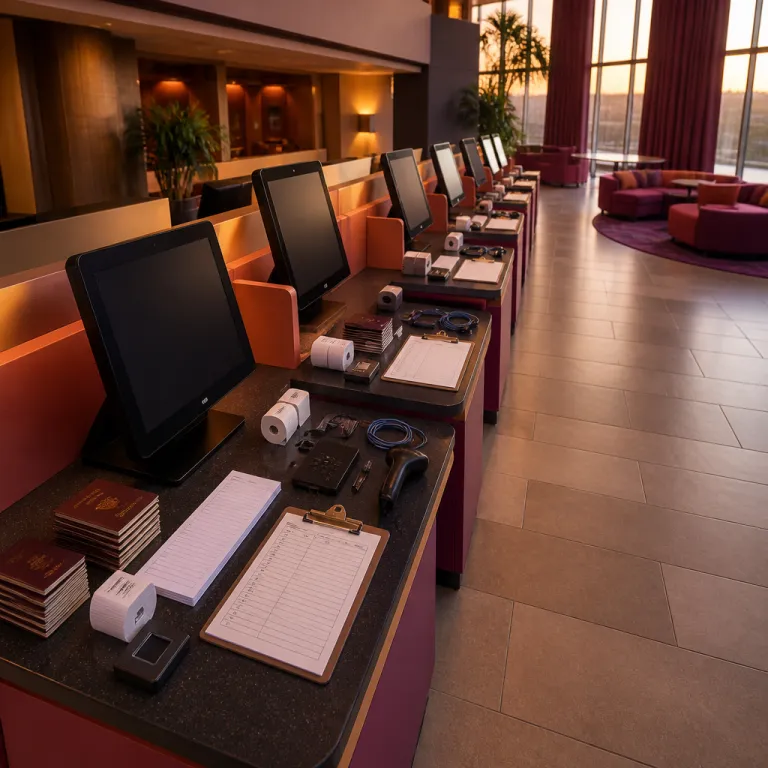
Why hotel self check-in kiosk data security is a hardware blind spot
Self check-in terminals have become the default arrival ritual in many hotels. For risk managers and executive leadership, that shift means the hotel self check-in infrastructure now concentrates identification documents, payment card data, loyalty IDs and room key credentials in one physical point. A 2023 Skift and Oracle Hospitality survey reported that roughly 70% of hotel guests in the United States would prefer to use self-service technology for some part of their stay, including check-in, which means the volume of guest check-in interactions flowing through each kiosk multiplies the impact of any single failure. That survey, based on thousands of respondents across major chains and independents, underlines how quickly lobby hardware has become a mainstream touchpoint rather than an optional add-on.
From a pure security perspective, each hotel kiosk is a compact data center bolted to the lobby floor. The guest stands shoulder to shoulder with other guests, entering passport numbers, payment details and room preferences on a bright screen that often exposes more than it should, while staff may assume that the vendor has handled every control in the system. Attackers see the same thing you do on a walk through the lobby: a cluster of hotel kiosks with network access, card readers, key encoders and a management system connection, but usually without the hardened monitoring you apply to your core servers, SIEM dashboards or privileged access gateways.
Public research by Pentagrid Security into self check-in terminals manufactured by Ariane Systems in 2023 showed how real this risk has become. By using a kiosk mode bypass to reach the underlying operating system, testers could access guest data and even generate valid room keys for occupied rooms, which turns a convenience feature into a direct physical threat. Ariane Systems has stated that its solutions are deployed in thousands of hotels worldwide, so hotel self check-in vulnerabilities of this type are no longer an edge case for niche properties but a systemic exposure for the wider hospitality sector. The Pentagrid write-up, which has been referenced in multiple security advisories and mapped to specific CVE identifiers, is now a common case study in hospitality cyber risk briefings.
How attackers actually compromise self service check kiosks
Most cyber programs in hotels still focus on PMS, CRS and payment processing platforms, not on the self service hardware that sits between the guest and those back ends. That leaves a gap where a single check-in kiosk can be misconfigured for years, running outdated firmware and weak session controls, even while the central management system is fully patched. For threat actors, this imbalance is attractive because the kiosk offers real time access to live sessions, cached data and sometimes even administrative tools, making it a practical bridgehead into the hotel network rather than a mere user interface.
In the Ariane Systems case, Pentagrid Security demonstrated that a determined attacker could exit the restricted interface and reach the underlying system shell. That kiosk mode bypass allowed access to configuration files, logs and in some instances unencrypted room key material, which effectively turned the hotel kiosk into a key cutting machine for unauthorized guests. When a self check-in terminal exposes both payment and key encoding functions, the attack surface spans from card data theft to silent room takeovers, all starting from a device that stands in the lobby without constant staff supervision and often without continuous log review.
Credential abuse and vulnerability exploitation remain the two dominant initial access vectors in hospitality breaches, as reflected in recurring findings from incident reports such as the Verizon Data Breach Investigations Report. A kiosk that shares credentials with other kiosks, or with the wider hotel service network, becomes a convenient stepping stone into more sensitive hotel systems, especially if network segmentation is weak. For this reason, any hotel check-in strategy that expands self service kiosks must pair deployment with a structured hardware security audit, not just a software penetration test of the PMS or booking extranet, and should reference concrete evidence such as CVE listings and vendor advisories when prioritizing remediation.
What is a kiosk mode bypass? A method to exit restricted kiosk mode to access the full operating system environment. How can hotels secure self-check-in terminals? Implement timely software patches, strong authentication and physical security measures such as locked ports and tamper seals. Are all self-check-in terminals vulnerable? Not all; vulnerabilities depend on specific systems, firmware versions and configurations, and must be assessed per deployment, ideally against published CVE records and the original Pentagrid Security analysis where relevant.
For legal and insurance stakeholders, the Ariane Systems disclosure also reframes vendor due diligence. When a third party device can be used to mint unauthorized room keys and expose guest data, liability allocation in contracts, cyber insurance wording and incident notification duties must be revisited. A practical starting point is to align your kiosk vendor assessment with the same depth you apply to partner extranet audits for online distribution, as outlined in this analysis of what a robust partner extranet audit should actually check, and to document how you track vendor patches, CVE references and independent security testing over time.
The hardware security audit checklist for lobby kiosks
Hotel self check-in terminals need a structured, repeatable audit framework that treats each kiosk as critical infrastructure. The first pillar is data-at-rest protection on the device itself, because even a brief theft of the hardware or a successful kiosk mode bypass can expose cached guest data, logs and sometimes full payment traces. Risk managers should require full disk encryption using industry-standard algorithms such as AES-256, encrypted key stores for room key material and strict control over any local storage used by the kiosk operating system, including disabling unneeded local user accounts and enforcing BIOS or UEFI passwords to block boot order changes.
Session management comes next, and it is where guest experience and security intersect most visibly. The check-in process must enforce automatic logouts after short inactivity periods (for example, 30–60 seconds of idle time), prevent the use of browser back buttons to revisit previous guest screens and ensure that no personal data remains visible once a transaction ends, while still keeping the self service flow smooth enough that guests do not abandon the kiosk for the front desk. Hotels should test in real time with actual guests to verify that the interface clears names, room numbers and partial payment details between check-ins, rather than relying solely on vendor assurances or default configuration settings, and should document the exact timeout values and masking rules in their configuration baseline.
Physical and network protections complete the core checklist for hotel kiosks. Each kiosk should have tamper-evident seals, locked panels around USB and network ports, and camera coverage that deters shoulder surfing without intruding on privacy, while the network path from kiosk to management system must be segmented away from back office and guest Wi-Fi using dedicated VLANs and firewall rules. Security teams should validate that service kiosks cannot reach administrative interfaces for PMS, CRM or payment processing systems directly, and that any remote support tools used by the vendor are tightly controlled with strong authentication, role-based access and detailed logging, including explicit SLAs for patch deployment such as “critical security updates applied within 30 days of vendor release.”
Legal and compliance leaders should embed this checklist into procurement and annual reviews. Contracts with kiosk vendors must specify patch timelines (for example, critical security fixes deployed within 30 days), vulnerability disclosure processes and responsibilities for incident response, including who pays for forensic work if a kiosk compromise leads to a broader system breach. A sample clause might read: “Vendor shall notify Hotel of any security vulnerability affecting the kiosk platform within 72 hours of discovery, provide a remediation plan within 10 business days and deploy patches within 30 days for critical issues; Vendor shall bear reasonable forensic and remediation costs arising from vulnerabilities in Vendor-controlled components.” For a deeper regulatory framing of guest data obligations that apply equally to lobby hardware and cloud platforms, many hotels now rely on structured guidance on navigating hotel guest data protection laws and safeguarding privacy and compliance in hospitality.
Data flows, retention and vendor accountability in hotel self check ecosystems
Every self check-in interaction generates multiple streams of data that travel through the kiosk, the PMS, the payment gateway and often a loyalty or CRM layer. For hotel self check-in risk assessments, the first task is to map which data elements remain on the kiosk, which are stored centrally and which transit through third party services, because regulators and insurers will ask these questions after a breach. Many hotels still assume that kiosks are stateless terminals, when in reality logs, temporary files and cached configurations can persist sensitive information for months, especially if default logging levels or debug modes have never been reviewed after installation.
A robust data retention policy for hotel kiosks must specify maximum durations for local storage, automated log rotation and secure deletion routines. The management system should enforce that no full payment card numbers, passport scans or room key cryptographic material are stored on the kiosk beyond the minimal technical need, while central logs should be pseudonymized where possible to reduce the impact of any compromise. Risk managers should also verify that check-in kiosks use tokenized payment processing, so that the kiosk never handles raw card data beyond the secure reader, which materially reduces PCI scope and potential liability and can be documented in both PCI assessments and internal risk registers.
Vendor accountability is the other half of hotel self check-in kiosk data security. Contracts with manufacturers such as Ariane Systems must include clear obligations for timely security patches, transparent communication of vulnerabilities and support for independent penetration testing of both the kiosk and its cloud back end, with explicit rights for the hotel to share results with insurers and regulators. When a vulnerability like the Pentagrid Security finding can affect many hotels and large numbers of rooms simultaneously, coordinated disclosure and patch management become board level issues, not just IT housekeeping, and should be tracked against public CVE references and vendor security bulletins.
Legal teams should align kiosk data practices with broader guest privacy frameworks. That means ensuring that privacy notices cover self service channels, that data subject rights can be exercised for information collected at a kiosk and that cross border transfers via vendor clouds are documented and justified under applicable law. For a more comprehensive view of how these obligations apply across the guest journey, many risk leaders reference specialized analyses on hotel guest data protection laws and the operational steps required to safeguard privacy and compliance in hospitality, and then extend those controls explicitly to lobby terminals and other on-property devices.
From guest trust to insurance coverage: managing the fallout of a kiosk breach
When a lobby terminal is compromised, the incident rarely stays a technical footnote. Guests immediately connect the physical kiosk they touched with any fraudulent payment activity or unauthorized room access, which means the guest experience impact is visceral and personal, not abstract like a distant cloud breach. Once a story about a self check-in terminal exposing guest data and room keys reaches mainstream media, the brand damage can outweigh the direct remediation costs by an order of magnitude, and regulators may reference public research such as the Pentagrid Security case or related CVE advisories when assessing whether the hotel acted responsibly.
For insurers and risk managers, hotel self check-in kiosk data security must be evaluated through the lens of policy wording and claims history. Cyber policies may cover data breach response, notification and credit monitoring, while property or crime policies might respond to physical theft enabled by cloned room keys, yet gaps often appear where the cause is a third party kiosk system rather than an internal server. Underwriters increasingly expect evidence of a structured kiosk security program, including hardware audits, vendor assessments and incident response playbooks that explicitly address self service devices, and they may request documentation of how the hotel tracks vendor advisories, CVE disclosures and independent penetration test results.
Operational efficiency is often the business case for deploying hotel kiosks, but that efficiency evaporates during a crisis if staff are unprepared. Front desk and lobby staff need clear scripts for handling guests when kiosks are taken offline, guidance on when to revert to manual hotel check-in procedures and training on preserving digital evidence from affected kiosks without tampering, while management must be ready to brief regulators and law enforcement with precise timelines and technical details. The incident response plan should also address AI driven tools used in guest communication, because misconfigured chatbots can create additional liability, as shown in analyses of liability boundaries for AI generated guest commitments when automated systems hallucinate rates or guarantees.
Rebuilding trust after a kiosk related breach requires transparent communication and visible improvements. Hotels that share concrete steps such as new tamper detection, independent penetration tests and stricter vendor SLAs tend to recover faster than those that offer only generic reassurances about security. For legal, risk and insurance stakeholders, the lesson is clear: lobby hardware is now a frontline asset in the protection of guest data, and it deserves the same governance, budget and scrutiny as any core digital system, supported by verifiable references to vendor advisories, CVE records and third party security research.
FAQ
Why are self check in kiosks considered high risk for guest data ?
Self check in kiosks process identification documents, payment details and room key credentials in a single device that is physically accessible to anyone in the lobby. If kiosk mode can be bypassed, attackers may reach the underlying system and extract cached data or configuration files. This combination of concentrated sensitive data and easy physical access makes kiosks a high value target compared with back office servers, and recent public research such as the Pentagrid Security analysis and associated CVE references has demonstrated that these risks are not theoretical.
What practical steps can hotels take to secure existing kiosks ?
Hotels should start with a focused hardware and configuration audit of every kiosk, checking firmware versions, encryption settings, session timeouts and physical protections such as locked ports and tamper seals. Network segmentation must ensure that kiosks only reach the systems they strictly need, with strong authentication for any remote support tools. Finally, hotels should work with vendors to apply patches promptly and schedule regular penetration tests that include attempts to bypass kiosk mode, referencing vendor advisories and CVE identifiers to confirm that known vulnerabilities have been remediated.
How should data retention be handled on lobby terminals ?
Data retention policies should minimize what remains on the kiosk and for how long, with clear rules for log rotation and secure deletion. Sensitive elements such as full card numbers, passport scans and room key cryptographic material should never be stored locally beyond the technical transaction window. Central systems should receive only the data required for operations and compliance, with pseudonymization where feasible to reduce breach impact, and hotels should document these settings so they can demonstrate alignment with privacy and security guidance after an incident.
Are all self check in terminals affected by the Ariane Systems vulnerabilities ?
Not all self check in terminals share the same design or configuration, so vulnerabilities identified in Ariane Systems devices by Pentagrid Security do not automatically apply to other manufacturers. Even within the same brand, hotels may run different software versions or security settings that change the risk profile. Each property must therefore assess its own kiosks individually, rather than assuming safety or exposure based solely on vendor name, and should compare installed versions against vendor advisories and any published CVE entries.
How should kiosk risks be reflected in insurance and vendor contracts ?
Cyber and property policies should explicitly address incidents originating from third party kiosks, including data breaches and unauthorized room access enabled by compromised keys. Vendor contracts need clear clauses on security standards, patch timelines, vulnerability disclosure and cost sharing for incident response and forensics. Aligning these documents with the actual technical risk of kiosks helps avoid coverage disputes when an incident occurs, and referencing public research such as the Pentagrid Security case and related CVE identifiers can help justify specific contractual requirements.