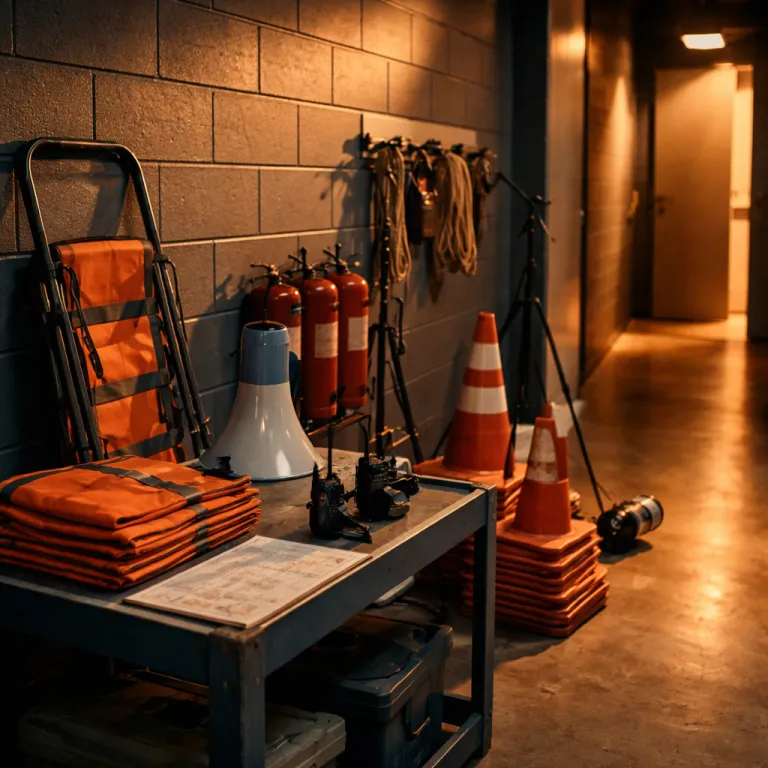
Why most hotel fire drill evacuation protocol documents fail under real pressure
Every hotel claims to have a hotel fire drill evacuation protocol, yet very few properties can execute a clean guest evacuation when alarms sound at 03:00. The gap is rarely about missing policies; it is about how fire safety rules, evacuation procedures and emergency response checklists are converted into muscle memory for guests, staff and the night management équipe. When a building fills with smoke, the only thing that matters is whether your evacuation drills have rehearsed the exact actions that your team will need in those first chaotic minutes.
A widely used training example is a composite case study based on several documented night-time evacuations, including the 2017 fire at the Address Downtown Dubai hotel and the 2015 fire at The Peninsula Hotel in Hong Kong. In this hypothetical “Harborview Grand Hotel” scenario, at 02:47 a smoke detector activates on the 11th floor; by 02:49 the night manager has confirmed the zone and initiated the evacuation plan. Floor wardens begin door-to-door sweeps at 02:51, and by 02:56 more than 200 guests have reached the primary assembly point. At 02:58, a secondary muster area is opened to relieve congestion, and by 02:59 the evacuation coordinator delivers a verified headcount to arriving firefighters. The nine-minute timeline from first alarm to reconciled roll call illustrates how a well-practised hotel evacuation plan can perform under real pressure.
Regulators expect written fire safety and fire protection documentation, but insurers and courts look at how that documentation shaped real emergencies. Guidance from the National Fire Protection Association (for example NFPA 101 Life Safety Code, Sections 4.7 on drills and 28.7 on lodging and rooming houses) and many local fire codes emphasises regular evacuation exercises, documented training and clear lines of command. Hotels that treat evacuation planning as a living operational discipline, not a compliance binder, consistently achieve lower average evacuation time and fewer incident-related injuries. Independent hotel safety reports, municipal fire brigade debriefs and insurer risk engineering bulletins frequently reference full-floor evacuations in around five minutes for well-prepared buildings, a benchmark that aligns with the Harborview Grand Hotel case and with several city fire department training circulars.
For risk managers and directions générales, the starting point is to define a single accountable evacuation coordinator role with clear authority during any fire emergency. That person owns the emergency action plan, validates evacuation routes and escape routes for every wing, and ensures that staff training covers both daytime and night scenarios. Without that operational owner, even the best written evacuation planning framework will fragment across departments, and guests, staff and emergency services will experience a confusing, high-risk response when a fire evacuation is required.
The first 90 seconds: night manager protocol and alarm choreography
When the alarm panel activates, the hotel fire drill evacuation protocol either comes alive or collapses into panic. The night manager’s first 90 seconds must be scripted in the emergency response plan with the same precision as a cockpit checklist, because this is the window where communication, fire safety decisions and emergency response sequencing determine the trajectory of the incident. In a well-run drill, the night manager acknowledges the alarm, confirms the building zone, initiates internal communication to the on-duty evacuation coordinator and immediately contacts emergency services if any doubt exists about a real fire.
A practical 90-second night manager checklist might include:
- Acknowledge alarm on the fire panel and note time and zone.
- Verify detector type (smoke, heat, manual call point) and affected floor.
- Notify the designated evacuation coordinator and duty engineer via radio.
- Call emergency services if there is visible smoke, heat, or any uncertainty.
- Lock out guest access to elevators serving the affected zone.
- Authorise public address announcements and instruct floor wardens to mobilise.
During training, simulate both confirmed fire and false alarm scenarios so that staff learn to manage time pressure without skipping verification steps. The protocol should specify who silences or resets alarms during drills, who controls elevators to prevent entry to affected floors, and who starts guest evacuation announcements over the public address system. Hotels that integrate two-way radios, centralized alert platforms and clear code phrases into their fire drills consistently report smoother evacuation procedures and fewer communication failures when real emergencies occur.
High-quality fire drills also define how many staff must be on site overnight to execute evacuation route sweeps, manage assembly points and support emergency services on arrival. Risk managers should benchmark their staffing ratios against advanced hotel fire safety guidelines and adjust scheduling so that at least one trained evacuation coordinator and two floor wardens are present at all times. For properties seeking deeper technical guidance on integrating fire protection systems, alarm logic and evacuation drills, specialist analyses on advanced hotel fire safety strategies provide a useful reference framework for aligning engineering controls with human procedures.
Floor assignment, guests evacuation flows and assembly point control
The difference between an orderly evacuation and corridor chaos is the clarity of floor assignments in your hotel fire drill evacuation protocol. Each floor, wing and fire stair in the building must have a named staff warden responsible for guest evacuation, with backups identified for high-occupancy periods and for night shifts. During drills, those wardens physically sweep their zones, guide guests towards the safest evacuation routes and confirm that escape routes and stairwells remain clear of smoke and obstruction.
Evacuation drills should rehearse not only downward movement but also horizontal relocation when a lower-level fire emergency blocks primary stairs. In practice, that means training staff to redirect guests and colleagues to alternative evacuation routes, to close fire doors to slow fire spread and to prevent entry into compromised areas while maintaining calm communication. Properties that map multiple assembly points, including a primary assembly point and at least one secondary location for adverse weather or security incidents, give themselves more flexibility when an incident evolves unexpectedly.
At the assembly points, the evacuation coordinator leads a structured headcount using a pre-prepared list from the property management system, a current staff roster and any event or group manifests. A simple headcount template typically includes:
- Rooming list or group manifest reference number.
- Number of guests checked in versus number confirmed at the assembly point.
- Staff on duty by department and their status (accounted for / missing).
- Names or room numbers of any unaccounted guests or employees.
- Time the headcount was started and time it was finalised.
The operational target should be to reconcile guests and staff within five to seven minutes of the last person leaving the hotel, because emergency services will immediately ask for a best estimate of anyone still inside. Fire authority post-incident reports and several insurance risk engineering bulletins support this five-to-seven-minute reconciliation window as a realistic objective for well-trained hotels. A practical way to embed this into evacuation planning is to use a pre-printed headcount sheet with columns for time, location, number evacuated, number missing and notes, so that the reconciliation process becomes a repeatable, auditable routine.
Failure modes to rehearse: blocked stairs, power loss and missing people
A hotel fire drill evacuation protocol that only rehearses ideal conditions is a liability in disguise. Real emergencies rarely respect your planning assumptions, so evacuation drills must deliberately inject failure modes such as a blocked stairwell, a power outage or a non-ambulatory guest on an upper floor. During training, assign observers to note how staff adapt evacuation procedures, how quickly they identify alternative evacuation routes and whether communication remains clear under stress.
One critical scenario is the partial loss of lighting or signage, which can turn even familiar escape routes into disorienting spaces for guests. Hotels should test battery-backed emergency lighting, luminous exit markings and handheld torches during drills, while wardens practice guiding guests and staff by voice and touch along the safest path. Another scenario is a missing staff member or guest at the assembly point, which forces the evacuation coordinator to balance the risk of sending a search team back into the building against the duty to protect life.
Risk managers should also integrate adjacent threat scenarios into their evacuation planning, such as a simultaneous security incident that requires both fire evacuation and panic button activation for vulnerable employees. Regulatory trends, including expanded panic button obligations in some jurisdictions, mean that communication protocols must align fire, security and health and safety workflows rather than treating them as separate silos. Detailed analyses of panic button compliance gaps show how easily fragmented procedures can undermine an otherwise strong emergency response, and they offer practical templates for unifying alarm, notification and post-incident reporting processes.
From drill to doctrine: post incident reviews that actually change behaviour
The most valuable part of any hotel fire drill evacuation protocol is the structured review that follows the drill or incident. A meaningful post-drill debrief goes beyond asking how people felt and instead interrogates specific performance indicators such as total evacuation time, communication clarity, assembly point control and the accuracy of the final headcount. In many well-run hotels, safety committees meet within 24 to 72 hours to convert those observations into written changes to the evacuation plan, staff training modules and building maintenance priorities.
During these reviews, involve representatives from operations, security, human resources, legal and insurance to ensure that fire safety decisions reflect both operational realities and duty of care obligations. This cross-functional approach helps identify systemic risk issues, such as chronic understaffing at night or recurring delays in contacting emergency services, that a single department might normalise. Over time, the accumulation of these post-drill adjustments turns a static evacuation planning document into a living doctrine that genuinely prepares the hotel for complex fire emergency scenarios.
Guest communication should also be part of the post-drill analysis, especially in hotels that host international guests with diverse language needs and varying familiarity with local fire protection standards. Feedback from guests who experienced evacuation drills can highlight confusing signage, inaudible announcements or unclear assembly points that staff may overlook. As one internal guidance document for hotel safety teams puts it with useful simplicity: “How often are hotel fire drills conducted? Typically quarterly, as per safety regulations. What should guests do during a fire drill? Follow staff instructions and evacuate promptly. Are fire drills mandatory for hotels? Yes, to ensure safety and compliance.”
FAQ
How often should a hotel run full scale fire drills with guests present ?
Most hotels conduct staff-focused fire drills at least quarterly, then schedule occasional full-scale exercises that include guests when occupancy, local regulations and brand standards allow. The key is to ensure that the hotel fire drill evacuation protocol is tested under realistic conditions, including night scenarios and high-occupancy periods. Risk managers should coordinate with local emergency services and safety consultants to balance operational disruption with the need for credible training.
What is the role of an evacuation coordinator in a hotel ?
The evacuation coordinator is the single point of command for any fire emergency or drill, responsible for activating the evacuation plan, directing floor wardens and liaising with emergency services. This role oversees evacuation routes, escape routes, assembly points and post-incident headcounts, and it ensures that evacuation procedures are applied consistently across all shifts. In many hotels, the evacuation coordinator also leads post-drill reviews and updates to the hotel’s fire safety documentation.
How can a hotel reduce panic during an evacuation ?
Panic is reduced when guests and staff know what to expect, which means clear pre-arrival information, visible evacuation maps and regular training for employees. During an incident, calm and repetitive communication over public address systems and by floor wardens helps guide guest evacuation along safe evacuation routes and towards the correct assembly point. Hotels that rehearse these communication patterns during evacuation drills see more orderly movement and fewer injuries when alarms are real.
What data should be captured after a fire drill in a hotel ?
After each drill, hotels should record total evacuation time, any delays in alarm activation or emergency services notification, issues with evacuation routes or escape routes and the accuracy of headcounts at assembly points. They should also document equipment failures, such as non-functioning fire doors or blocked stairs, and any communication breakdowns between staff. This data feeds into evacuation planning improvements, insurance discussions and legal compliance reviews.
How should hotels handle guests who refuse to evacuate during a drill or incident ?
Policies should state clearly that all guests must participate in evacuation drills and must leave the building during any confirmed fire emergency. Staff should be trained to explain the safety rationale calmly, to document refusals and to inform the evacuation coordinator so that emergency services receive accurate information. In extreme cases, hotels may need to rely on local regulations and law enforcement support to prevent entry into hazardous areas and to protect overall guest safety.